
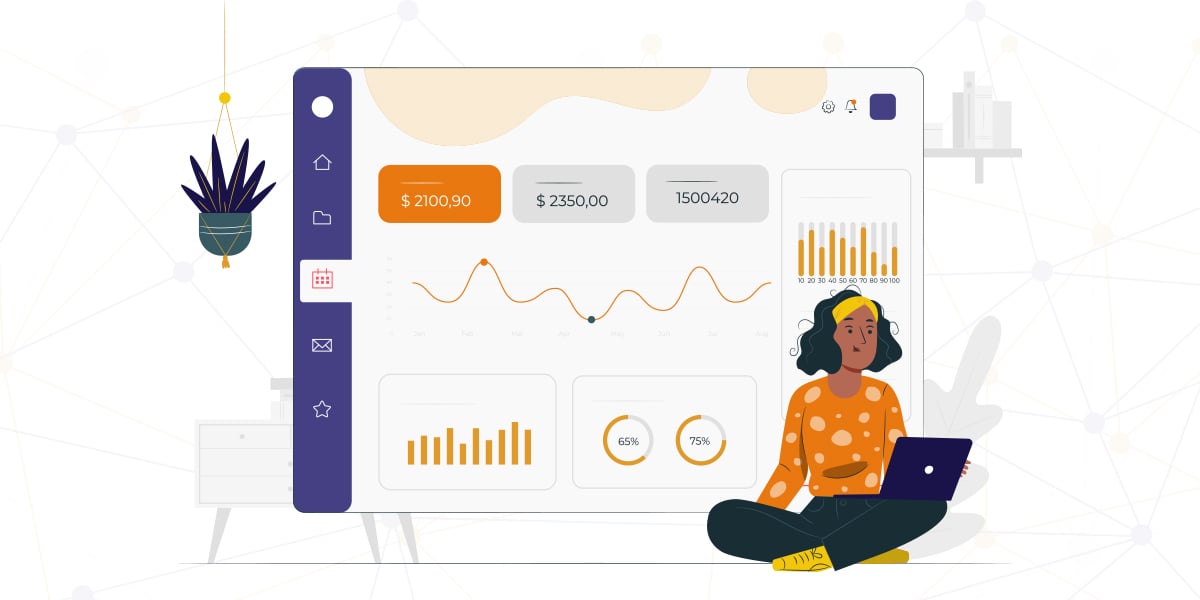
Discover how SAP can help you have internal control in your company to minimize errors
Effectiveness and efficiency in internal management are key to the success of any organization. In this context, the implementation of technological solutions plays a fundamental role, and SAP is one of the best allies for companies seeking to optimize their internal control and minimize operational errors.
At Xamai, we want to explain what an internal control system is for all areas of a company, the controls you can have in each one, and also discover how SAP can be the answer to the demands of a more efficient internal management to stay at the forefront in a competitive and dynamic environment where information is power.
What is internal control of a company?
Internal control of a company refers to the set of policies, procedures, and mechanisms established by the organization to ensure efficiency, integrity, and reliability in its operations. The main objective of internal control is to safeguard the company's assets, ensure the accuracy and reliability of financial information, promote operational efficiency, and comply with applicable laws and regulations.
In simpler terms, internal control involves the implementation of internal measures that help prevent and detect errors, fraud, and malpractice within the company. This includes everything from segregation of duties to supervision and evaluation of business activities.
Internal controls seek to ensure that organizational objectives are achieved effectively and that resources are used efficiently. In this article, we share how internal control can address various areas, such as accounting, risk management, information security, legal compliance, and how SAP is the perfect ally for this control of your organization.
A solid internal control system provides the company with the necessary foundation to operate effectively, mitigate risks, and maintain the trust of stakeholders, including shareholders, customers, and regulators.
Importance of corporate internal control
At Xamai, we have realized that corporate internal control plays a crucial role in the health and sustainability of an organization by providing a structured framework to ensure operational effectiveness, financial integrity, and regulatory compliance.
By establishing procedures and policies, internal control mitigates risks, prevents fraud and errors, and promotes transparency in all business activities.
A solid internal control system not only protects the company's assets but also contributes to informed decision-making and maintaining a positive reputation in the market as well as real cohesion between all processes and human resources needed within a business.
Internal control according to ISA 400
ISA 400 refers to the International Standards on Auditing (ISA) established by the International Federation of Accountants (IFAC) and adopted by auditors to carry out audits of financial statements. For ISA 400, internal control is treated within the framework of risk assessment and the design of audit procedures.
According to ISA 400, the auditor must assess and understand the internal control related to financial information relevant to the audit. This assessment includes understanding the entity's internal control structure, evaluating the effectiveness of its design, and determining whether it has been implemented effectively.
The importance of this approach lies in the fact that the auditor needs to understand the internal control environment to plan the audit appropriately. A solid understanding of internal control helps the auditor identify and assess the risks of material misstatement in the financial statements, allowing for the implementation of more effective audit procedures.
ISA 400 highlights the need for a thorough assessment and understanding of internal control as an integral part of the audit process to ensure the quality and integrity of financial information.
How can an ERP help improve internal control?
An ERP (Enterprise Resource Planning) can play a fundamental role in improving and strengthening the internal control of a company.
- Process Automation
ERP systems automate numerous business processes, which reduces the possibility of manual errors and fraud. Automation also ensures consistency in operations, which is essential for the integrity of financial information. - Information Integration
An ERP integrates data from different departments and functions into a single platform. This facilitates the generation of accurate and timely financial reports, thus contributing to the reliability of financial information. - Segregation of Duties
Many ERP systems allow for the clear definition of roles and responsibilities, which facilitates segregation of duties. This is essential to prevent fraud, as it limits access to certain areas and ensures that no one person has total control over a process. - Access Management
An effective ERP provides tools to manage access permissions to data and systems. This ensures that only authorized individuals have access to critical information, improving data security and confidentiality. - Audit and Tracking
ERP systems often have audit functions that allow you to track and record activities. This is useful for continuous monitoring and early detection of potential irregularities. - Risk Management
Risk management modules in an ERP help identify, assess, and mitigate business risks. This contributes to strengthening the company's ability to meet its operational and financial objectives. - Regulatory Compliance
An ERP can be configured to ensure that the company's operations comply with applicable laws and regulations. This is essential to avoid legal sanctions and maintain the company's reputation.
SAP products that help with your organization's internal controls
SAP offers a wide range of products that can be implemented in a company to improve internal control and should be considered by the company's board of directors to streamline records of all internal activities.
Here are some of the products offered by SAP and that are frequently used for this purpose:
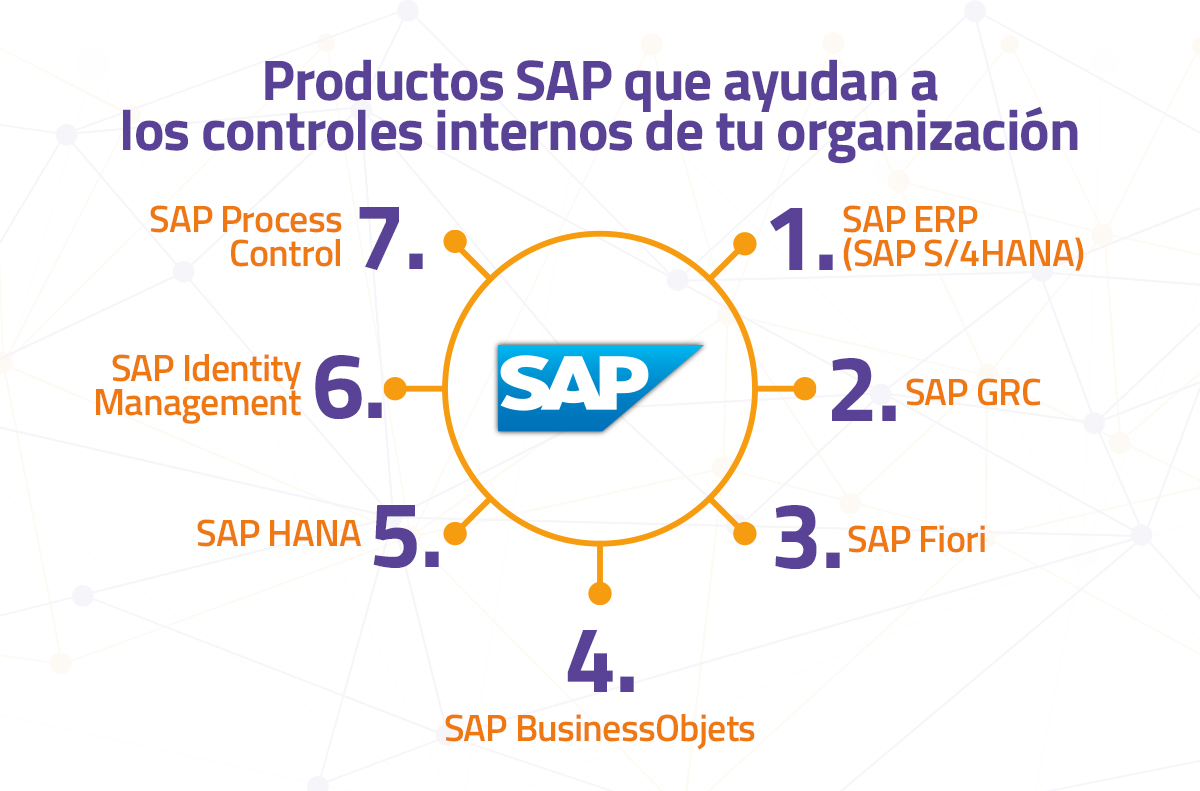
SAP ERP (SAP S/4HANA):
It is SAP's main enterprise resource planning system, which integrates key business processes such as finance, purchasing, sales, production, and warehouse management. Implementing SAP ERP helps automate and optimize processes, providing a solid framework for internal control.
SAP GRC (Governance, Risk, and Compliance):
This suite of solutions is specifically designed to address aspects related to governance, risk, and regulatory compliance. It includes modules for risk management, access management, and compliance management. SAP GRC helps companies maintain strong internal control by monitoring and managing risks and ensuring regulatory compliance.
SAP Fiori:
Fiori is a modern, role-based user interface that facilitates interaction with SAP systems. It provides personalized dashboards and role-specific applications to improve user experience and operational efficiency, thus contributing to better internal control by facilitating access and understanding of key information.
SAP BusinessObjects:
This suite of business intelligence applications allows companies to analyze, visualize, and share business information. It improves internal control by providing accurate reports and analysis, aiding in informed decision-making and facilitating the detection of potential problems or irregularities.
SAP HANA:
As an in-memory database platform, SAP HANA accelerates data processing and improves real-time analytics capabilities. This is beneficial for internal control by providing quick access to critical information and facilitating early problem detection.
SAP Identity Management:
This product focuses on identity and access management, helping to ensure that only authorized individuals have access to critical systems and data. It contributes to segregation of duties and reinforces internal security.
SAP Process Control:
Designed specifically for internal control management, SAP Process Control helps companies monitor and manage key controls, automate risk assessments, and ensure regulatory compliance.
The combination of these SAP products can provide a company with the tools needed to strengthen all control activities, improve operational efficiency, and ensure regulatory compliance. The selection of specific products will depend on the particular needs and requirements of the company and its components, for which you should contact one of our SAP consultants.
Our specialized team has the experience and knowledge necessary to understand the particularities of your business and recommend the most suitable SAP products and services.
With solutions like SAP ERP and other advanced tools, we can help you establish a solid internal control framework, automate key processes, and ensure compliance with your objectives and those of each of your employees.
At Xamai, we understand the importance of operational efficiency and financial integrity, and we are committed to collaborating with you to achieve the success of your company. Don't hesitate to contact us to explore how SAP can drive excellence in your organization!
Ready to talk to SAP specialists?
Tell us what your company needs and we'll help you find the best path.
Request information






 English
  Español de México
  Español