
SAP PI, a comprehensive business integration tool that facilitates smooth communication between heterogeneous systems.
SAP PI, which stands for Process Integration, is a software solution developed by SAP to facilitate the integration of business systems and applications. This component is part of the SAP NetWeaver suite and focuses on the efficient management of communication and data exchange between heterogeneous systems within an organization.
AP PI provides tools and services for the integration of business processes, enabling seamless communication between applications and allowing the automation of business workflows.
With functionalities such as data transformation, routing, and monitoring, SAP PI contributes to the optimization of interoperability and efficiency in the business environment. It is important to note that, as of 2020, SAP has evolved towards the SAP Integration Suite platform, which includes solutions such as SAP PI/PO (Process Orchestration) and SAP Cloud Platform Integration.
PI to PO, discover why you should use this SAP product
Since 2020, SAP has carried out a significant evolution in its integration solutions, moving towards the SAP Integration Suite platform. This new platform offers a broader and more modern approach to addressing integration challenges in complex and evolving business environments. SAP Integration Suite includes several tools and services that enable more agile and flexible integration.
Instead of relying exclusively on SAP PI (Process Integration) or SAP PO (Process Orchestration), the SAP Integration Suite encompasses solutions such as SAP Cloud Platform Integration. The latter is a cloud platform that facilitates the integration of cloud and on-premise systems, as well as the connection of business applications with web services.
The transition to the SAP Integration Suite represents a step forward in SAP's ability to address modern integration requirements and provide companies with more advanced and flexible tools to manage their business processes and workflows in an increasingly digital and distributed environment. The suite offers improved orchestration, analytics, data transformation, and connectivity capabilities, for both on-premise and cloud environments.
What is PO?
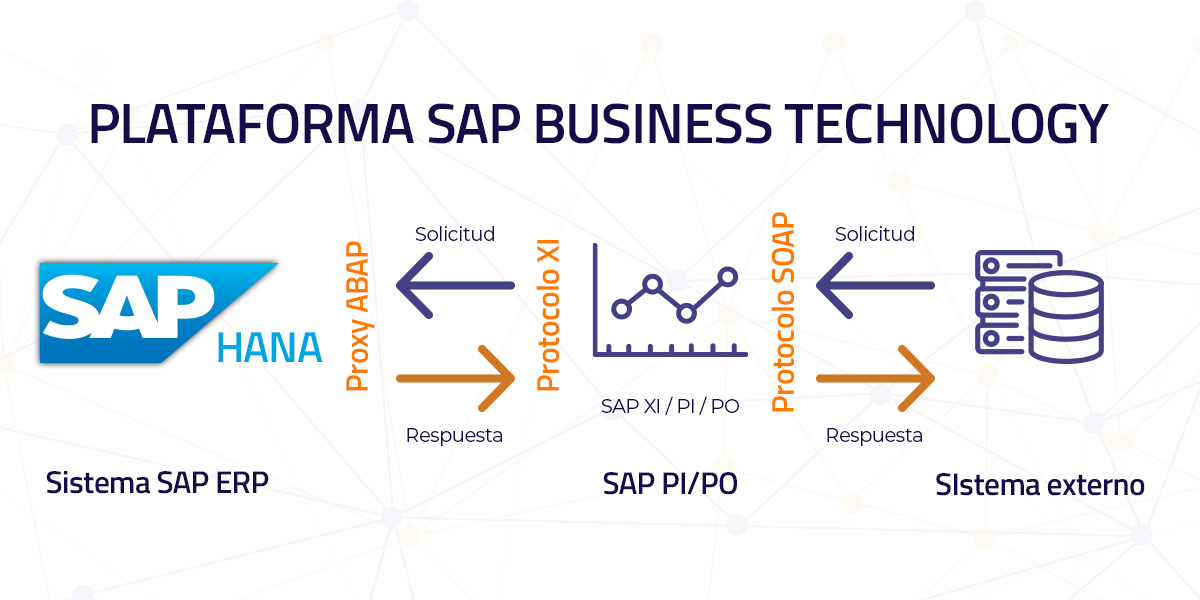
This tool is designed to facilitate the integration of heterogeneous enterprise systems, enabling effective communication and workflow management between applications and systems within an organization. SAP PO combines enterprise integration capabilities, business processes, and collaboration management in a single environment.
The main functions of SAP PO include process orchestration, data transformation, message routing, and monitoring of integration activity.
It provides a unified framework for connecting systems and applications, both in on-premise and cloud environments, allowing companies to optimize their operations and improve the efficiency of workflows.
Why migrate PI to PO?
The migration of SAP PI (Process Integration) to SAP PO (Process Orchestration) can have several reasons, and is generally related to the evolution of technologies and business strategies.
Here are some common reasons why organizations consider migrating from PI to PO:
Expanded functionality:
SAP PO offers additional functionality compared to PI. The inclusion of the Process Orchestration component in PO allows for more advanced and centralized management of business workflows.
Modernization of infrastructure:
The migration can be part of a broader strategy to modernize the technological infrastructure. PO integrates more efficiently with hybrid environments, encompassing both on-premise systems and cloud solutions.
Improved connectivity:
PO offers improvements in connectivity, allowing for smoother and more efficient integration between systems and business applications. This is especially valuable in a business environment that is evolving towards the cloud, where customers may use web services.
Centralized management:
PO provides centralized management of integration processes, which facilitates the administration and monitoring of complex workflows and troubleshooting.
Compliance with updates and support:
Over time, SAP may stop providing support or updates for older versions like PI. Migrating to a more recent solution like PO ensures access to the latest features, bug fixes, and ongoing support.
Adaptation to SAP strategy:
As SAP evolves its focus towards broader integration solutions, such as the SAP Integration Suite platform, migrating to PO can be a logical step to align with SAP's long-term strategy.
If you have any questions about migrating from PI to PO to take advantage of new features, improve operational efficiency, ensure compliance with current technological standards for your company, reach out to our consultants at Xamai.
Ready to talk to SAP specialists?
Tell us what your company needs and we'll help you find the best path.
Request information







 English
  Español de México
  Español