
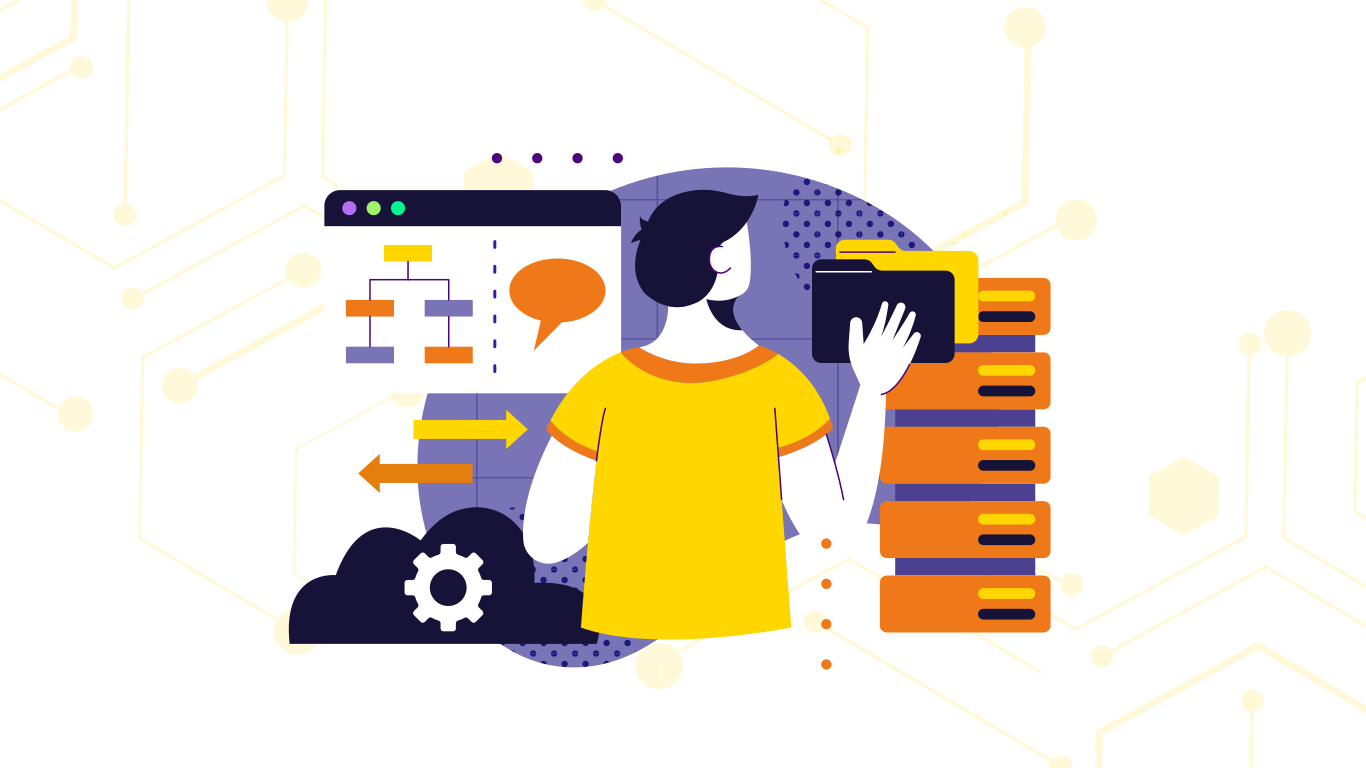
We tell you how information technologies transform organizations, improving efficiency and communication.
Nowadays, companies that do not adopt these information technology tools risk falling behind their competitors, as you should know that information, data, and the ability to respond in real time are the true capital that must be had and cared for.
The question is not whether it is convenient or not to use them, but how to do it strategically to improve performance, optimize processes, and generate better results.
Digital transformation as a starting point
As of today, information technologies have ceased to be simple support systems to become the very heart of businesses. Everything related to the digital context requires adaptation, innovation, and the ability to integrate solutions at all levels of the organization: from human resources departments to financial management, customer relations, and production.
We are talking about an infrastructure that combines hardware, software, networks, storage, and devices, all connected and with the possibility of operating in the cloud, which multiplies availability, security, and remote access. Something that you surely already know and dominate at a theoretical level.
Generic and infrastructural use of technology
The first level of use of information technology is infrastructural. Here enter the basic elements that allow companies to function today:
- Email, instant messaging, and social networks as communication media.
- Operating systems that allow applications to be executed and tasks to be coordinated.
- Data storage and processing platforms to share information between users.
- Connectivity tools that integrate employees in offices, manufacturing plants, or remote work schemes.
That is, computing applied to the daily life of an organization. Without these foundations, it would be impossible to think about more advanced strategies.
Specialized use
The second level is specialized use, where information technologies become a driver of change. We are talking about solutions designed for critical areas:
- Tools for planning, monitoring, and evaluating compliance with objectives.
- Financial management and accounting with ERP systems that integrate from production to logistics.
- Production and manufacturing: CAD/CAM applications, quality control, traceability of inputs, and process automation.
- Supply chain management: SCM platforms that optimize inventories, logistics, and supplier relationships.
- Customer management: CRM systems that allow for personalized attention and anticipating consumer needs.
Each of these areas represents not only efficiency but also a cultural change in the way of working.
The role of artificial intelligence and analytics
Artificial intelligence deserves a chapter of its own. Thanks to AI, companies can process data at an unprecedented speed, generate reports, identify problems before they occur, and propose strategies to solve them.
Chatbots, for example, allow attending to customers at any time. Analytics offers a deep view of trends, consumption habits, and internal performance.
For growing companies, adopting these technologies means competing on an equal footing with larger players, as long as they know how to leverage information.
Sectors where the impact is most felt
The importance of information technology in organizations is noticeable in all sectors:
- In manufacturing, with reduced waiting times and better inventory control.
- In transportation, with shipment traceability and security in distribution.
- In human resources, with systems that facilitate employee selection, training, and evaluation.
- In foreign trade, with platforms that simplify documentation and regulatory compliance.
- In society in general, with the digitalization of procedures and public services.
Clear benefits of technology in the company
The benefits of information technologies in organizations are evident and increasingly decisive for the way companies operate. One of the most relevant is increased productivity, as the automation of processes and the optimization of resources allow more tasks to be completed in less time. This is added to a better performance of the teams, who manage to work with greater precision and speed thanks to digital tools designed to simplify procedures.
Another clear benefit is the reduction of operating costs, since digitalization eliminates unnecessary steps, minimizes errors and avoids expenses related to manual processes. In addition, the integration of processes into a single system facilitates coordination between areas, improving workflow and ensuring that information is available to all involved.
Finally, these advantages translate into a direct increase in competitiveness and a greater ability to adapt to market changes. However, it doesn't end there: technological adoption also implies important responsibilities, such as guaranteeing data security, protecting the integrity of systems and fostering an organizational culture open to constant adaptation.
Challenges and problems faced
Not everything is simple. Organizations face problems such as:
- Cultural resistance to change.
- Lack of digital skills in the teams.
- Difficulties in incorporating new technologies.
- Maintenance and infrastructure costs.
- Risks to the security and integrity of information.
This is where leadership and the ability to design clear management strategies come into play.
The role of the cloud and digitalization
The cloud has revolutionized the way companies manage information. Today it is possible to store enormous volumes of data, access them from anywhere and guarantee their real-time availability.
Digitalization, for its part, ensures that documents, procedures and processes can be executed without paper, more quickly and with fewer errors.
Both elements are now indispensable for any organization that wants to compete.
Xamai and the support we provide
At this point, it is worth remembering that having the technology is not enough: you need to know how to use it. That's where specialized firms like Xamai, SAP Gold Partner, come into play.
Xamai accompanies companies in the adoption of advanced solutions, from SAP Business One to S/4HANA, helping to integrate operations, optimize management and increase productivity.
True value lies in integration: having all areas work on the same information base, which generates trust and transparency in decision-making.
Technology with purpose
Information technologies in organizations are not an end in themselves, but a means to transform the way we work, produce, and compete.
Each company must find the balance between the necessary infrastructure and the strategic applications that best respond to its needs.
Ultimately, it's about using information as the most valuable resource, converting data into knowledge, and that knowledge into actions that generate results.
The technology is there. The challenge is to incorporate it intelligently, with a vision for the future, and with a clear objective: to make the organization grow, improve its performance, and adapt to a market that changes every day.
Ready to talk to SAP specialists?
Tell us what your company needs and we'll help you find the best path.
Request information

 English
  Español de México
  Español