
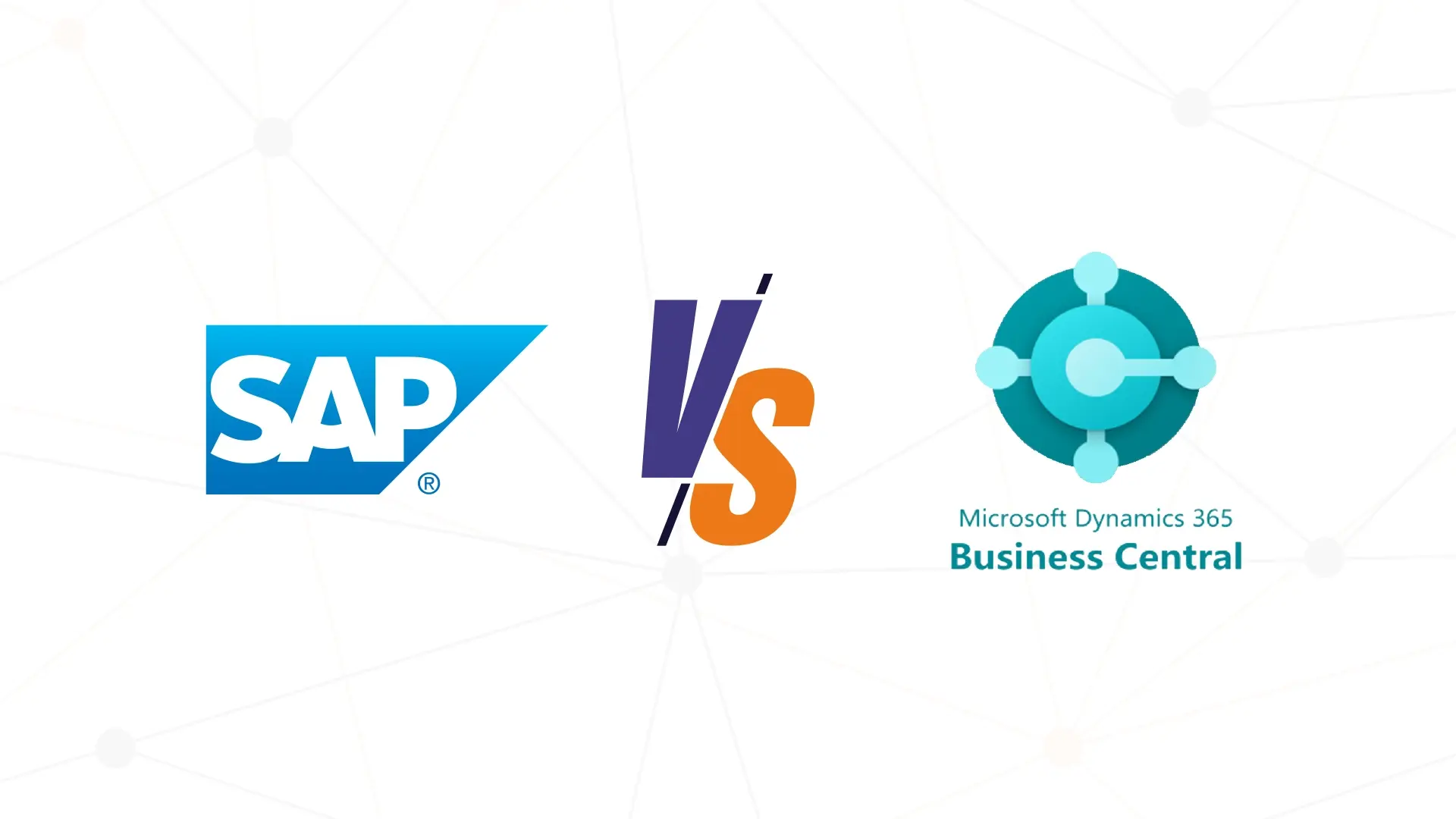
Compare Business Central and SAP to discover which ERP best suits your business needs.
Implementing an ERP is not a trivial task nor is it an option to be discarded within the growth of any business, as it will allow you to structure your company around the business models you have chosen and can unite all users of the company, thus becoming a substantial element of corporate culture.
The quality, integrity, and flexibility of an ERP will also determine to what extent it can be a differentiating element compared to the competition.
In fact, among the new concerns about the globalization of markets and the increasingly higher levels of service requirements, having an ERP will be a cornerstone when it comes to growing your business, so it is very important to compare the solutions offered in the market and thus make informed decisions.
How to adequately compare Microsoft Dynamics 365 Business Central vs SAP
Comparing the ERP solutions of Microsoft and SAP may seem simple at first glance, but it is clear that there are more preconceived notions than real differences.
The structure of SAP was sometimes considered 'too lightweight' or 'too complex', but this myth is no longer relevant! SAP S/4HANA ERP has provided a very efficient user interface that adapts perfectly to the device used: desktop computer, tablet, smartphone, etc.
It also offers numerous contextual indicators that help users make better decisions. S/4HANA has also come to bury the perception of SAP as an 'overly heavy' ERP, which requires an army of consultants, since the solution can now be implemented in a few months in companies with fewer than 100 employees.
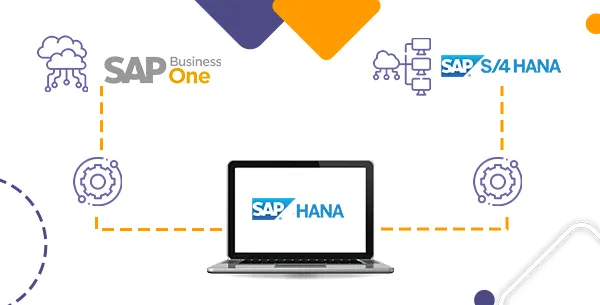
SAP Business One and SAP S/4HANA and the flexibility they offer

SAP Business One is a SAP product designed specifically for growing companies. It offers a platform that streamlines all your business processes and finances, sales, purchasing, warehouses, production, and more. It offers an intuitive user interface and a modular model whose greatest advantage is the ability to grow along with your business.

In the case of SAP S/4HANA, it is the most advanced version currently offered by SAP and is built on the SAP HANA in-memory database. This means it gives you immediate access to large volumes of information and facilitates real-time tracking, analysis, and decision-making.
Using this technology is useful for industries that require operational precision and constant visibility, such as logistics, manufacturing, or supply chain. However, it should be noted that SAP is for any industry as it has a vision focused on automation, digital transformation, and the use of business intelligence, artificial intelligence, and integration with third-party solutions.
Microsoft Dynamics 365 using the Microsoft approach.
Microsoft Dynamics, particularly Dynamics 365 Business Central, is a well-known alternative due to its native integration with other Microsoft products such as Office 365, Teams, and Outlook. Like SAP, it has a modular structure and is designed to respond to the most common requirements of small and medium-sized companies in areas such as financial management, CRM, human resources, and customer service.
While Dynamics 365 Business Central offers a very user-friendly interface with a gentle learning curve for those already familiar with Microsoft products, its structure and processing power may be limited compared to SAP HANA, especially when handling large amounts of data or complex configuration needs.
CRM and customer management in SAP vs Dynamics 365 Business Central
Both SAP and Dynamics 365 Business Central offer powerful CRM solutions to manage customer relationships, automate business processes, and boost sales. However, they have a different approach.
SAP Customer Experience (formerly C/4HANA) allows you to manage the entire customer lifecycle with modules for sales, marketing, service, and e-commerce. It is ideal for companies seeking personalization, advanced automation, and a connected experience across all channels.
Microsoft Dynamics 365, on the other hand, integrates CRM with tools like Outlook, Teams, and Power BI, facilitating its use in environments already familiar with Microsoft. It is practical for businesses that value rapid integration, although it may fall short in more complex scenarios.
However, when it comes to handling large volumes of customer data, multiple sales channels, or more sophisticated customer journey strategies, SAP is usually the best option, especially for its artificial intelligence capabilities, advanced automation, and focus on the customer experience as a central axis of the operation.
Delving deeper into SAP HANA and why it outperforms Dynamics 365
One of the main differences between SAP vs Business Central is noticeable in the database engine, as Dynamics commonly works with SQL and SAP bets on its own technology: SAP HANA.
This database can process information in memory, allowing it to access instant insights without prolonged waiting times.
Thanks to this, organizations that use SAP S/4HANA can react more quickly and are able to anticipate changes in the market by making data-driven decisions in real time with ease and a clear competitive advantage over systems that rely on traditional queries.
How accessible is each one in terms of implementation and budget?
Implementing an ERP requires planning and expert support, regardless of which you choose. It is worth noting that SAP has a wide network of certified partners, such as Xamai, where we help you customize the solution according to the type of industry and the requirements of each of our clients.
SAP Business One has proven to be accessible for companies looking to control costs without sacrificing functionality, and Microsoft Dynamics, although flexible, tends to require more adjustments and developments to adapt to certain workflows, which can increase the total cost in the long term.
Customization and scalability: which one best adapts to the company's needs?
Both SAP and Microsoft offer ERP software that can be customized with good results. The difference between the two options is that SAP has a deeper focus on adaptation according to the internal processes of each business, which allows for more specific configurations in industries with complex operations, which is of vital importance for growing companies.
Regarding scalability, both options offer cloud solutions, but SAP's architecture allows for incorporating new applications, modules, or integrations with greater ease and less impact on daily operations.
What is your target market?
SAP Business One is designed for any industry and any size of companies but is especially useful for those that are growing, while SAP S/4HANA targets larger companies or with advanced needs.
Dynamics 365 Business Central, on the other hand, tries to cover both sectors, although its proposal may fall short for companies with a more sophisticated or global operation.
In general, SAP responds with greater precision to the needs of vertical industries thanks to its extensive set of specialized modules.
Looking to the future, what is the best option?
We can say that both systems are aligned with the digital transformation trends that Industry 4.0 demands. SAP is currently in the lead by offering automation tools, intelligent process management, and compatibility with emerging technologies such as IoT and machine learning.
Furthermore, with the constant evolution of SAP in business management solutions, its products are designed to drive growth, optimize resources, and ensure ongoing regulatory compliance.
SAP, a platform designed to evolve with you
When it comes to comparing SAP vs Dynamics 365 Business Central, it is important to look beyond the basic functionalities and focus on versatility, infrastructure, technical support, and long-term vision. SAP not only covers the essential aspects of an ERP system, but enhances them with analysis tools, scalability, and a technological base capable of adapting to any business scenario.
If your company is looking for a solution with strength, adaptability, that drives business intelligence and guarantees constant evolution, SAP is the option that best accompanies that path.
Ready to talk to SAP specialists?
Tell us what your company needs and we'll help you find the best path.
Request information


 English
  Español de México
  Español