
Updated: February 2025
Access your data in real time, simplify processes, and boost operational efficiency with ERP Cloud
A cloud ERP, or Cloud ERP, is a system that allows companies to manage their business processes in an integrated manner through the internet. Instead of hosting the software on local servers, it runs on remote servers, offering flexible access, scalability, and reduced operating costs.
Unlike traditional ERPs that require physical infrastructure and costly maintenance, Cloud ERPs eliminate those barriers, allowing users from any company to access information from any location with an internet connection. This improves collaboration and real-time decision-making to the benefit of the company.
Components of a Cloud ERP
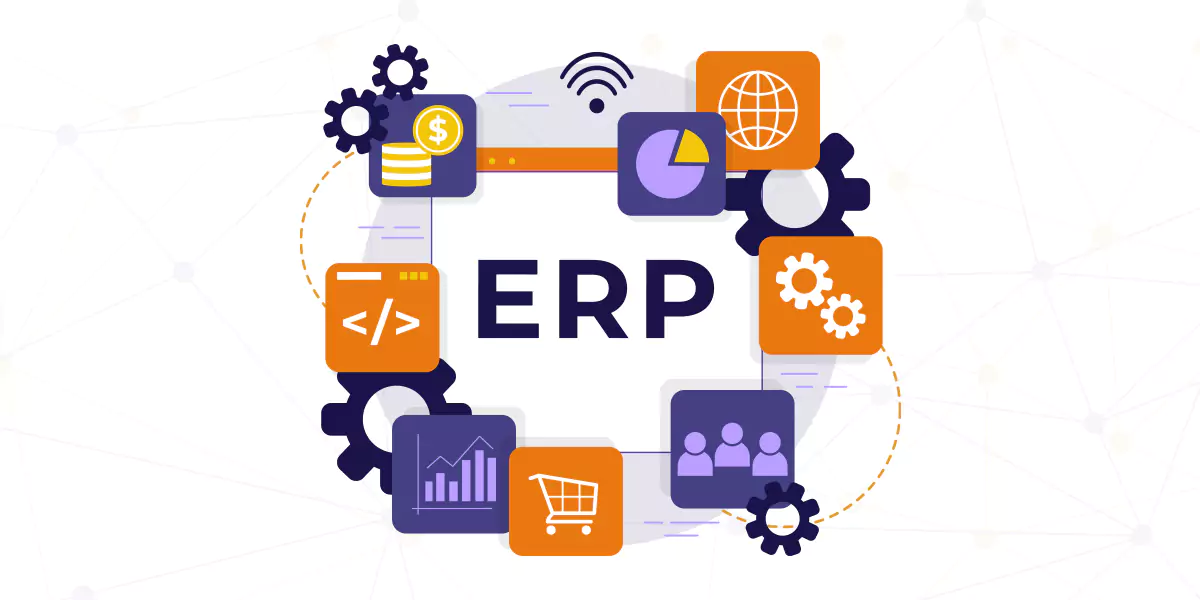
A cloud-based enterprise resource planning system has modules that are integrated and cover different areas of the company, such as
- Accounting and Finance
- Human Resources
- Inventory and Supply Chain
- Project Management
- Data Analysis
Cloud ERPs offer remote access to the operating system, automatic updates, data security and protection, and integration with other business applications.
Types of Cloud ERP
Cloud ERP systems can be classified into different types according to their characteristics and focus:
- Public Cloud ERP: Shared with other companies on the provider's infrastructure (e.g., Oracle Cloud ERP, SAP S/4HANA Cloud Public).
- Private Cloud ERP: Implemented in a cloud dedicated exclusively to an organization (e.g., SAP S/4HANA Cloud Private).
- Hybrid ERP: Combines on-premises and cloud solutions to take advantage of the benefits of both models.
- ERP for SMEs: Designed specifically for small and medium-sized enterprises (e.g., NetSuite, Microsoft Dynamics 365 Business Central, SAP Business One Cloud).
Vertical Cloud ERP: Adapted to specific sectors such as healthcare, manufacturing, or education.
- Mobile Cloud ERP: Optimized for mobile devices, allowing real-time access.
- Open Source ERP: Customizable solutions with access to the source code
Benefits of a Cloud ERP System
This has many benefits, including improved operational performance, cost efficiency, support for rapid growth, and greater visibility of your business functions through real-time reporting.
The most common benefits are:
Lower upfront costs
By using a cloud ERP system, you don't have to spend money on expensive hardware or cover the costs of ongoing infrastructure maintenance and updates. Instead, you pay a monthly or annual fee to access the software, which can be a more cost-effective option for many companies.
Better data access
Previously, a company could have dozens of applications running, and all information had to be entered into spreadsheets or similar tools and then recalculated to obtain meaningful and useful business information.
The cloud ERP system provides real-time data access from anywhere.
Faster implementation
Implementing an on-premise ERP system can take months or even years. However, when using a cloud ERP system, you can get started much faster. The software in its public version comes preconfigured, so you only need to customize it to adapt it to your specific needs. As a result, you will be able to start benefiting from the system much faster.
Why choose a cloud ERP system?
A cloud-based ERP system, with its flexibility and advanced features, has become a key piece for success in the digital age.
Historically, ERPs have been essential tools for optimizing productivity and obtaining valuable insights. However, digitalization has completely transformed the business landscape, making on-premise systems increasingly inefficient. These systems are often rigid and difficult to adapt to a constantly evolving environment.
Traditional ERPs were designed for simpler business structures, so they don't always offer the agility, speed, and analytics that companies require today to stay competitive.
Today, consumers demand faster deliveries, constant improvements in products and services, greater reliability, and competitive prices. To meet these expectations, many companies have expanded their reach and work in collaboration with strategic partners in areas such as manufacturing, distribution, sales, support, and key processes.
This implies the need for a technological platform that not only manages internal operations efficiently but also facilitates coordination with commercial networks on a global scale.
This level of integration and scalability is only possible with a cloud ERP.
How to know if you need a cloud ERP system
To answer this question, let's pose the opposite: how can you be sure that you don't need a cloud ERP system? Adopting the cloud is not just a trend, but a necessary evolution, just as it has been the use of a cell phone. Today it is vital to be communicated at all times and in all places; having a cell phone could not be considered a luxury, but a necessity.
Thus, a cloud ERP is not just a modernization, but a necessary tool to keep your business organized and competitive within the digital age. Remember that your business is unique and so are your business needs.
At the same time, this uniqueness is the best reason to migrate to the cloud. This opens up new possibilities for system customization and helps to take advantage of scalability and ease of growth in the cloud, with advanced features and services, to provide what is needed, when it is needed.
The key question is: will your current system be able to successfully manage your company's business requirements over the next 3 to 5 years?
If your company is not launching new products, merging, or innovating, it is likely that it is not growing and is stuck in the status quo. Therefore, you may not need an ERP system.
But if your answer is close to “No, my current system will not be sufficient in 3 to 5 years”, then it is time to consider a cloud ERP system. Next, we will explain the importance of a solution for a medium-sized company and the benefits of cloud ERP software.
The importance of a cloud ERP solution for medium-sized companies
The ERP plays a central role in all areas of medium-sized companies. A good cloud ERP system intelligently automates processes, provides analysis through AI and machine learning, helps companies innovate business models, and more.
In addition to all these benefits, there are three main reasons why companies, regardless of their size and industry, should have a cloud ERP:
Greater flexibility
Flexibility is especially important for companies with growth potential. These companies are often specialists in their industries and operate in vertical sectors such as professional services and have deep relationships with their clients.
To grow quickly, they need to take advantage of new opportunities: adding new locations, introducing new products and services, making acquisitions, or responding to competitive needs.
An outdated system that is not flexible or easily scalable hinders growth because it cannot provide the necessary information to make decisions quickly enough.
When a company relies on independent reporting systems from an integrated database, it is difficult to share information and collaborate on common and urgent goals.
Cash flow transparency
The vital element of a medium-sized company is cash flow, and improving profit margins is often a top priority.
Creating reserves in the balance sheet – and stimulating growth – requires careful monitoring of working capital, operating expenses, and investments. And none of this can be done in isolation.
A cloud-based ERP system integrates accounting processes with business operations, both internal and external, so that absolutely everything can be accounted for accurately. Although all companies have some type of accounting system, many of these systems do not provide immediate cash flow or important information about profitability. They often do not meet current business needs or integrate with other systems.
Ease of application integration
Companies of any size tend to quickly implement point solutions for specific operational needs, such as call center software or field service systems, but are slow to change their main ERP system.
However, adding these complementary solutions has significantly increased costs and complexity, as these tools do not easily connect to the ERP system.
A modern cloud ERP system changes all of this, causing more and more companies to reconsider their ERP system options. Companies increasingly prefer the easy integration, scalability, and flexibility offered by a cloud ERP system.
Comparison: Cloud ERP vs. On-Premise ERP
When choosing between a cloud ERP and an on-premise ERP, it is important to evaluate some important factors.
Costs: A cloud ERP operates on a subscription model, eliminating upfront hardware costs, while an on-premise ERP requires a larger investment in infrastructure and maintenance.
Accessibility: The cloud allows access from any device with internet, while an on-premise ERP is usually limited to the internal network.
Security: Although cloud ERP providers have high security standards, some companies prefer local management for greater control.
Maintenance and Updates: Cloud ERPs receive automatic updates, while local ERPs require manual maintenance and additional resources.
Scalability: The cloud allows you to increase or decrease resources according to demand, while a local ERP may require new investments in hardware.
Customization: Local ERPs often offer greater adaptability, while cloud ERPs depend on the provider's options.
Integration: A cloud ERP facilitates connection with other applications and web services, while a local ERP may require greater effort in integration.
Is it safe for your business data to have Cloud ERP?
Constant news about cyberattacks and security breaches can raise doubts about the reliability of a cloud ERP. However, the level of security largely depends on the implementation and administration of the system.
In the case of SAP, the cloud platform has high security measures, including advanced encryption, continuous monitoring, and compliance with the highest international standards, which guarantees the protection of business data.
We will analyze some aspects:
Protection against data theft
One of the biggest fears in the digital world is unauthorized access to confidential information. Data breaches often affect companies that store their information on local servers more than in the cloud. Cloud ERP providers implement advanced encryption and constant monitoring to reduce these risks.
Prevention of information loss
Data can be lost due to natural disasters, human error, or technical failures. One advantage of cloud ERP systems is that providers usually perform automatic and redundant backups. This allows for quick information restoration and maintains operability with minimal interruptions.
Security and maintenance
For many companies, having an internal IT security team is a challenge. However, by opting for a cloud ERP, you gain access to cybersecurity specialists who work continuously to maintain system protection, apply updates, and prevent threats.
For growing companies, a cloud ERP is not only an efficient alternative but also a more secure option compared to a locally hosted system.
Cloud ERP is a proven and mature solution used today by thousands of companies worldwide (and perhaps many of your competitors). Companies that choose to work with a cloud ERP can quickly track the transformation process, have immediate and continuous access to tools that can drive change, as well as the flexibility and ability to use them as opportunities arise.
For growing companies, migrating to the cloud is an inevitable step to take their business to the next level and meet market demands. A cloud ERP is an ideal solution for companies looking to optimize their operational management with lower infrastructure investment and greater accessibility.
However, the choice between a Cloud ERP and an on-premise ERP will depend on the specific needs of each organization. To evaluate the best option for your business, consult with our experts at Xamai and discover the solution that best suits your business requirements.
Ready to talk to SAP specialists?
Tell us what your company needs and we'll help you find the best path.
Request information




 English
  Español de México
  Español