
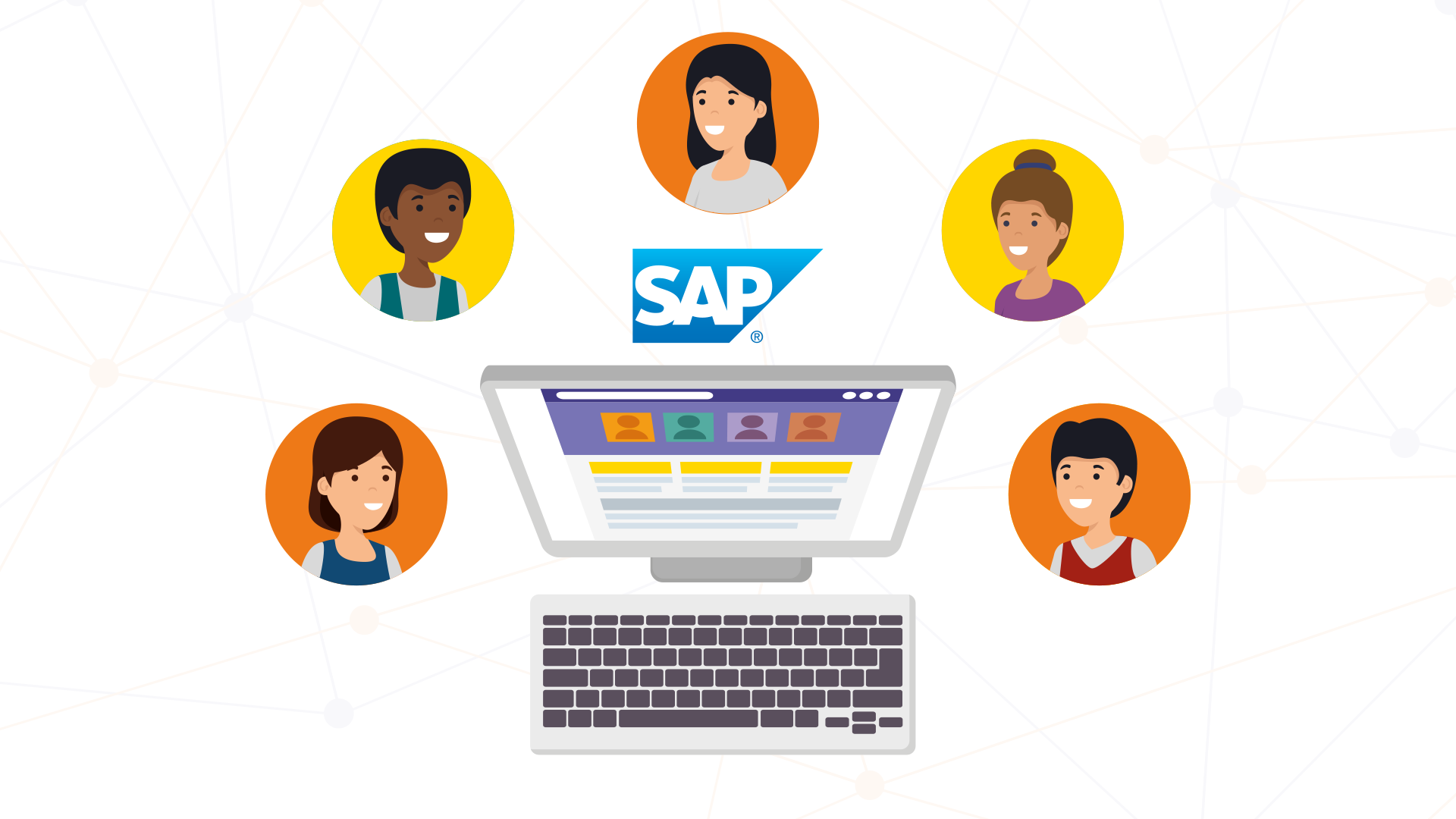
We show you the most common SAP users and how to use them.
In SAP, the user type defines user categories, such as system administrators or operators. This classification system goes beyond license types.
A user in SAP determines the permissions that can be assigned to them through roles. These roles grant specific functionalities within the SAP system.
With the help of various user types, the system administrator controls the permissions that can be assigned to each user to perform their task securely and have access to each option of the system.
Different types of users in SAP
The versatility of SAP undoubtedly lies in its ability to adapt to the needs of each SAP user and the assignment of their functions. Depending on their roles within the organization, access to SAP tools and data varies.
Below, we show you the different user profiles offered by this platform. SAP has defined 5 types of users:
1) Dialog User (A)
A dialog user is used for all types of single-person login. It is used to log in via SAP GUI.
During a dialog login, the system checks for expired or initiated passwords.
The user can change their password. Several dialog logins are checked and, if applicable, logged.
Characteristics of dialog users:
- These users have the ability to perform standard transactions.
- It is a type of interactive login.
- Multiple initial logins can be 6.
- They are established according to company policy.
2) System User (B)
These are non-interactive users. They are used for background information processing and internal communication within the system (such as RFC users for ALE, Workflow, TMS, and CUA).
Characteristics of system users:
- End users cannot change their passwords.
- Only the administrator user can change their passwords.
- Multiple logins are allowed for this type of user.
- Login via dialog is not possible for this type of user.
3) Communication User (C)
The communication user is used for non-dialog communication between systems. It is not possible to use this type of user to log in via interactive dialog.
Characteristics of the Communication User
- Their passwords are valid for a specific period, so they expire.
- Users have the option to change their passwords.
4) Service User (S)
The service user is available for a larger, anonymous group of users. The system does not check for expired or initiated passwords during login. Only the user administrator can change the passwords.
Characteristics of the Service User
- Generally, this type of user is granted very restricted authorizations.
5) Reference User (L)
A reference user is, like the service user, a general user not related to a specific person.
It is not possible to log in via dialog with this type of user.
A reference user is used solely to assign additional authorizations.
User types in SAP according to their interaction with the ERP
These user types refer more to levels of experience and roles in using the system according to the business and processes, with a focus on daily operations and system implementation.
Super User:
They are system administrators with maximum privileges, responsible for maintaining the health and security of the SAP environment. We can say that all their responsibilities cover everything from system configuration and user management to resolving highly complex technical incidents.
This type of user has access to all functionalities and can therefore make deep changes to the configuration. Whoever has this type of user must have extensive training and experience.
Key User:
When we talk about this user, we are referring to a bridge between business and technology. They must have a deep understanding of internal processes and the operation of SAP; they are a user who acts as an internal consultant, collaborating in the implementation, configuration, and customization of the system.
Their role is crucial to ensure that SAP adapts to the company's needs and that end users use it efficiently.
End User:
The End User is the engine that drives the day-to-day operations of the organization. From operational positions to strategic roles, everyone interacts with SAP to perform the corresponding tasks.
The End User experience is vital for the success of the implementation, so it is essential to offer an intuitive interface and adequate training for the client.
How to create a User in SAP
- Execute the SU01 code in the SAP command field.
- Next, enter the user you want to create and then click the Create icon.
- Now go to the menu and enter the user's information: name, last name, email, etc.
- You will now be taken to the Logon Data window, here you will have to choose the user type from the drop-down list.
- Next, click on New Password and create a new password.
- Once you have created a new password, you will be directed to the Roles window, here system administrators can assign specific roles to each user.
- Now assign the profiles to each user in the Profiles window.
- Finally, click the Save button to confirm that the user type has been created.
Ready to talk to SAP specialists?
Tell us what your company needs and we'll help you find the best path.
Request information






 English
  Español de México
  Español