

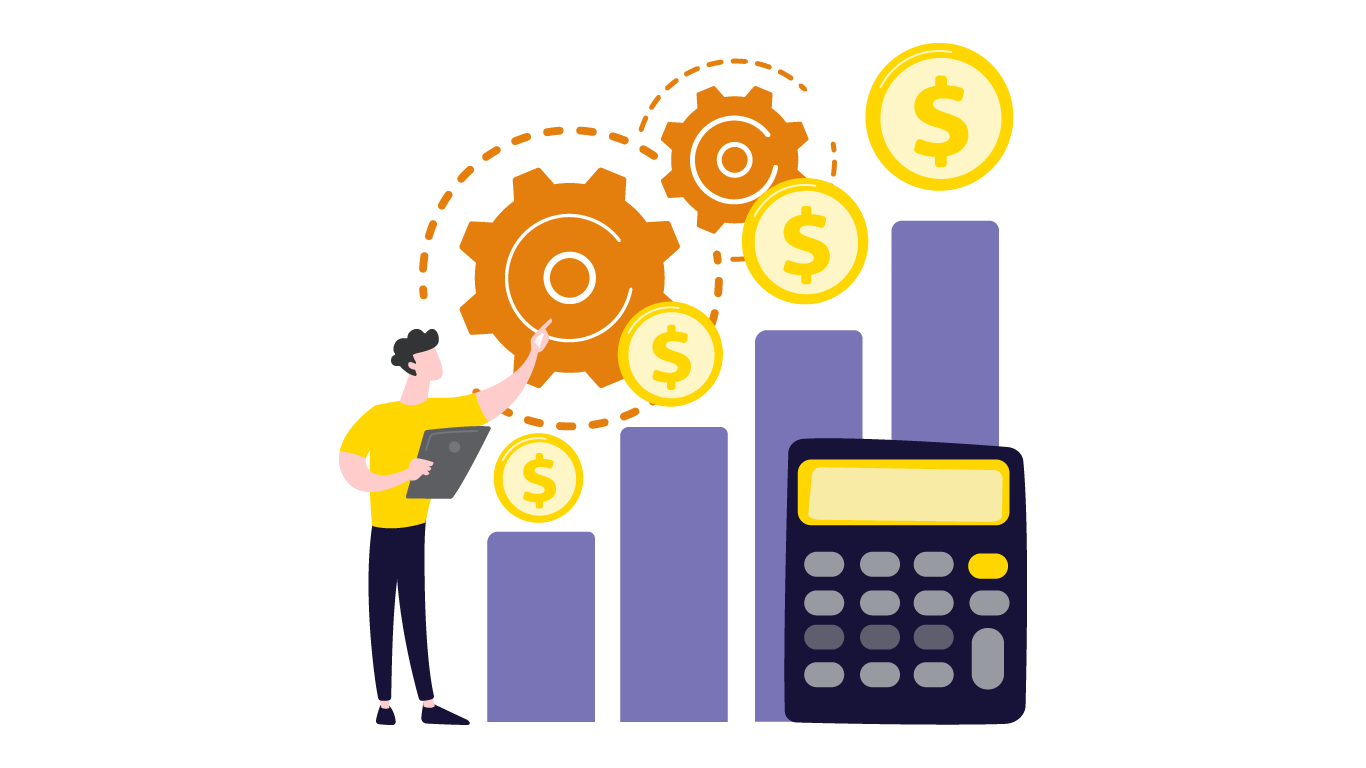
Operating expenses what they are, how they impact a company's profitability, and how to manage them with technology to improve control and efficiency.
Every company, regardless of its size, sector, or business model, needs to cover a series of expenses in order to function, and as a good entrepreneur, you should know that these are constant and seemingly invisible outlays in everyday life. However, each one is decisive for profitability, competitiveness, and growth.
We are talking about operating expenses. Today at Xamai, we want to give you a guide on them and how you can manage them to optimize the financial health of your business; it is vitally important to understand what operating expenses are, how they are classified, and how they influence financial results.
What are operating expenses in a company?
These are expenses necessary for a company to carry out its daily activities and include costs related to administration, production, service provision, sale of products, and the general operation of the business, considering the amount of resources, materials, or inventory required to maintain the operation.
Operating expenses are repeated constantly and are directly linked to the day-to-day operation. Without them, the company simply could not work, produce, sell, or serve its customers.
These expenses include concepts such as salaries and wages, office rent, utilities such as electricity, water, and gas, purchase of raw materials, maintenance of machinery, equipment, and tools, cleaning services, marketing expenses, distribution costs, insurance, infrastructure, and work tools, among many others.
Difference between operating expenses and non-operating expenses
It is important to distinguish operating expenses from non-operating expenses, because not all of a company's disbursements relate to its main activity. Companies must identify and differentiate operating expenses from non-operating expenses to have a clear view of their efficiency.
Operating expenses are directly linked to the production process, the provision of services, or the marketing of goods.
Non-operating expenses correspond to external or extraordinary situations, such as payment of interest, debts, taxes, fines, losses from accidents, amortization, inventory write-offs, or legal agreements, or costs derived from a restructuring.
In the income statement, operating and non-operating expenses are presented in different lines, making financial analysis much easier to identify the impact of each type of expense on the company's economic situation.
Why are operating expenses so important for the business's operation?
Because they not only sustain the daily operation, but also directly influence financial results and the ability to compete within the market. Proper cash flow management is fundamental to maintaining the financial stability of the company, so a high operating expense can signal inefficiency in the company's management, and as a result, poor management of these expenses can lead to negative consequences for the financial and operational situation of the organization.
Relationship between expenses, income, and profits
A company's profits depend on the difference between the income obtained from sales and the expenses necessary to generate that income, so the following should be noted: operating expenses affect profitability by directly subtracting from income to calculate operating profit. When operating expenses grow uncontrollably, profitability is affected, even if sales increase.
How do operating expenses impact competitiveness and growth?
A company that knows its operating expenses can set more competitive prices, plan investments with a view to market changes with less probability of financial imbalances that put the operation at risk.
Types of operating expenses most common in an organization
Although every company is different, there are categories of operating expenses that are repeated in most organizations and which we will see below:
Administrative and management expenses
These are related to the general administration of the company and include:
-
Administrative staff salaries
-
Offices
-
Rent
-
Utilities such as electricity or internet
-
Insurance
-
Accounting
-
Digital platforms
-
Website and expenses associated with managing the business.
These expenses are not directly linked to production, but are essential for the organization to function in an orderly manner.
Production and operating expenses
Here are grouped the costs necessary to manufacture products or provide services. In industrial companies, we can list:
-
Raw material
-
Direct labor
-
Machinery
-
Maintenance
-
Infrastructure and inventory.
It is essential to calculate the appropriate amount of inventory to avoid overcosts or shortages, since a lack of stock can negatively affect the operation and financial management of the company.
In service companies, these expenses may be:
-
Work tools
-
Technological systems
-
Operational support
-
Resources needed to execute the service.
Furthermore, it is important to consider that variable expenses are those that increase or decrease according to the level of production.
Sales, marketing, and commercialization expenses.
These include all expenses intended to generate income such as advertising, marketing, sales commissions, distribution, promotional campaigns, and actions focused on attracting and retaining customers.
Although they are often seen as a high expense, they are a strategic investment thanks to the results they offer in the future.
Personnel and human resources expenses.
Expenses related to employees represent one of the most important items. They include salaries, wages, benefits, hiring, training, insurance, and development programs.
Good personnel management directly impacts productivity, work quality, and the overall performance of the company.
Examples of operating expenses in different types of companies.
Operating expenses vary depending on the sector, but are always present, so to better understand what these expenses are like in various companies, we will provide some examples.
Service companies.
Here, operating expenses include personnel expenses, technological tools, digital platforms, operational support, business trips, and training. These expenses must be recorded at the place where they are generated and have receipts or supporting documentation for their proper justification and possible reimbursement.
Industrial or production companies.
In these companies, an example of operating expenses would be those related to raw materials, machinery, inventory, maintenance, suppliers, distribution, and logistics costs. Always identifying the place where these expenses originate and keeping the corresponding receipts.
How are operating expenses calculated and controlled?
Calculating operating expenses involves identifying all fixed and variable costs associated with the business activity within a period and uses the formula:
Operating Expenses = Fixed Expenses + Variable Expenses.
The result of this calculation will tell you how much it really costs to operate and, based on that result, you can make the corresponding decisions.
Fixed costs and variable costs within the operation.
Fixed costs, such as rent or administrative salaries, remain stable regardless of the production level. Variable costs, on the other hand, depend on the volume of activity, such as raw materials, commissions, or consumption of services. We always recommend knowing the difference between the two, as this helps to develop realistic budgets and anticipate scenarios of growth or decline in activity.
Strategies to reduce costs and optimize operating expenses
Reducing expenses does not mean cutting without criteria; you should always optimize processes, eliminate inefficiencies, and rely on tools that provide visibility and control.
Automation with management systems
Implementing enterprise management systems allows you to centralize information, automate processes, and have precise tracking of expenses. Some SAP solutions, implemented by Xamai, help you integrate areas such as finance, purchasing, inventory, and human resources into a single platform with the aim of reducing errors and improving efficiency in all your operations.
Better management of suppliers and purchases
Negotiating better conditions with suppliers, analyzing acquisition costs, and improving purchasing processes helps you reduce expenses without affecting the quality of goods and services. Technology facilitates price analysis, contract control, and supplier performance tracking.
Improve your personnel and internal processes
Investing in training, improving work organization, and standardizing processes increases productivity and reduces operating losses. A well-managed team generates better results with the same resources.
Operating expenses vs investments for decision-making
While operating expenses seek to maintain daily operations, investments are geared towards long-term growth and development, such as the purchase of machinery, the adoption of technology, or the improvement of infrastructure.
Knowing the difference between these two concepts allows you to better plan the use of money and evaluate the real impact of each financial decision.
The role of SAP in operating expense management
Managing operating expenses in this era requires visibility, control, and real-time analysis. SAP solutions allow companies to integrate their financial information, automate processes, and track key indicators from a single platform. Automation and expense control are key to achieving financial and operational success.
With the support of Xamai, organizations can transform the way they manage their expenses, improve profitability, and strengthen their competitiveness in an increasingly demanding environment.
Operating expenses are an essential part of the operation of any company. Knowing them, analyzing them, and managing them strategically allows you to improve profitability, optimize resources, and make more informed decisions.
Relying on technology and management systems not only facilitates financial control, but also opens the door to sustainable, orderly, and data-driven growth. Remember that good management of operating expenses makes the difference between surviving and growing.
Ready to talk to SAP specialists?
Tell us what your company needs and we'll help you find the best path.
Request information






 English
  Español de México
  Español