
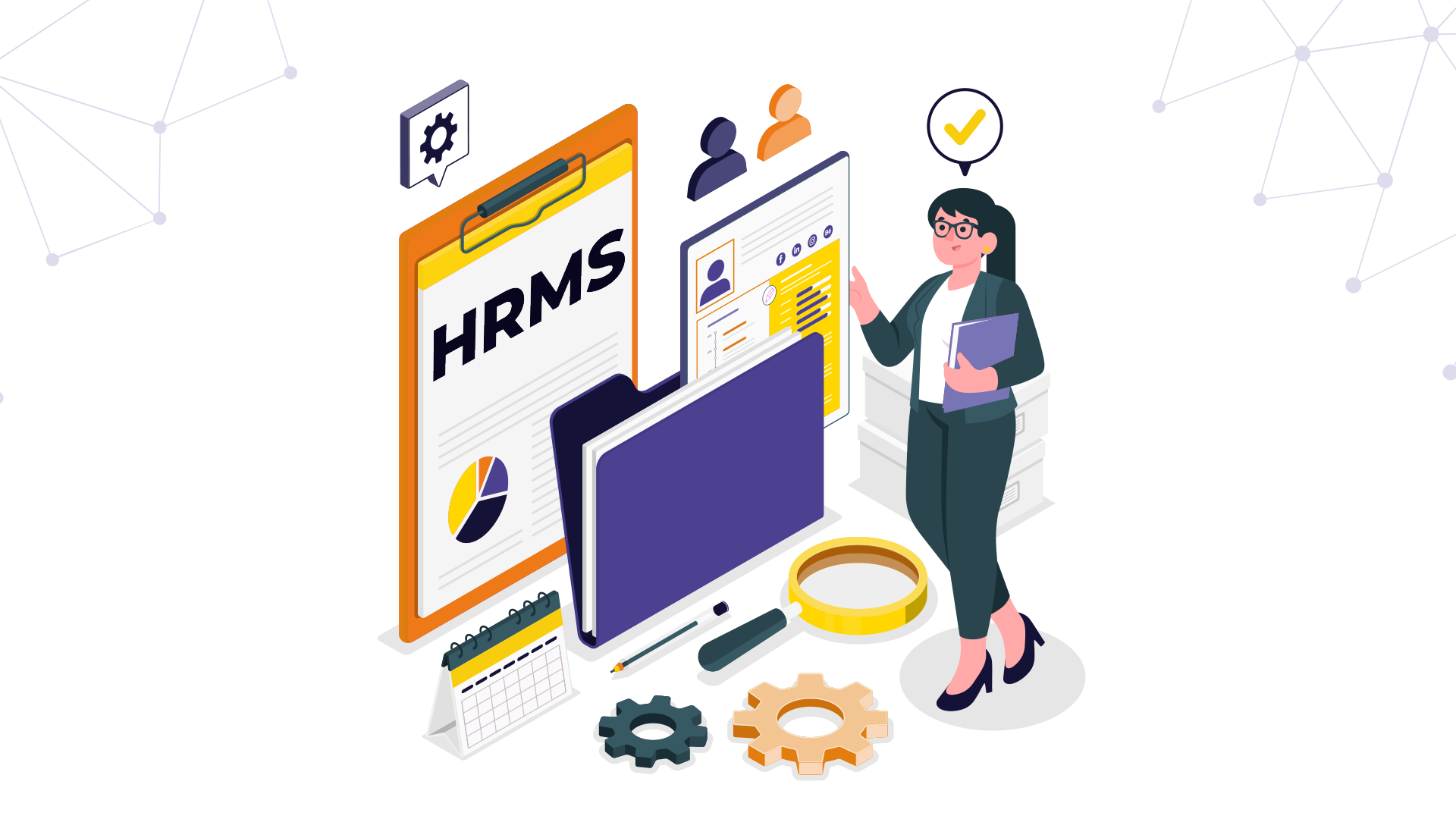
What does an HRMS do that an HRIS or an HCM doesn't? We explain its functions, process automation, and its importance in the era of remote and digital work.
An HRMS (Human Resources Management System) is a management system for Human Resources and its objective is simple: to order, automate, and improve all processes related to a company's employees.
Today, companies need an HRMS because manual methods are no longer sufficient to handle current challenges and all the HR processes that arise daily. What context are we in?
Business challenges
- There is greater competition and retention, a constant pressure to retain talent.
- Many companies have teams working remotely, so HR management is different.
- Regulations are becoming increasingly strict, so human resources information, as well as employee data, must be in perfect order
Employee Experience (Digitalization)
Remote work requires platforms that eliminate paperwork and in-person approvals. People expect a fast and digital employee experience:
- They want to see their data, pay stubs, vacations, and evaluations instantly, so HR professionals need to address that part.
- They need to access everything from their phone or computer.
Data-driven decision making
Organizations are moving away from 'intuition' to adopt more agile and data-driven models:
- Clear, up-to-date, and centralized information is required for key decisions (personnel, compensation, training).
- HRMS Solution: Converts manual and isolated processes into automated and measurable workflows.
An HRMS brings all HR information together on a single platform (from payroll and vacations to performance evaluations).
The biggest benefit it provides is that HR teams stop doing manual and repetitive tasks and can focus on being more strategic thanks to having clear and accessible data.
HRMS, HCM, and HRIS: what are the real differences?
Although they are often used as if they were the same, each one has a different focus within people management. Understanding these differences helps the reader have a clearer overview before delving into processes, benefits, or technology.
HRIS (Human Resources Information System)
It is the most basic and traditional system. Its main function is to store and organize employee information: personal data, contracts, positions, payroll, attendance, and administrative records. It is a tool focused on information and compliance.
HRMS (Human Resources Management System)
It represents a step forward. In addition to managing data and operational processes, it integrates functions to manage human resources processes more comprehensively. An HRMS unifies recruitment, training, evaluations, absences, self-service, and reporting. Its focus is to automate, connect processes, and improve efficiency.
HCM (Human Capital Management)
It's the most strategic approach. It doesn't just seek to manage employees, but to drive their development, measure their performance, create career plans, identify key talent, and improve the employee experience. An HCM system integrates advanced analytics, learning modules, and professional growth tools. Its central purpose is to develop and empower talent within the organization.
In a nutshell:
- HRIS observes information.
- HRMS automates management.
- HCM drives talent growth.
Many modern systems combine these functions, but knowing these differences helps to understand how far each type of platform goes and how complete a solution is.
How an HRMS works in day-to-day operations
An HRMS for human resources combines software, databases, and applications that connect different human resources processes, such as hiring, training, evaluations, planning, and personnel administration.
Instead of having scattered files, spreadsheets, or isolated systems, everything is concentrated in a single system that facilitates tracking, storage, processing, and report generation.
Many of these systems operate in the cloud, which provides greater connectivity, flexibility, and access from anywhere. This benefits both human resources and workers, who find self-service functions to consult data, update information, or download documents without depending on the department.
A partner for managing people and talent
Current management is no longer limited to administering salaries or vacations. Today, human capital management and talent management require tools that help to better understand people, detect competencies, drive development, and improve the employee experience.
An HRMS includes HCM modules, training programs, performance activities, performance indicators, growth strategies, communication with the workforce, and even functions based on artificial intelligence and machine learning.
All of this makes management software an essential piece for organizations that want to respond more quickly to the needs of their people and the changes in the business.
What is an HRMS really for?
Human Resources management has evolved tremendously because it's not just about recording salaries, managing absences, or approving vacations. Human Capital Management (HCM) and Talent Management require tools that allow organizations to be truly competitive.
Understanding and developing people
A modern HRMS goes far beyond administrative tasks. Its central role is to help the company understand and empower its employees.
- Competency Detection: The system identifies each employee's key skills (or those they lack) and compares them to the company's future needs.
- Boost to Development and Training: Includes Learning and Development (L&D) modules that suggest courses, career paths, and personalized training programs, ensuring that talent is always up-to-date.
- Improvement of Employee Experience (EX): By automating processes, the system frees employees from bureaucracy, giving them self-service tools that improve their daily satisfaction.
Real and everyday use cases
To understand the value of an HRMS, nothing works better than seeing how it solves everyday situations within a company. These cases ground the concept and show that it's not just about digitizing processes, but about making them faster, clearer, and more reliable.
Seamless onboarding
When someone new arrives, the system automates everything: from data registration and document delivery to the assignment of initial courses. This way, the employee starts off right and HR avoids delays.
Vacation and absence requests without email chains
Employees can request days off with a click and managers approve from their panel. Everything is recorded in real time, without loose sheets or calendar errors.
Clearer performance evaluations
Instead of using scattered files or different formats, the HRMS unifies objectives, 360° evaluations, and continuous feedback. This allows tracking each person's goals and building more realistic improvement plans.
Early detection of turnover risks
By combining data such as performance, work environment, and engagement metrics, the system identifies signals that may indicate an employee is thinking of leaving. This allows for timely intervention.
Better organized growth paths
The HRMS connects competencies, courses, and internal opportunities, making it easier for employees to visualize how they can grow and what they need to advance in their career.
Integrated modules for complete management
The key to the HRMS is its ability to integrate a wide variety of functions into a single platform:
|
Management Area |
Functions Integrated into the HRMS |
Strategic Value |
|
Performance |
Objectives (KPIs/OKRs), 360° Reviews, Continuous Feedback |
Transforms evaluations into action and growth plans. |
|
Growth and Succession |
Career plans, identification of high potential, succession routes. |
Ensures there is always talent ready to cover key roles. |
|
Communication and Engagement |
Climate surveys, tools of engagement, internal communication. |
Measures team morale and allows responding proactively to their needs. |
|
Advanced Technology |
Functions based on Artificial Intelligence and Machine Learning. |
Predicts employee turnover, suggests coaching or identifies biases in hiring. |
The fundamental piece for agility
An HRMS provides agility to the organization by having accurate and real-time data on talent. The HR area can make strategic decisions quickly, whether restructuring teams, launching an urgent training program, or retaining a key employee.
It helps companies not only adapt to business changes but also respond effectively to the needs of their people.
The technology behind the modern HRMS
Today, providers of these systems have incorporated more advanced technologies.
For example:
- Machine learning algorithms to anticipate turnover or measure workplace climate.
- Automation modules to accelerate report generation.
- Optimization tools that analyze results and suggest improvements.
- Self-service functionalities that give employees more autonomy.
All of this makes the implementation of an HRMS not just a technological project, but a transformation in the way work is done and decisions are made within the HR area, which will also indirectly benefit customers.
When is it advisable to adopt it?
An HRMS is especially useful when a company starts to grow, when processes become more complex, or when data can no longer be managed manually without generating delays, errors, or loss of information.
Furthermore, when the goal is to improve performance, attract better talent, or strengthen internal strategies, this type of software becomes practically indispensable.
How an HRMS and SAP connect
An HRMS is, in short, a system for organizing everything related to personnel, their processes, their information, talent, and general human resources management. It serves to concentrate data, automate functions, and bring more order to the company.
SAP, on the other hand, is a much broader platform. It not only manages human resources; it also connects finances, operations, purchasing, logistics, and various other areas. Within SAP there is a specialized module called SAP HCM (or SAP SuccessFactors in its cloud version), which essentially functions as an HRMS but with complete integration into the rest of the business system.
The direct relationship
What connects them is that SAP HCM / SuccessFactors is, in itself, an HRMS, only more robust and fully integrated with the rest of the company's operations.
While a standalone HRMS manages employees, payroll, absences, evaluations, and talent, SAP does so within an ecosystem that also synchronizes financial, accounting, and operational data. This allows any personnel changes to be automatically reflected in budgets, cost centers, and internal processes.
Advantages of using SAP as an HRMS
- Employee information is connected to the entire system.
- Personnel movements, hires, terminations, or position changes are reflected in real time.
- From recruitment to training and talent development.
- With SuccessFactors, the company can have a modern HRMS without on-premise infrastructure.
Boost your Human Resources management with Xamai
At Xamai, we accompany you in implementing SAP HCM and SuccessFactors so that your company has a solid, connected HR management system, ready to grow. We help you digitize processes, integrate modules, train teams, and maximize your talent data.
If you want a consultation, a demo, or to understand which solution best suits your company, contact our team.
Ready to talk to SAP specialists?
Tell us what your company needs and we'll help you find the best path.
Request information



 English
  Español de México
  Español