

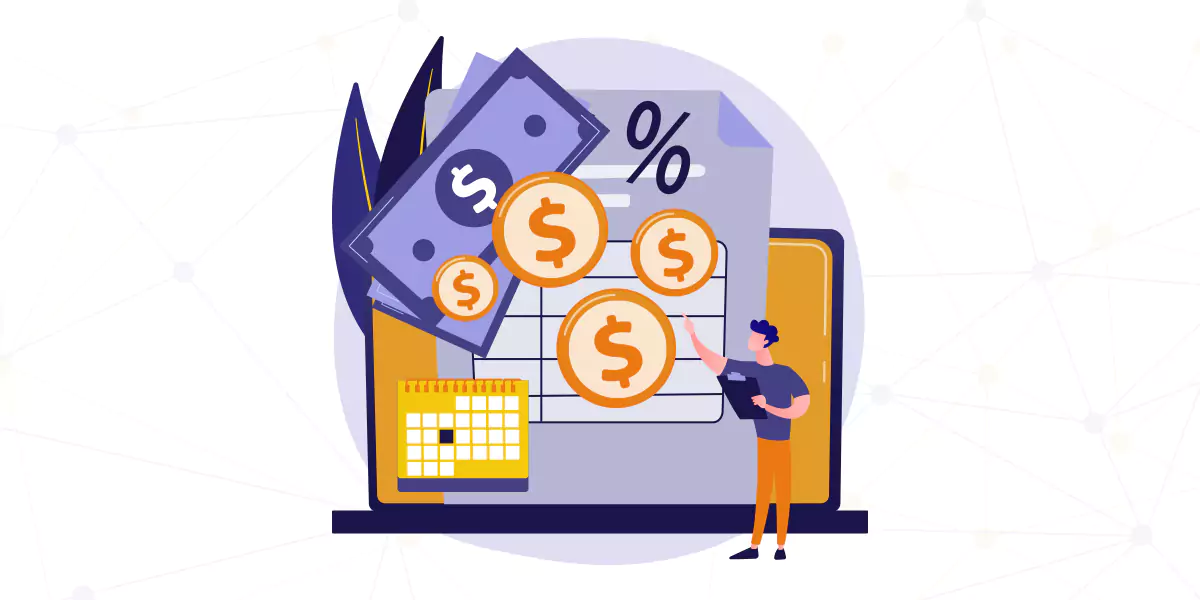
Payroll management refers to the process of administering and calculating employee salaries and benefits in an organization.
This process involves a series of tasks, including collecting information about hours worked, deductions, taxes, and other elements related to employee compensation.
A payroll, in general terms, is a detailed document that shows the specific income and deductions of an employee during a defined period of time, usually a month.
These documents are essential for both employers and employees, as they provide financial and legal transparency in relation to compensation and associated taxes.
What aspects does payroll management comprise?
Payroll management is a crucial part of human resources administration in an organization and encompasses various aspects.
Here are some of the key aspects that payroll management comprises:
Employee Records:
Creation and maintenance of employee records, including personal information, tax details, and bank data.
Salary and Benefits Calculation:
Determination of employee salaries and benefits, which may include base salary, bonuses, commissions, incentives, overtime, and other types of compensation.
Deductions and Withholdings:
Application of legal and voluntary deductions, such as income taxes, social security contributions, health insurance, and other withholdings.
Legal and Tax Regulations:
Compliance with local, regional, and national labor and tax regulations, ensuring that payrolls comply with current labor and tax laws.
Pay cycle:
Establishing and managing payment schedules, whether weekly, bi-weekly, or monthly, ensuring that employees receive their salaries in a timely manner.
Reports and records:
Generation of detailed reports on payroll, which may include summaries of labor costs, tax reports, and payment records.
Exception handling:
Handling exceptional situations, such as medical leaves, permits, absences, and other circumstances that may affect payments.
Direct deposits and checks:
Coordination of payment methods, whether through direct deposits into employees' bank accounts or issuing checks.
Accounting and reconciliation:
Integration of payroll information with the organization's accounting systems, ensuring proper reconciliation of financial records.
Auditoría y cumplimiento:
Conducting periodic audits to ensure the accuracy of calculations and compliance with labor and tax regulations.
Communication with employees:
Providing employees with clear and detailed information about their payments, deductions, and benefits through payroll statements and related documents.
Payroll management is essential for maintaining transparency, fairness, and compliance in labor relations, as well as ensuring that employees are compensated fairly and in accordance with applicable laws and regulations.
Payroll management tasks
The payroll management process is not only affected by the size of the company, but also by factors such as the form of remuneration and employment policies. In companies with frequent changes in their personnel, payroll management becomes more complex compared to those with a more stable workforce.
Payroll elements:
Some of the elements that are commonly included in payroll are the following:
Employee Information:
- Employee's full name.
- Social Security Number (SSN)
- Federal Taxpayer Registry (RFC)
- Bank account number for deposit
Employer Information:
- Company name and tax information
- Company's Federal Taxpayer Registry (RFC)
- Company's bank account number
Payment Period:
- Start and end date of the payment period
Salary and Perceptions:
- Base salary
- Bonuses
- Commissions
- Overtime hours
- Other income
Deductions:
- Income Tax (ISR)
- Contributions to the National Social Security Institute (IMSS)
- Contributions to the National Housing Workers' Fund Institute (INFONAVIT)
- Other deductions authorized by law
Compensation and Benefits:
- Christmas Bonus.
- Vacation.
- Vacation Bonus.
- Sunday Premium.
- Other additional benefits.
Total Net Income:
- Total amount of income after taxes and deductions.
Other Relevant Data:
- Number of days worked during the period.
- Absences and permissions.
- Bank account number for deposit
Tax Data:
- Details of tax withholdings and employer contributions.
Signature and Date:
- Employee signature as acceptance of the payroll.
- Issue date.
What is the payroll process in a company?
The payroll process in a company is a crucial task that involves the calculation and distribution of salaries and benefits to employees on a regular basis. First, attendance data and hours worked by each employee are collected during a specific period. This data is entered into a payroll system that calculates salaries taking into account factors such as overtime, tax deductions, and additional benefits.
Once salaries have been calculated, payment checks are generated or funds are electronically transferred to employees' bank accounts. In addition to base salaries, payroll also includes mandatory deductions such as income taxes and social security contributions.
It is essential to stay up to date with tax and labor regulations to ensure compliance with the law. Finally, the human resources department is responsible for distributing payment checks and managing any queries or problems related to payroll from employees.
Payroll management involves more than just issuing paychecks; it also includes timely tax reporting and compliance with labor regulations.
Payroll professionals must be accurate and maintain detailed records to avoid errors and ensure that employees receive the correct compensation at the appropriate time. The implementation of automated payroll systems has facilitated this process, improving efficiency and reducing the possibility of manual errors.
SAP products for payroll management
SAP offers several software solutions for payroll management within a company. One of the most prominent products in this area is SAP SuccessFactors Employee Central Payroll. However, at Xamai, we want to show you an overview of the key tools and components that SAP offers for managing the salaries of any company:
SAP SuccessFactors Employee Central Payroll:
Employee Central Payroll is a cloud-based solution that integrates human resources and payroll management. It provides a centralized approach to managing employee data and processing payroll efficiently.
Features:
- Global payroll processing: Offers support for payroll processing in multiple countries, taking into account the specific legal and tax complexities of each region.
- Integration with SAP HCM (Human Capital Management): Integrates closely with SAP HCM modules, enabling comprehensive employee data management.
- Process automation: Automates payroll processes, which reduces errors and improves efficiency in payment processing.
- Regulatory compliance: Helps comply with local and international labor and tax regulations.
SAP ERP HCM (Human Capital Management):
Although SAP SuccessFactors is the most recent and cloud-based solution, some companies still use SAP ERP HCM for human resources and payroll management.
Features:
- Employee data management: Allows for centralized management of personnel information, including personal data, employment history, etc.
- Payroll processing: Facilitates payroll processing and the generation of associated reports.
- Time and attendance management: Offers tools to manage employee attendance and hours worked.
SAP Payroll Processing:
SAP provides specific functionalities for payroll processing that can be integrated with various SAP products.
Features:
- Configurable payroll rules: Allows for the configuration of company- and country-specific payroll rules.
- Integration with other SAP modules: Integrates with modules such as SAP Time Management and SAP Personnel Administration for more comprehensive human resources management.
SAP Fiori:
SAP Fiori is a modern, role-based user interface that provides easy and mobile access to SAP applications, including those related to human resources and payroll management.
Features:
- Intuitive user experience: It offers an intuitive and role-based user interface to improve the user experience.
Mobile access: It allows access to applications from mobile devices, making payroll management easier anywhere. - These SAP tools and solutions are designed to provide efficient and effective payroll management, while ensuring regulatory compliance and accuracy in remuneration calculations.
The choice of the specific solution will depend on the company's needs and preferences, as well as the existing technological infrastructure, so we always recommend the advice of our consultancy for a better choice for the company and the worker.
Ready to talk to SAP specialists?
Tell us what your company needs and we'll help you find the best path.
Request information





 English
  Español de México
  Español