

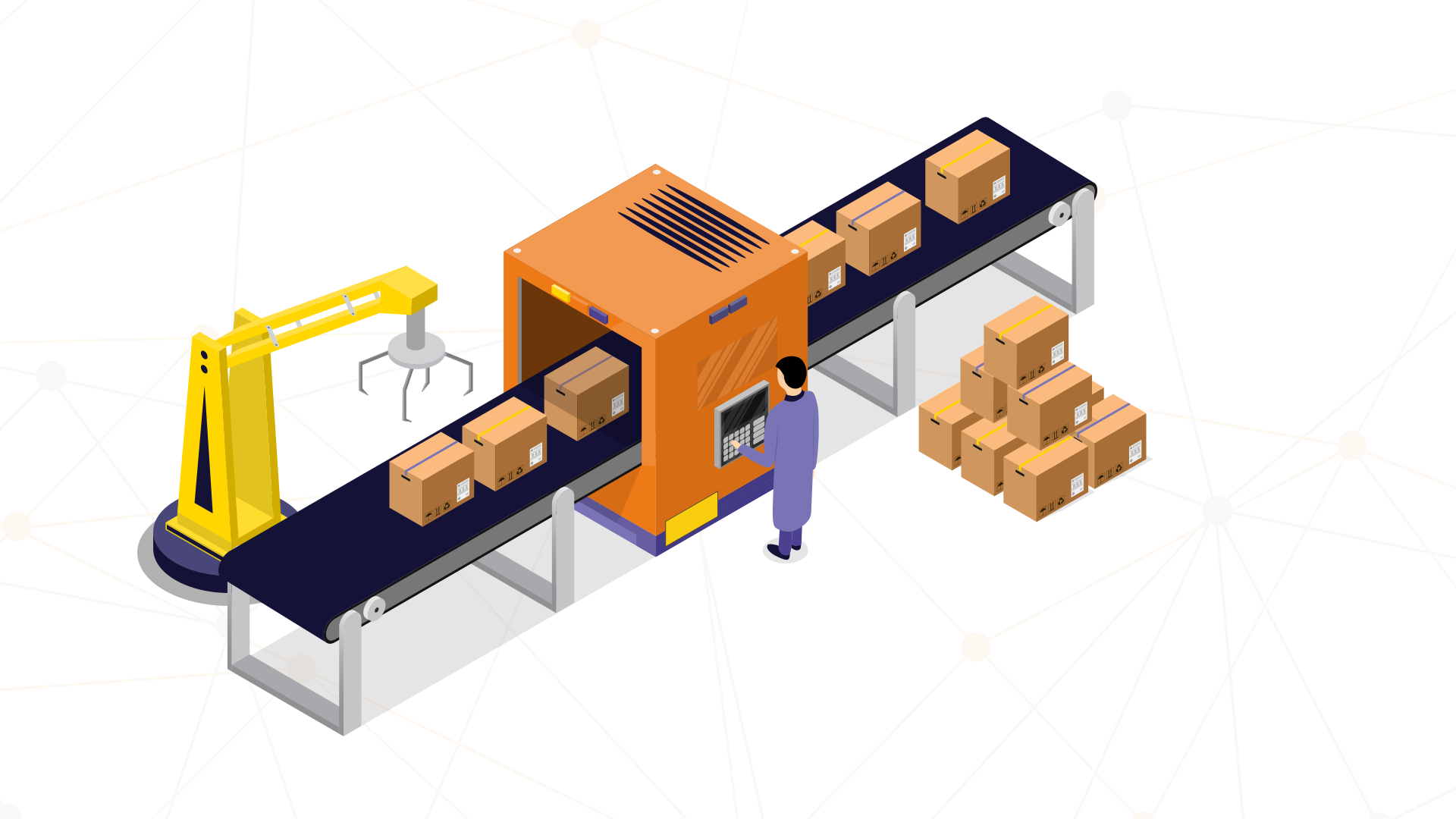
Optimize your production process with a practical production plan. Improve efficiency and reduce costs.
Manufacturing or service companies must have a production plan that establishes what is necessary to carry out their operational processes.
What is a business production plan?
Developing a production plan involves preparing a roadmap for the design and creation of a product or service. This allows organizations to be more efficient, as it is used to allocate the resources, time, and activities that are essential to achieve objectives.
It also aims to anticipate demand and optimize the use of raw materials, labor, and machinery to achieve optimal production levels.
The company's operational plan covers the technical and organizational aspects related to its performance and manufacturing. It must specify the industrial processes, material, human, and technical resources to be used, and the associated deadlines.
Stages of production plan development
The production manager is the one who organizes and respects all the elements of the production plan, which generally includes the following steps:
Demand forecasting
The company estimates the quantity of products that its current or future customers will request to satisfy their needs. These forecasts anticipate consumer behavior and decisions based on historical data and new trends.
Consideration of different production possibilities
This involves quantifying available resources and using them as efficiently as possible based on predicted demand.
Choice of efficiency
Selection of the least costly and most flexible solutions to implement for the company.
Monitoring and evaluation
As production progresses, the company must check whether the objectives are being met and take into account any deviations.
Adjustments
Once production is complete or the service has been provided, the production plan may require modifications to meet user expectations and improve it.
What is needed to establish a production plan?
Several elements are necessary for any business to carry out the essential steps of a production plan. These elements must be linked together for a plan to be successful:
- Strategy This involves choosing between a make-to-stock manufacturing model (producing to store) or a make-to-order manufacturing model (producing to fulfill orders). It is also important to define the working hours: 24-hour production, 7 days a week, or downtime on weekends, for example.
- Planning. Shows the specific dates on which the various activities will take place.
- Materials. It is important to ensure the availability of stocks and resources necessary for the manufacture of each product, which is done through the bill of materials (BOM). This is the first step before planning supply.
- Quality control. It consists of carrying out tests, inspections and surveillance aimed at guaranteeing compliance with quality standards.
- Continuous improvementIdentify potential inefficiencies and bottlenecks to eliminate them, increase productivity and reduce costs.
How to develop a production plan?
First, it is advisable to inquire about possible production limitations and production lines and rates for each item.
These correspond to the volumes that can be produced in an hour. Once this data has been collected, the development of the production plan can begin. This can be done using a spreadsheet, however larger companies often use a specific planning system.
The master production schedule specifies what should be produced, when and in what quantity. Therefore, it should break down each action to be performed into subtasks, anticipate the interrelationships between tasks and assign the resources necessary for their execution:
- Workflow diagram. It may be useful to prepare a table or diagram that shows the evolution of the phases of the project to detect interrelationships or anticipate possible difficulties.
- Task breakdown. Each task should be assigned to a responsible person and have a start date, an end date, a cost in hours (internal task) or weights, dollars or euros (external task) and, finally, links with other activities.
- Project execution schedule. Once the tasks have been assigned to the available resources and their duration has been defined, all of them must be entered into a calendar that also shows the subtasks.
Advantages of the production plan
The benefits of a production plan are numerous. In particular, it allows for better material procurement through relationships with suppliers, but also to respect the schedule and respond to demand in a timely manner.
The production plan also allows costs to be lowered to optimal values, without compromising the quality of goods and services, and minimizing waste of resources.
Connect your warehouse to production with SAP ERP
When a company uses SAP ERP to integrate its warehouse with the production area, the entire process becomes more agile, precise, and controlled. This connection allows you to know in real time what materials are available, which are needed, and when they should be ready to avoid bottlenecks.
SAP helps to automate demand planning, optimizes the use of machinery, and links each production order with its respective inputs and tasks. This not only improves operational efficiency, but also ensures that each unit produced meets the expected standards, reducing errors and unnecessary costs.
SAP and production management
SAP ERP offers a specialized module called SAP PP (Production Planning) that allows you to manage all processes related to manufacturing from beginning to end.
This module not only organizes what, how much, and when to produce, but does so by coordinating inventories, personnel, machinery, and times, all within the same platform.
From the creation of the production order to the monitoring of progress in the plant, SAP centralizes information and allows decisions to be made based on real-time data, which translates into more agile production, less waste, and better responsiveness to changes in demand or availability of inputs.
Automation and traceability
One of the greatest contributions of SAP in production is the automation of repetitive tasks and the precise control of the progress of each order.
Each batch or unit manufactured can be tracked from the raw material to the finished product. This traceability not only helps in regulatory compliance or audits, but also allows for the rapid detection and correction of any error or deviation.
For example, if a production order is delayed, SAP can identify whether it is due to a lack of materials, a problem with a machine, or an incorrect allocation of resources. This total visibility facilitates continuous improvement and informed decision-making.
Integration with other areas
Another very important point is the integration of the production module with other areas of the business: logistics, finance, purchasing, quality, and maintenance. For example, when generating a production order, SAP can automatically check if there is enough inventory available and, if not, initiate a purchase request. Everything remains connected, avoiding manual errors, rework, or lack of communication between departments.
This is especially valuable for companies with multiple plants or complex processes, where coordination between areas can make the difference between meeting or not meeting delivery times.
Why connect your warehouse to production with SAP ERP?
Connecting your warehouse to production through SAP ERP is not only a matter of efficiency, but of competitiveness. It allows you to anticipate needs, avoid stockouts, reduce waste, and align production with the real market demand. All of this translates into lower costs, higher quality, and greater customer satisfaction.
Having SAP ceases to be a luxury and becomes a necessity for any company that wants to grow sustainably using integrated production planning methods with the supply chain, supported by every key document in the process and strengthened with technological tools that offer total visibility in real time.
Do you want to take your company's production to the next level?
At Xamai, we are experts in implementing SAP ERP with a strategic and personalized approach for manufacturing companies. We help you connect your warehouse with the production area, optimizing your processes from planning to final delivery.
If you are ready to transform your operation with world-class technology, talk to our consultants and discover how SAP can drive the growth of your business regardless of the industry it belongs to.
Ready to talk to SAP specialists?
Tell us what your company needs and we'll help you find the best path.
Request information








 English
  Español de México
  Español