
In today's business landscape, where competition is fierce and customer expectations are constantly evolving, having effective tools to manage internal resources and provide an exceptional customer experience has become fundamental.
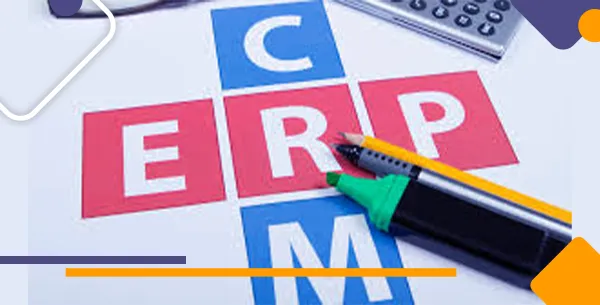
Two systems that play a crucial role in this regard are ERP (Enterprise Resource Planning) and CRM (Customer Relationship Management). Although both are designed to improve efficiency and productivity, it is important to understand their differences and how they complement each other to achieve business success.
Understanding the difference between an ERP and a CRM is essential for any organization that aspires to optimize its internal processes and offer exceptional customer service.

What is an ERP?
An ERP is a “back office” software that provides a centralized platform to manage and coordinate various functional areas of an organization, such as accounting, inventory management, production, purchasing, sales, and human resources.
An ERP allows for the automation of tasks, the optimization of workflows, the tracking of information in real time, and the generation of accurate reports, which helps to improve decision-making and operational efficiency in a company.
By consolidating the database into a single system, the ERP facilitates communication between different departments and improves visibility and control over business processes as a whole.
What is a CRM?
A CRM allows you to collect, organize, and analyze relevant data about customers, such as their preferences, purchase history, and behaviors, in order to offer personalized service and improve customer satisfaction.
In addition, it facilitates the management of sales, marketing, and customer service activities, allowing for effective tracking of interactions, report generation, and task automation, which contributes to greater operational efficiency and long-term business growth.
Now that we know a little about both, we will explain the differences between CRM and ERP.
7 main differences between ERP and CRM
An ERP and a CRM are two types of software systems used in enterprise resource planning, but they focus on different aspects and business functions. Here are seven differences between an ERP and a CRM:
1. Main Focus:
- ERP: An ERP focuses on the management of internal business resources, such as resource planning, inventory management, financial accounting, supply chain management, among others. It is designed to integrate and automate business processes across all functional areas.
- CRM: A CRM focuses on managing customer relationships. Its main goal is to help companies acquire, retain, and manage interactions with customers. It provides tools for sales tracking, marketing, customer service, and support activities.
2. Functional Areas Covered:
- ERP: An ERP covers a wide range of functional areas, such as finance, human resources, inventory, purchasing, manufacturing, distribution, etc. It provides a comprehensive view of business processes throughout the organization.
- CRM: A CRM primarily focuses on the areas of sales, marketing, and customer service. It provides tools for managing contacts, sales opportunities, marketing campaigns, customer tracking, service tickets, among others.
3. Time Scope:
- ERP: An ERP deals with long-term business processes, such as resource planning, supply chain management, and production. It focuses on the long-term efficiency and optimization of business resources.
- CRM: A CRM deals with customer-related interactions and activities in real time. It is designed to improve customer relationships and satisfaction, as well as to drive short-term sales and marketing.
4. Data Focus:
- ERP: An ERP relies on internal company data, such as financial transactions, inventory data, employee information, etc. It uses this data to improve internal efficiency and decision-making.
- CRM: A CRM relies on data related to customers, such as contact information, purchase history, preferences, previous interactions, etc. It uses this data to improve customer relationship management and offer personalized experiences.
5. Process Integration:
- ERP: An ERP focuses on integrating internal business processes, meaning that different departments and functions within the organization can share information and collaborate more effectively.
- CRM: A CRM focuses on managing the customer relationship, which involves integrating customer interactions across all stages of the customer lifecycle. It allows for a complete view of activities and communications with customers.
6. Business Objectives:
- ERP: The main objectives of an ERP are related to operational efficiency, cost reduction, process optimization, improved planning, and data-driven decision-making.
- CRM: The main objectives of a CRM are related to customer acquisition and retention, improved customer satisfaction and loyalty, increased sales, and marketing effectiveness.
7. Main Users:
- ERP: The main users of an ERP are employees and managers of different functional departments of the company, such as finance, human resources, logistics, production, etc.
- CRM: The main users of a CRM are the sales, marketing, and customer service teams, who interact directly with customers and use the system to manage their activities and communications.
It is important to note that in practice, many companies use both systems in a complementary manner to manage both internal resources and customer relationships efficiently.
What functions do ERP and CRM have in an SME?
An ERP and a CRM are two business management systems that play key roles in a small or medium-sized enterprise (SME).
The ERP is an integrated software that allows for the planning and management of business resources, covering areas such as finance, human resources, purchasing, inventory, and production.
It provides a complete and centralized view of the company's operations, enabling efficient resource management, process automation, and accurate report generation. The ERP helps to optimize productivity and decision-making by providing updated data and real-time analysis.
On the other hand, the CRM focuses on managing customer relationships. It allows the company to collect, store, and analyze information about customers, including demographic data, purchase history, and preferences.
With this information, customer service can be improved, offers and promotions can be personalized, and customer loyalty can be strengthened. The CRM also facilitates the automation of sales and marketing tasks, tracking business opportunities, and managing campaigns, which improves the efficiency and effectiveness of sales teams.
While the ERP focuses on the internal management of the company, the CRM focuses on managing the relationship with customers. Both systems are fundamental to optimizing business processes, improving efficiency, and providing a satisfactory experience both internally and externally in an SME and its business model.
ERP and CRM, which option to choose? Xamai helps you choose
XAMAI can play a fundamental role in choosing an ERP system like SAP and in evaluating the need to implement a CRM or both simultaneously.
At XAMAI, we have experts in the field of business management and technology who can thoroughly analyze the processes and specific needs of the company in question.
Through a thorough analysis, at XAMAI we can determine if an ERP system like SAP is the right solution to optimize business processes, centralize data management, and improve operational efficiency.
In addition, we can evaluate whether your company could also benefit from implementing a CRM system to improve customer relationship management, sales generation, and after-sales service.
With our experience and knowledge in implementing business solutions, XAMAI will offer you impartial recommendations and advice to help your business make the best decision that suits your needs and objectives.
Ready to talk to SAP specialists?
Tell us what your company needs and we'll help you find the best path.
Request information



 English
  Español de México
  Español