

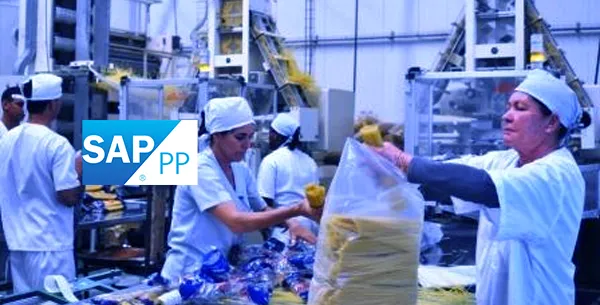
SAP PP is the production planning module in the SAP ERP system. Its main objective is to help companies plan and control their production process, from demand planning and production scheduling to quality management and cost control.
The importance of SAP PP lies in the fact that it allows companies to optimize their production processes and, therefore, improve efficiency and profitability.
By using SAP PP, companies can have better visibility of their supply chain and their resources, which allows them to make more informed decisions and adapt quickly to changes in market demand.
Additionally, SAP PP integrates seamlessly with other modules of SAP ERP, which allows companies to have a complete view of their business operations.
In this article, we will learn everything related to the SAP PP module and explain each of its features in detail.
What is SAP PP?
SAP PP (in English Production Planning) is a module of the SAP ERP system that focuses on the planning and control of production and consumption in companies. It allows you to plan, schedule, and control production processes to improve efficiency and profitability.
It provides production planning and control tools that allow companies to better manage their production processes, from planning to scheduling and control.
With SAP PP, companies can improve the efficiency, quality, and profitability of their production.
In general terms, SAP PP is divided into three main areas:
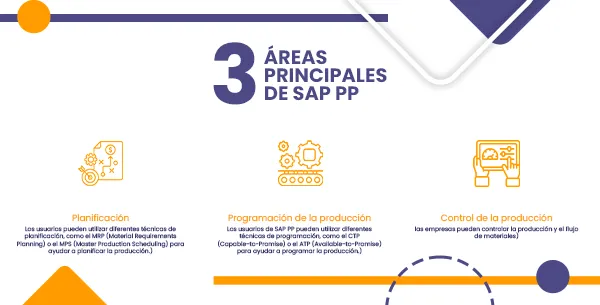
Production Planning
In this area, companies can define production planning based on demand, resource availability, and other factors.
SAP PP users can use different planning techniques, such as MRP (Material Requirements Planning) or MPS (Master Production Scheduling) to help plan production.
Production Scheduling
In this area, companies can schedule production based on resource capacity and material availability.
SAP PP users can use different scheduling techniques, such as CTP (Capable-to-Promise) or ATP (Available-to-Promise) to help schedule production.
Production Control
In this area, companies can control production and the flow of materials. SAP PP users can monitor production and quality processes, manage production lots and defective materials, and track production costs and times.
What is SAP PP Production Planning used for?
SAP PP Production Planning is used to optimize production processes, coordinate resource availability, and plan production based on market demand.
It allows for efficient production scheduling, coordinating resource availability, production orders, and material needs.
Among the main functionalities of SAP PP are the creation of production orders, production scheduling, material planning, capacity management, long- and short-term production planning, and optimization of production processes.
Ultimately, SAP PP Production Planning allows companies to improve the efficiency of their production processes, reduce costs, and improve the quality of the products they offer to the market.
Bases and functionality of SAP PP
SAP PP is based on the integration of data and processes to offer comprehensive production management. Information on production planning and control is shared with other SAP ERP modules, such as materials management, sales and distribution, finance and accounting, which allows for a global view of the business.
In addition, SAP PP offers a wide range of functionalities to manage the production process. These functionalities include:
Demand planning
SAP PP allows you to plan production based on predicted demand and other factors, such as the availability of resources and materials.
Master production planning
SAP PP allows you to create and manage long-term production plans to ensure the availability of materials and resources.
Materials Requirements Planning (MRP)
SAP PP allows you to plan the materials needed for production based on predicted demand and current inventory levels.
Capacity planning
SAP PP allows you to plan the capacity of production resources, such as machines and personnel, to ensure that predicted demand can be met.
Production Scheduling
SAP PP allows you to schedule production based on resource capacity and material availability.
Production Control
SAP PP allows you to control production and material flow, manage production lots and defective materials, and track production costs and times.
Quality management
SAP PP allows you to manage quality processes and product inspection during production.
Secondary components of the SAP PP module
The SAP PP (Production Planning) module is a comprehensive solution for production management and materials planning in a company.
The secondary components of the SAP PP module can vary depending on the software version and the specific planning and needs of the company, but some of the most common secondary components include:
SAP Production Planning for Process Industries (PP-PI)
This SAP PP secondary component is designed to help companies operating in process industries, such as chemical, food, and pharmaceutical. It offers specific tools and functionalities for the planning and execution of production stages in these industries.
SAP Variant Configuration (LO-VC)
This SAP PP secondary component allows companies to create and manage product variants and production processes.
This means that different versions of the same product or process can be created, which can be useful for meeting customer needs or adapting to different production situations.
SAP Capacity Planning (PP-CRP)
This SAP PP secondary component is designed to help companies plan the production capacity needed to meet their production goals.
It provides tools to evaluate current and future capacity, identify bottlenecks, and optimize the utilization of production resources.
SAP Production Planning for the Automotive Industry (PP-AUTO)
This SAP PP secondary component is specifically designed for companies in the automotive sector.
It provides functionalities for the planning and execution of production in this industry, including the management of production orders, resource planning, and quality management.
SAP Quality Management (QM)
This SAP PP secondary component focuses on the management of the quality of products produced in a company. It provides tools to perform quality inspections, keep records of them, and manage continuous improvement processes.
Content of the SAP PP module
The SAP PP (Production Planning) module is one of the functional modules of SAP ERP that focuses on the planning and control of production in a company. The following are some of the main components and functionalities of the SAP PP module:
Master data management
Master data management in SAP PP refers to the process of creating, maintaining, and updating the essential information that is used in the SAP production planning (PP) module for production planning and control.
Master data in SAP PP includes information such as materials, production routes, work centers, bill of materials, and routing sheets, among others.
Master data management in SAP PP is essential to ensure that the information used in production planning and control is accurate and up-to-date. This helps to ensure that production is carried out efficiently and that deadlines and customer requirements are met.
Furthermore, master data management in SAP PP can also help to improve the quality of product presentation, reduce production costs, and improve the efficiency of production processes in general.
Demand planning
With SAP PP, production stock needs can be planned based on predicted customer demand.
La planificación de la demanda en SAP PP se refiere a la capacidad de prever las necesidades futuras de los clientes y la demanda del mercado para una empresa en particular. SAP PP (Producción y Planificación) es un módulo de SAP ERP que se utiliza para la planificación y control de la producción en una empresa.
La planificación de la demanda en SAP PP implica el análisis de datos históricos de ventas y la evaluación de los factores que pueden afectar la demanda, como los cambios estacionales, las tendencias del mercado y la situación económica.
Utilizando esta información, SAP PP puede generar pronósticos precisos para la demanda futura y planificar la producción en consecuencia.
Además, SAP PP también ayuda a coordinar la cadena de suministro para garantizar que los materiales y los recursos necesarios estén disponibles en el momento adecuado para cumplir con la demanda planificada. Esto puede incluir la planificación de compras, la programación de la producción y la gestión del inventario.
Production Planning
La planificación de la producción con SAP PP (Producción y Planificación) es un módulo del software SAP (Sistemas, Aplicaciones y Productos en Procesamiento de Datos) que se utiliza para planificar y gestionar los procesos de producción en una empresa.
Con SAP PP, los usuarios pueden planificar la producción, definir los materiales necesarios, programar el tiempo de producción y monitorizar el proceso en tiempo real. También se pueden gestionar los pedidos de los clientes, las necesidades de materiales y los recursos de producción.
El módulo de SAP PP ofrece una amplia gama de funcionalidades, como la planificación de la demanda, la planificación de la capacidad, la planificación de la producción a largo y corto plazo, la programación de la producción, el control de la producción y la gestión de la calidad.
Production Scheduling
La programación de la producción con SAP PP se refiere a la utilización del módulo SAP PP (Production Planning) para planificar y programar los procesos de producción en una empresa.
Este módulo proporciona herramientas para la planificación de la demanda, la gestión de materiales, la planificación de la capacidad, la gestión de órdenes de producción y la programación de la producción.
Con SAP PP, es posible gestionar todo el proceso de producción de forma integrada y optimizar la utilización de los recursos de la empresa.
La programación de la producción con SAP PP permite a los usuarios planificar la producción a largo y corto plazo, tener una visión en tiempo real del estado de la producción, gestionar las restricciones de capacidad, asignar los recursos necesarios, controlar los costes y mejorar la eficiencia de la producción en general.
Todo esto se logra mediante la integración de la planificación de la producción con otros procesos empresariales, como la gestión de la cadena de suministro, la gestión de inventarios y la contabilidad.
Production Control
SAP PP permite el control de la producción en tiempo real, mediante el seguimiento de las órdenes de fabricación y el registro de los tiempos de producción.
El control de la producción con SAP PP se refiere al conjunto de funcionalidades y herramientas disponibles en este módulo que permiten a las empresas planificar, programar, controlar y supervisar la producción de bienes y servicios.
Algunas de las funcionalidades específicas que ofrece SAP PP incluyen la planificación de necesidades de materiales (MRP), la gestión de órdenes de producción, la gestión de procesos de fabricación, la programación de la producción, la gestión de la calidad y la gestión de la capacidad.
Con SAP PP, las empresas pueden tener una visión completa y en tiempo real de sus operaciones de producción, lo que les permite tomar decisiones informadas y oportunas sobre la planificación de la producción y la gestión de los recursos disponibles.
Quality management
SAP PP permite la gestión de la calidad de los productos durante todo el proceso de producción, desde la recepción de los pedido de las materias primas hasta la entrega del producto final.
En términos generales, la gestión de calidad en SAP PP implica la definición de requisitos de calidad para los productos, la creación de planes de inspección para evaluar si los productos cumplen con esos requisitos, y la realización de tareas de pruebas y controles para asegurar que se cumplen los estándares de calidad establecidos.
SAP PP también permite la gestión de la documentación necesaria para cumplir con los requisitos de calidad, como la creación de hojas de especificaciones, la gestión de registros de inspección, la gestión de certificados de calidad, entre otros.
En resumen, la gestión de calidad en SAP PP es un proceso integral que asegura que los productos cumplen con los estándares de calidad establecidos por la empresa, lo que mejora la respuesta y satisfacción del cliente y la reputación de la empresa.
Supply Chain Management
SAP PP integrates with other SAP ERP modules, such as MM (Materials Management) and SD (Sales and Distribution), to optimize the supply chain and improve production efficiency.
In this regard, SAP PP plays a key role in supply chain management, as it helps coordinate and optimize production, inventory management, and purchasing and sales processes.
By using SAP PP, companies can plan and schedule production according to market demand and available resources, allowing them to optimize delivery times and minimize production costs.
Furthermore, SAP PP also allows integration with other SAP modules, such as SAP MM (Materials Management) and SAP SD (Sales and Distribution), which facilitates end-to-end supply chain management.
Reports and Analytics
Reports and analyses in SAP PP (Planned Production) refer to the tools and functions used to collect, analyze, and present information about planned production processes within a company.
These reports and analyses can help managers and planners monitor and control production, optimize resource utilization plans, identify bottlenecks, analyze production performance, improve efficiency, and reduce costs.
Some examples of report and analysis types available in SAP PP include production order reports, production capacity reports, bill of materials status reports, production performance analysis, among others.
Reports and analyses in SAP PP can be customized according to the specific needs of each company, and are designed to provide a detailed and real-time view of planned production processes.
Most common SAP PP transactions
Some of the most common transactions in SAP PP are as follows:
Transaction MD61:
It is used to create a material requirements planning view. It allows users to visualize and plan the material needs required for the production of a certain amount of product.
In this transaction, production plans can be created based on different types of demand, such as sales orders, sales forecasts, and inventory requirements.
The production plans generated through this transaction are used to determine the appropriate quantity and timing for purchasing materials, scheduling production, and delivering finished products.
Transaction MD02:
It is used to generate material requirements planning (MRP) proposals for specific materials in a plant or center. In other words, it is used to plan and schedule the production of materials.
By entering the required parameters, such as the material, plant, planning horizon, and planning profile, MD02 automatically calculates material requirements and generates a list of production orders or material requisitions that must be created to meet those needs.
MD02 also allows for adjustments to planning proposals, such as changing delivery dates or production quantities, and can be executed in simulation mode to evaluate the impact of such adjustments before making them.
Transaction CO01:
It is used to create production orders. In CO01, you can specify the bill of materials, the quantity to be produced, the work center, the production schedule, and other important details related to production.
You can also define the standard production cost and cost control activities. Once the production order is created, you can release it for execution and track its status and progress through other SAP transactions, such as CO02 and CO03.
Transaction CO02:
The SAP PP CO02 transaction is used to modify production orders in SAP. It allows users to view, edit, and update the details of the production order, such as the bill of materials, production scheduling, and production cost.
Users can modify the information in the production order and record the changes to maintain a record of all updates made.
They can also check the status of the production order and perform actions such as closing the production order when production is complete.
Transaction CO03:
CO03 allows you to view production orders in SAP. The screen displays detailed information about the production order, such as the order status, bill of materials, routing, costs, and associated documents.
Changes can also be made to the production order, such as updating the produced quantities or modifying the expected completion date. In summary, the CO03 transaction is a useful tool for tracking and controlling production orders in the SAP system.
Transaction MD04:
It is used to display an overview of material requirements and availability in the supply chain. It allows users to view the list of materials needed for production, current and planned stock, pending orders, and material reservations.
MD04 shows the details of material requirements planning (MRP) and allows users to adjust the parameters to optimize supply chain management. Users can view information at different levels, such as the plant, center, or material level.
Transaction MRP:
It is a material planning tool that helps ensure that the items and materials needed for production are available at the right time and in the right quantity.
The MRP planning process begins with creating a bill of materials (BOM) and defining production demand in the sales and operations plan (S&OP).
Then, SAP PP MRP uses the BOM information, production demand, and current material availability to determine the quantity and timing of material orders needed to meet the planned production demand.
The MRP transaction in SAP PP also allows users to adjust planning parameters, such as the planning period, planning horizon, and planning policies, to optimize the material planning process and ensure material availability at the right time.
Transaction MF50:
MF50 is used to view and modify the production plan for a specific work order. In this transaction, you can see the bill of materials, routing, scheduling, and status of the work order.
You can also make changes to the production planning, such as adding or deleting operations or changing the start and end dates.
This transaction is useful for monitoring and controlling the progress of production and ensuring that deadlines and quality requirements are met.
Transaction MF60:
It is used to view and modify master production data for a manufacturing order. Through this transaction, it is possible to update data related to production planning, such as the production schedule, material requirements calculation formulas, bill of materials, and production routes.
Additionally, transaction MF60 allows the viewing of key information about the manufacturing order, such as the start and end date, the quantity to be produced, the bill of materials, and the production routes, enabling better production planning and tracking.
Transaction MF47:
It is used to print production orders. Upon accessing the transaction, the user can select different filtering options to find the production orders they want to print, such as by order number, material, start date, among others.
Once the production orders are selected, a list with detailed information about each order can be printed, such as the quantity to be produced, the production time, the bill of materials, among others.
This list can be useful for production planning and tracking, as well as for generating reports and cost analysis.
These transactions are just some of the many available in SAP PP and are used to perform a variety of tasks related to production planning and control.
Route sheet in SAP PP
The route sheet (routing in English) in SAP PP is a key component of the module used to plan and control the production process. The route sheet describes the detailed process followed to produce a specific item, including the necessary operations and the sequences in which they must be performed.
The route sheet is used to define the workflow and production operations that must be carried out to manufacture a particular product.
The detailed information included in the route sheet may include instructions on material selection, capacity classes, work centers, use of tools and equipment, production times, quality controls, and the resources required for each operation and their order.
In SAP PP, the route sheet is a critical component used in production planning and control of manufacturing processes. It allows users to define production processes in detail and plan the allocation of necessary resources, such as machinery, materials, and labor, to carry out production effectively and efficiently.
Conclusion
In conclusion, SAP PP is a production planning module of SAP that helps companies manage their production processes efficiently and effectively.
With SAP PP, companies can plan, schedule, and control their production processes, allowing them to optimize their resources, improve efficiency, and reduce costs.
Additionally, SAP PP also allows integration with other SAP modules, which facilitates end-to-end supply chain management. Finally, we could say that SAP PP is a valuable tool for companies seeking to improve the management of their production processes and increase their competitiveness in the market.
If you would like to learn more about this module or any of its components, contact us as we will answer your questions with a specialized consultant from Xamai.
For more general information about SAP, we recommend reviewing the article What is SAP? What is it used for?
Ready to talk to SAP specialists?
Tell us what your company needs and we'll help you find the best path.
Request information








 English
  Español de México
  Español