
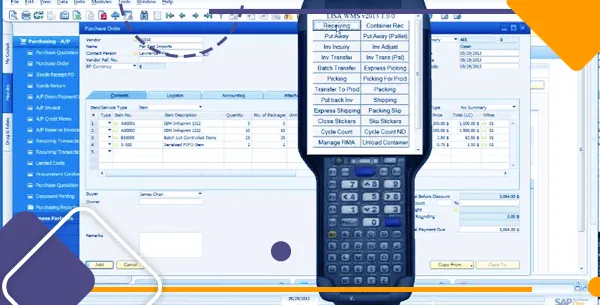
A solution for intelligent warehouse management
In an increasingly competitive and globalized business world, logistical efficiency has become a critical factor for business success. Proper warehouse management and optimization of storage and distribution processes are fundamental elements to ensure customer satisfaction and achieve a competitive advantage.
In this context, SAP WMS (Warehouse Management System) has established itself as a leading solution in the implementation of intelligent stock management.
What is a WMS (warehouse management system)?
A WMS or Warehouse Management System is software designed to manage and optimize operations in a warehouse or distribution center. Its main objective is to efficiently control and coordinate activities related to the flow of goods and inventory management in a warehouse.
Its main function is to provide tools that supervise and manage various activities, such as receiving goods, storage, product location, customer order preparation, packaging, labeling, shipping, and managing returns.
It can also help with human resource management, quality control, real-time inventory tracking, and report generation thanks to its extensive database.
What does a WMS do?
The main objective of a WMS is to efficiently control and optimize all activities related to the storage and movement of inventory within a facility.
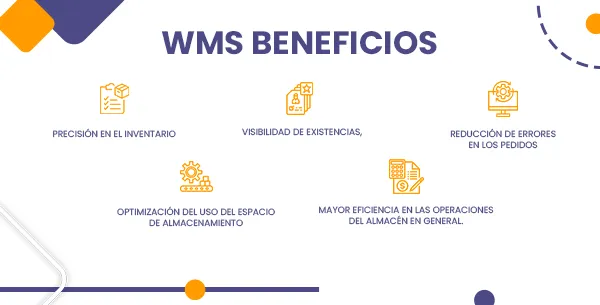
A WMS can provide a variety of benefits, such as increased inventory accuracy, better visibility of stock, reduced order errors, optimization of storage space utilization, and increased overall warehouse operations efficiency.
Meaning of WMS
The acronym “WMS” refers to “Warehouse Management System” in English, which translated to Spanish means “Sistema de Gestión de Almacenes”.
Challenges in the warehouse for SAP users
The SAP warehouse management system presents several challenges for its users. Firstly, the complexity of the software can require a steep learning curve, making it difficult to use efficiently and effectively.
Furthermore, integration with other SAP modules can be complicated and require specialized technical knowledge.
Another common challenge is the lack of flexibility and adaptability of the system, which can make customization difficult to suit the specific needs of each project or company.
Similarly, data management and report generation can be laborious and time-consuming, affecting productivity.
Finally, keeping the system updated and compatible with the latest versions of SAP, with the help of Xamai, is important so that your company does not suffer these types of problems in the warehouse management system.
SAP WM
One of its most popular modules is the warehouse management module or SAP WM, it is part of its suite of business solutions and is designed specifically for the efficient management and control of storage and distribution operations in a company.
The presence of SAP in the WM module is due to its focus on optimizing a company's warehouse and logistics activities.
SAP WM is a sub-module of SAP’s logistics module that is used to manage warehouse management operations within an organization.
It provides functions to control and monitor the processes of goods in and out, inventory management, product location, optimization of storage space, tracking of batches and expiration dates, and management of internal movements, among other aspects related to warehouse management.
SAP WMS
SAP WMS, on the other hand, refers to a broader warehouse management system that can include both the functionality of SAP WM and other additional features. Instead of being just a submodule of SAP, it can be a standalone solution or an extension of SAP WM that provides greater functionality and flexibility to manage more complex warehouse operations.
SAP WMS is a platform that offers a complete set of tools and functionalities designed specifically to optimize inventory management, control material flows, improve accuracy in the receipt and shipment of products, as well as optimize picking, packing, and transportation processes.
SAP EWM
SAP EWM (SAP Extended Warehouse Management) is the most advanced warehouse management solution offered by SAP. It is a standalone application that provides a wide range of functionalities for managing highly complex and distributed warehouses.
SAP EWM is designed for warehouses with sophisticated requirements, such as managing multiple locations, real-time material flow, advanced inventory management, route optimization, and integration with warehouse automation systems.
In addition, SAP EWM supports features such as value-added management, transportation management, and quality management. It is a scalable and flexible solution that allows it to adapt to the changing needs of modern warehouses.
Five benefits of a warehouse management system
Improvement of operational efficiency:
Automates and optimizes storage and distribution processes, enabling greater efficiency in operations. It helps reduce errors, improve accuracy in inventory management, accelerate order processing time, and minimize downtime.
Optimization of storage space:
Allows for better utilization of available storage space. The system can help determine the optimal location for each product based on its turnover, size, and special requirements. This helps maximize storage capacity and minimize wasted space.
Greater accuracy in inventory management:
Provides real-time tracking of inventory levels, which helps to avoid stockouts or overstocking. By using technologies such as barcode scanning or RFID, the system can automatically track and record product entries and exits, reducing errors and improving accuracy in inventory management.
Cost reduction:
By improving efficiency and accuracy in warehouse operations, a WMS can help reduce operating costs. By minimizing downtime, errors, and wasted space, savings can be achieved in labor, storage, and transportation.
Better customer service:
By having an efficient warehouse management system, companies can improve their ability to meet delivery deadlines, respond quickly to customer orders, and provide more reliable service. This can lead to greater customer satisfaction and improve the company's reputation.
What is SAP SCM-EWM?
SAP SCM-EWM (Supply Chain Management – Extended Warehouse Management) is a software solution developed by SAP AG, a leading company in the field of developing enterprise resource planning (ERP) systems and supply chain management.
SAP SCM-EWM specifically focuses on warehouse management and supply chain optimization in complex environments. It provides a set of tools and functions to help companies efficiently manage and control their warehouse operations, from receiving and storing goods to order preparation and shipping. Some of the key features of SAP SCM-EWM are:
Advanced inventory management:
Allows for detailed control of inventory volume in real time, which helps to minimize stock levels and reduce associated costs.
Supply chain planning and execution:
Facilitates the planning and execution of logistical activities throughout the supply chain, ensuring timely and efficient product delivery.
Optimized receiving and storage:
Provides tools to optimize the operations of receiving and storing materials and goods, such as automatic location assignment and storage capacity management.
Picking and packing management:
Enables the efficient planning and execution of picking and packing activities, optimizing order preparation processes and reducing errors.
Integration with other SAP modules:
Integrates with other SAP modules, such as Materials Management (MM) and Sales and Distribution (SD), ensuring data and process synchronization across the organization.
Intelligent storage technology
The main objective of this technology is to improve efficiency and accuracy in storage operations, inventory control, and product distribution within a warehouse.
By combining the functionality of SAP WMS with intelligent technologies, such as the Internet of Things (IoT), artificial intelligence (AI), and machine learning, significant improvements in productivity and decision-making can be achieved.
Some key features of intelligent storage technology in SAP WMS include:
IoT and sensors:
Sensors are used to capture real-time data about the location, status, and movement of products in the warehouse. This data is transmitted via IoT and integrated with the SAP WMS, enabling accurate inventory tracking and visibility.
Data analysis and visualization:
Intelligent storage technology uses AI and machine learning algorithms to analyze large volumes of data from the warehouse environment. This allows for the identification of patterns, trends, and anomalies, facilitating informed decision-making and process optimization.
Automation and robotics:
Intelligent storage systems can include the automation of repetitive tasks using robots and handling equipment. This streamlines receiving, storage, and order preparation operations, reducing errors and increasing efficiency.
Integration with other enterprise systems:
Intelligent storage technology integrates with other enterprise systems, such as SAP's Enterprise Resource Planning (ERP) system. This enables consistent supply chain management and all deliveries.
In conclusion
SAP WMS offers a wide range of functionalities, including inventory management, route planning, and real-time monitoring of operations. It has also become an essential tool for companies seeking to maximize efficiency and productivity in the management of their warehouses and the supply chain in general.
If you require more information about what SAP WMS is and how you can implement it, do not hesitate to contact our Xamai consultants, who will provide you with more information.
Ready to talk to SAP specialists?
Tell us what your company needs and we'll help you find the best path.
Request information







 English
  Español de México
  Español