

The main objective of an ERP is to improve efficiency and decision-making in the company, providing real-time information and automating processes that were previously performed manually. By centralizing and standardizing information, an ERP helps companies optimize their performance, reduce costs, and increase productivity.
In this article, we will learn about the characteristics of an ERP and how this tool is of vital importance for a business today.
Characteristics of an ERP system
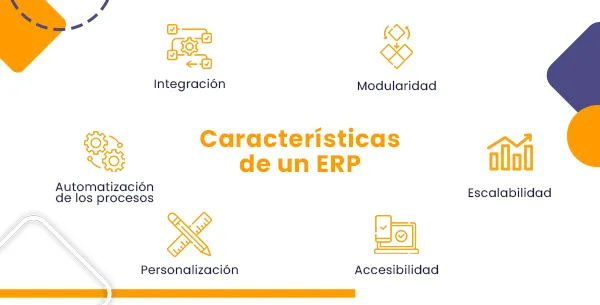
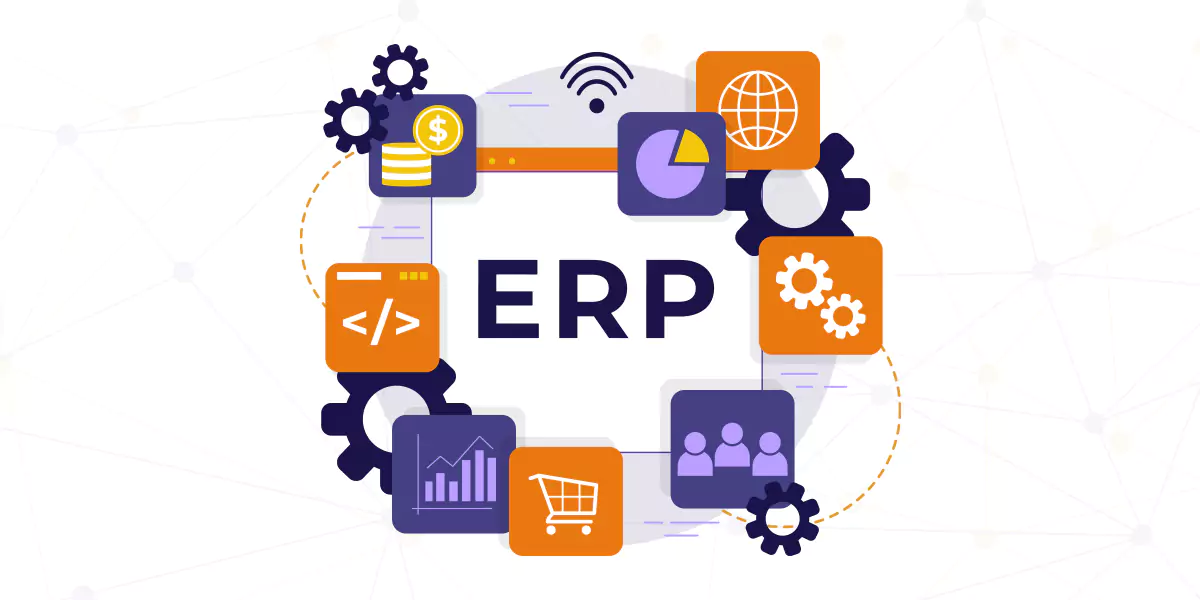
The typical characteristics of enterprise resource planning systems primarily focus on:
Integration
ERP systems are designed to integrate all business processes into a single centralized system, allowing different areas of the organization to share information and work more efficiently.
This is a key feature of an ERP system as it refers to the system's ability to connect and share data between different modules and functional areas of the company. In other words, integration refers to the system's ability to unify all business processes into a single platform.
In an integrated ERP system, data from all areas of the company, such as finance, purchasing, sales, inventory, human resources, and production, is stored in a centralized database and shared in real time. This means that when information is entered in one area of the company, it is automatically available in all other areas.
ERP integration is important because it allows the company to optimize its processes, increase efficiency, and improve decision-making. Having a unified view of the company, problems and improvement opportunities can be quickly identified, which in turn allows the company to make more informed and strategic decisions.
Modularity
ERP software is divided into modules that cover different areas of the company, allowing companies to choose the modules they need and customize the system according to their needs.
Modularity allows companies to customize the ERP system to meet their specific needs and add or remove modules as necessary. Additionally, modules can be updated or replaced without affecting the rest of the ERP system. This makes it easier for companies to adapt to changes in their operations and keep the ERP system updated.
Furthermore, modularity can also improve the scalability of the ERP system. Companies can add new modules as they grow and expand their operations, allowing them to handle more processes and data in the ERP system.
Automation of processes
An ERP automates many business processes, which reduces the need for manual data entry and decreases the possibility of errors.
In an ERP system, process automation is achieved through the integration of different modules or applications that manage the different areas of the business, such as finance, human resources, purchasing, inventory, sales, and marketing, among others. These modules are interconnected and share information in real time, allowing business processes to be more efficient and effective.
Process automation in an ERP system can include automatic generation of purchase orders, automatic invoicing of customers, automatic inventory control, automatic payroll management, among others. By automating these processes, companies can reduce errors, waiting times, and costs, allowing them to be more competitive in the market.
Scalability
An ERP can grow and evolve along with the company, making it suitable for growing or expanding companies.
Scalability is one of the most important functions of this management software; let's look at an example: if a company starts with a few branches and then expands nationally or internationally, a scalable ERP system can handle the increase in the number of branches, users, and data without affecting its performance.
Furthermore, scalability also refers to the system's ability to integrate with other applications and enterprise systems, allowing companies to add new functionalities and features as needed.
Customization
ERP systems can be customized to meet the needs of the company, allowing the company to adapt the system to its unique business processes.
This means that the enterprise management system can be configured to fit the company's unique business processes, as well as its particular reporting, analysis, and data management requirements. In other words, the ERP system can be customized to meet the company's specific needs, rather than having to adapt to a predefined set of processes and functionalities.
Customization in an ERP system can involve creating new functionalities, modifying existing ones, configuring the user interface, integrating with other systems, defining custom fields, and customizing reports and dashboards. All of this allows the company to adapt the ERP system to its own business reality and maximize its capabilities.
It is important to emphasize that customization should be balanced with the system's ability to remain updated and scalable. That is, the company should be able to customize the system without affecting its integrity or limiting its ability to adapt to future changes.
Accessibility
ERP systems are accessible online, allowing employees to access the system from anywhere and at any time.
This feature is important because it allows users to access the ERP system from anywhere and at any time, which increases the company's efficiency and productivity. In addition, remote accessibility can also improve collaboration and communication between team members working in different geographic locations.
To ensure the security and protection of information, the ERP system must have adequate security measures, such as user authentication, data encryption, and intrusion protection. This way, unauthorized access to information can be prevented and the integrity and confidentiality of data can be ensured.
Reports and Analytics
ERP systems have built-in reporting and analytics tools, allowing companies to make data-driven decisions in real time.
Reports and analytics allow users to collect and analyze real-time data from various areas of the business, such as finance, sales, purchasing, inventory, and human resources.
Reports are tools that allow users to extract relevant information from the ERP system's database. Reports can be predefined or customized, and can include information on financial performance, purchase and sales order status, inventory availability, project tracking, and employee performance, among others.
Analytics, on the other hand, involve exploring and studying data to identify patterns, trends, and opportunities for improvement. Data analysis can help companies make informed and strategic decisions to improve their performance and increase profitability.
In conclusion, ERPs are fundamental tools for a company, as they integrate and automate business processes, improve data management, can be customized and scalable, and offer high levels of security. If you would like to learn more about our SAP solutions, do not hesitate to contact us so that a Xamai consultant can guide you through any questions you may have.
Ready to talk to SAP specialists?
Tell us what your company needs and we'll help you find the best path.
Request information






 English
  Español de México
  Español