
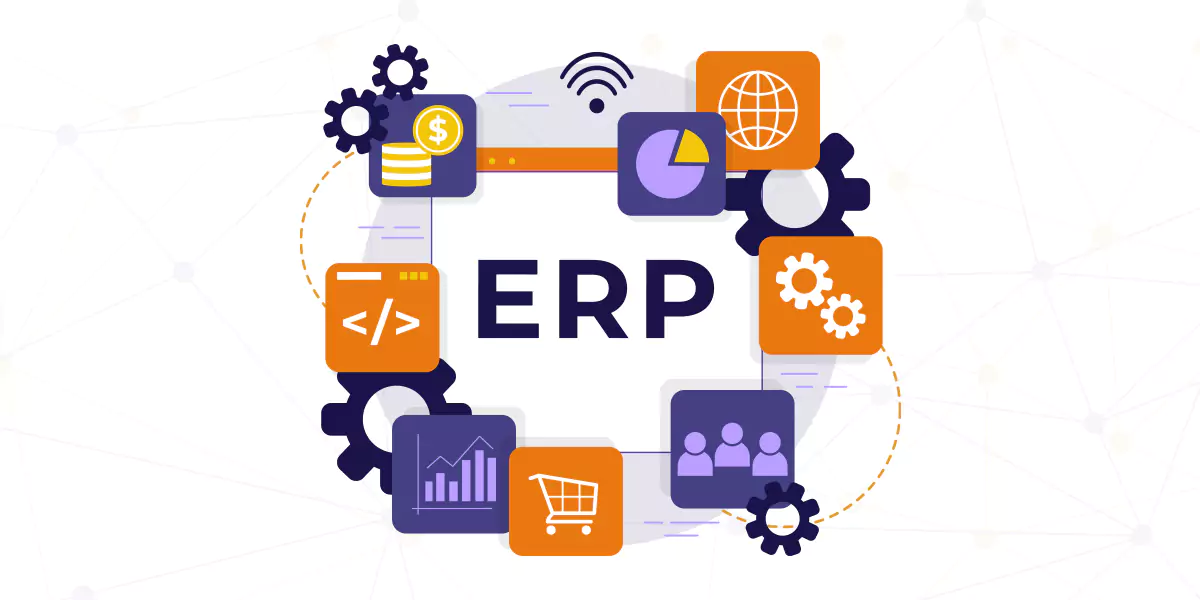
If you are planning to use ERP software in your company, there are typically additional maintenance and implementation costs in addition to the acquisition costs. Below, you will find the costs you should definitely consider in relation to ERP.
In this article, we want to address the topic as specifically as possible, but we must tell you that there is no specific answer to the question of how much does an ERP cost? The total cost depends on numerous factors, such as functionality, number of users, customization, training, and maintenance of the chosen ERP solution.
Let's analyze the main points to consider when setting the price of an ERP.
What is the investment that a company requiring an ERP system should make?
The amount to be invested in an ERP (Enterprise Resource Planning) system in 2023 will depend on several factors, such as the size and complexity of the company, the industry sector in which the company is located, the level of functionalities required in the ERP system, and the available budget.
Business environment assessment
Before determining the amount to invest, it is important to perform a thorough assessment of the company's ERP needs. This involves considering the business processes that need to be automated, the data that needs to be managed and analyzed, and the company's strategic objectives. You can get an idea in our article about the most used ERP systems in Mexico.
Once these needs are understood, the cost of different ERP solutions in the market should be evaluated and compared with the available budget.
In general, ERP systems can have significant costs, which include the cost of the license, the cost of implementation and customization of the software, the cost of training personnel, and the cost of ongoing maintenance and support.
Distribution of the cost of an ERP for companies
In general, the cost of an ERP is distributed in several areas, including:
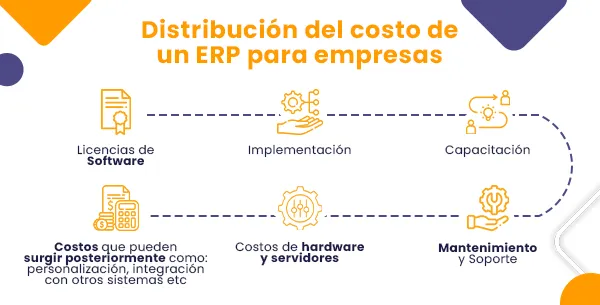
Software licenses:
This refers to the cost of acquiring the ERP software itself. The cost of software licenses when implementing SAP ERP can vary depending on several factors, such as the size of the company, the number of users, the modules that are desired to be implemented, and the duration of the license agreement. In general, the cost of SAP ERP licenses is based on the number of concurrent users who need access to the system at a given time.
In some cases, SAP may offer discounts on software licenses, especially if it is a large-scale implementation. It is also possible to offer subscription or perpetual license options, which can affect the total long-term cost.
Implementation:
The cost of implementation includes the installation, configuration, and customization of the software to adapt to the specific needs of the organization. This cost can be significant and can vary depending on the provider and the complexity of the system.
The size of the company and the complexity of its business processes can significantly affect the cost of configuring and customizing SAP ERP software. For example, a larger company with a more complex structure will require more time and resources to customize and configure the system.
The cost will also depend on the specific functionalities that the company needs. If a greater number of SAP modules are required, then the cost will be higher.
The cost of implementation will also depend on the specific functionalities that the business needs. If a greater number of SAP modules are required, then the cost will be higher.
It is always important to have the help of specialized consultants in SAP for the configuration and customization of the software. This will increase the total cost of the project but guarantees success when implementing an ERP.
Training:
It is important that ERP users receive adequate training to be able to use the system effectively. This may include training in the use of the software and in the business processes related to the ERP or CRM.
In general, training costs can be divided into two main categories: direct costs and indirect costs.
Direct costs are those that are directly related to the training itself, such as instructor fees, the cost of teaching materials, and travel and accommodation expenses if the training is held outside the company's facilities.
Indirect costs are those that are related to the time and productivity lost during the training process. This includes the time of employees to attend training, as well as the time employees need to adapt to the new system after training.
To determine the total cost of training, both direct and indirect costs must be considered. In addition, it is important to keep in mind that training is not a one-time expense, as additional training may be needed in the future as updates are made or new features are added to the system.
Maintenance and support:
Technical support and ongoing maintenance of the ERP system will likely be required. This may include software updates, bug fixes, and technical support in case of problems.
SAP offers different types of support, which vary in cost. Support types include basic support, standard support, and premium support. Premium support is usually more expensive due to the availability of additional services, such as customized support and access to experts.
The cost of support can also vary depending on the length of the contract. Generally, long-term support contracts are usually more economical than short-term contracts.
If customizations are made to the SAP ERP system, there may be additional support and maintenance costs. This is because customizations can affect the stability of the system and require additional attention.
Software updates may require additional time and resources to implement and test, which can increase the total cost.
Hardware and server costs:
In some cases, it may be necessary to acquire additional hardware and servers to host the ERP software.
The cost of hardware and servers in SAP ERP depends on several factors, such as the size and complexity of the system to be implemented, the number of users who will use it, the performance and capacity requirements, and the geographic location of the servers.
To determine the cost of hardware and servers in SAP ERP, the following steps can be followed:
1. Identify system requirementsThis includes determining the number of users, the database size, the storage requirements, and the performance requirements.
2. Select serversBased on the system requirements, the servers needed to support the system should be selected. This includes choosing the type of server (e.g., database server, application server, web server), the number of servers needed, and the geographic location of the servers.
3. Estimate hardware costs: Once the necessary servers have been selected, the cost of the required hardware should be estimated. This includes the cost of the servers, storage, memory, network, and other necessary components.
Costs not considered at the beginning of the project that may arise later
Implementing SAP can require a significant investment in time, resources, and money, and there are often hidden costs that can arise during the process. Some of the most common hidden costs during SAP implementation are the following:
Additional customization:
You may need to customize SAP to meet the specific needs of your company. While SAP is highly customizable, each change can take time and additional cost.
User training:
Implementing SAP often involves a significant amount of user training to ensure that staff can effectively use the new system. This can take additional time and resources.
Integration with other systems:
If your company uses other systems, there may be additional costs associated with integrating SAP with these systems.
Updates and Maintenance:
Implementing SAP may require regular updates and maintenance, which can increase costs in the long term.
Loss of productivity:
Implementing SAP can disrupt existing business processes, which can result in a loss of productivity and time.
Cultural change:
Implementing SAP may require a cultural change in the company, which can take time and additional cost to ensure that employees adopt the new system.
It is important to take these hidden costs into account when planning an SAP implementation and consider them in your overall budget to avoid financial surprises with clients.
SAP ERP Annual Maintenance Costs
SAP ERP Annual Maintenance Costs refer to the charges that SAP levies on its clients for the ongoing support and maintenance of the SAP ERP software. These costs are paid annually and are generally calculated as a percentage of the initial software license cost.
SAP ERP annual maintenance includes technical support for the software, security updates and enhancements, as well as the delivery of new software versions and the resolution of errors and issues.
Although these costs may vary depending on each client's specific contract, it is important to note that SAP ERP annual maintenance is a recurring and necessary cost to ensure that the program continues to function effectively and smoothly in the long term.
Furthermore, by keeping the SAP ERP software up to date, clients can take advantage of new features and improvements to improve the efficiency of tasks and competitiveness.
In conclusion
Investing in an ERP can be a smart strategic decision for a company, as it can provide a number of significant benefits, such as increased operational efficiency, better data integration, greater visibility and control of processes, increased ability to make informed decisions, and improved customer satisfaction.
However, it is also important to note that implementing an ERP can be a process that requires careful planning, effective change management, and adequate training for personnel. In addition, choosing the right ERP provider and correctly configuring the system are crucial for the success of the implementation.
In summary, investing in an ERP can be a valuable investment for a company seeking to improve its efficiency and competitiveness, but it is essential to approach the implementation process with care and strategy to maximize benefits and minimize risks.
On-premise ERP systems require a higher economic investment, but to know exactly what you need, it is important to contact one of our Xamai Consultants to obtain specific information about the costs of both SAP ERP for SMEs and for larger companies with SAP S/4 HANA, in an Understanding Session, we can provide you with detailed and updated information on prices and service packages.
Ready to talk to SAP specialists?
Tell us what your company needs and we'll help you find the best path.
Request information



 English
  Español de México
  Español