
Updated: September 2025
Implement the MRP system in SAP and transform your company: control inventories, reduce costs, and improve delivery to your customers.
In any company dedicated to manufacturing products, from an SME to a large international manufacturer, the underlying challenge is always the same: to satisfy customer demand profitably, guaranteeing the availability of raw materials without falling into excessive inventories that increase costs.
The MRP (Material Requirements Planning) system was created precisely to solve this dilemma. And today, integrated within ERP systems such as SAP Business One or SAP S/4HANA, it has become one of the most valuable tools for inventory management, production planning, and material procurement.
But what exactly is MRP, how does it work, and what are its advantages for companies? Let's break it down step by step.
What is the MRP system?
MRP is planning software designed to answer three fundamental questions in any manufacturing process:
- What materials are needed?
- How much of each material is needed?
- When are they needed to meet production and delivery?
The basis of the MRP system is the bill of materials (BOM) and the master production schedule (MPS). Based on these documents, the system calculates material requirements for each finished product, schedules raw material purchases, and generates production orders.
In simple terms, MRP converts demand forecasts and customer orders into a procurement and manufacturing plan, avoiding improvisation.
Brief history: from MRP I to MRP II
The concept of Material Requirements Planning (MRP I) emerged in the 1960s in the United States, when manufacturing companies were seeking more efficient methods to plan their production processes. Until then, planning was done manually with spreadsheets or physical boards, which generated errors and delays.
MRP I focused exclusively on materials, that is, answering three basic questions: what materials are needed, in what quantity, and at what time. This advancement was revolutionary because it allowed companies to align their inventories with anticipated demand, reducing excess stock and avoiding production shutdowns.
Expansion in the 1980s: MRP II
As the industry became more complex, planning materials was no longer sufficient. In the 1980s, MRP II (Manufacturing Resource Planning) was born, which took a step further: in addition to calculating material requirements, it began to integrate other manufacturing resources, such as machine capacity, labor, production times, and even the financial aspects.
MRP II allowed for scenario simulations, answering questions such as “do we have enough installed capacity?” or “what will be the total cost of this production plan?”, integrating information beyond the warehouse. It was here that planning systems began to become the “brain” of industrial operations.
From the 90s to the 2000s: birth of ERP
The next evolution was ERP (Enterprise Resource Planning), which took the logic of MRP II and expanded it to the entire company. It no longer only planned materials and production, but also finance, sales, purchasing, human resources, logistics, and more.
At this stage, software giants like SAP led the transition, integrating modules that communicated on a single platform. This allowed data to stop being isolated in departments and to be centralized, improving real-time decision-making.
The leap into the 21st century: digitalization and the cloud
With the arrival of the internet and new technologies, ERP and MRP systems began to migrate to the cloud. This made it easier for not only large corporations, but also SMEs, to access advanced planning tools without the need for huge investments in infrastructure.
MRP in SAP Business One, for example, opened the door for small and medium-sized companies to manage their inventory and production with the same level of control as a multinational, but with a more agile and accessible system.
Today: MRP in real time with SAP HANA
The most recent evolution is MRP Live on SAP HANA, which leverages in-memory computing to process millions of data points in seconds. This means that near-instantaneous simulations can now be run, “what if” scenarios can be planned, and plans can be adjusted in real time according to changes in the supply chain.
In a globalized world where suppliers are in different countries, delivery times are uncertain, and demand fluctuates rapidly, this responsiveness has become a strategic differentiator.
How MRP works in SAP
The operation of an MRP system in SAP follows a very clear logic:
1. Data Input:
- Bill of Materials (BOM) with all the components of a product.
- Master Production Schedule (MPS) with demand forecasts and customer orders.
- Information on current inventories, supplier lead times, and production processes.
2. Processing:
The MRP system compares the forecast demand with the available stock and calculates the net requirements. If it detects that inventory levels are insufficient, it generates procurement proposals.
3. Results:
- Purchase orders for external raw materials.
- Production orders for internally manufactured products.
- Transfer requests between warehouses or locations.
4. Monitoring:
Planners and production and purchasing departments use this data to track, adjust deadlines, and ensure material availability.
Practical example of materials planning
Imagine an electronics company receives an order for 500 smartphones. The MRP system reviews the bill of materials (BOM), where components such as screens, batteries, chips, and casings appear.
- The system detects that there are 400 screens in inventory and that the supplier takes 10 days to deliver more.
- Immediately, the MRP generates a purchase request for an additional 100 screens.
- It also issues a production order to assemble the units, automatically calculating the necessary times and labor resources.
This level of materials planning allows the company to meet the delivery without accumulating unnecessary inventory.
Advantages of the MRP system in companies
A well-implemented MRP system offers key benefits:
- Inventory optimization: maintains the balance between sufficient stock and costly excess.
- Cost reduction: less waste of raw materials and lower storage costs.
- Delivery compliance: ensures that customers receive their products on the promised date.
- Increased productivity: aligning manufacturing resources and production times avoids unnecessary overtime.
- Integration with other modules: in SAP, MRP connects with accounting, supplier management, and human resources, creating a complete enterprise resource planning system.
Challenges and disadvantages of MRP
Although the MRP system in SAP is a very powerful tool, its implementation is not without challenges. In many cases, companies face difficulties that, if not managed well, can cause the project to fail or not deliver the expected results.
Complexity of implementation
Configuring an MRP is not a simple process. It requires correctly defining parameters such as purchase lots, delivery times, inventory policies, and planning rules. If any of these values are misconfigured, the system may recommend excessive or insufficient orders.
Resource consumption
In companies with large operations, MRP calculations can require a lot of processing power. This forces it to be run on specific schedules or to use technologies like SAP HANA to avoid affecting the performance of other processes.
Data quality dependency
The system is only as reliable as the information it receives. If the bill of materials (BOM) is incomplete, lead times are unrealistic, or inventories are not updated, MRP will generate incorrect results.
MRP in SAP Business One: ideal for SMEs

The MRP module in SAP Business One is designed for small and medium-sized companies that need a practical and flexible solution. Its main functions include:
- Generate purchase and production recommendation reports.
- Automate production orders and purchase requests.
- Forecast sales and compare them with inventories.
- Issue inventory level and movement reports.
For an SME, this means gaining control over its operations, avoiding losses, and improving its profitability without the need for large planning teams.
Benefits of MRP: SMEs vs. large companies
The MRP system in SAP does not provide the same benefits to an SME as it does to a multinational corporation. Although the planning logic is the same, the impact varies depending on the size of the company.
In SMEs:
- Uncomplicated control: an MRP like the one in SAP Business One organizes inventories and production orders better than any Excel spreadsheet.
- Avoid losses: purchase only what is necessary, optimizing every peso invested in raw materials.
- Ordered growth: prepares you to scale without losing visibility over your operations.
- Real competitiveness: you can deliver in similar times to the large companies, but with fewer resources
In large companies:
- Large-scale coordination: manages thousands of suppliers and multiple production plants in an integrated manner.
- Processing in seconds: with SAP HANA, MRP calculation is done in real time to respond agilely to global demand.
- Optimized supply chain: connects purchasing, logistics, and production in different countries.
- Scalability and financial control: integrates materials planning with sales, costs, and finance.
In a nutshell: for SMEs, MRP means order and savings; for large corporations, it means global coordination and competitive advantage.
At Xamai, as a SAP Gold Partner, we help you choose the MRP solution that best suits your business reality.
SAP MRP Live on HANA: the next generation
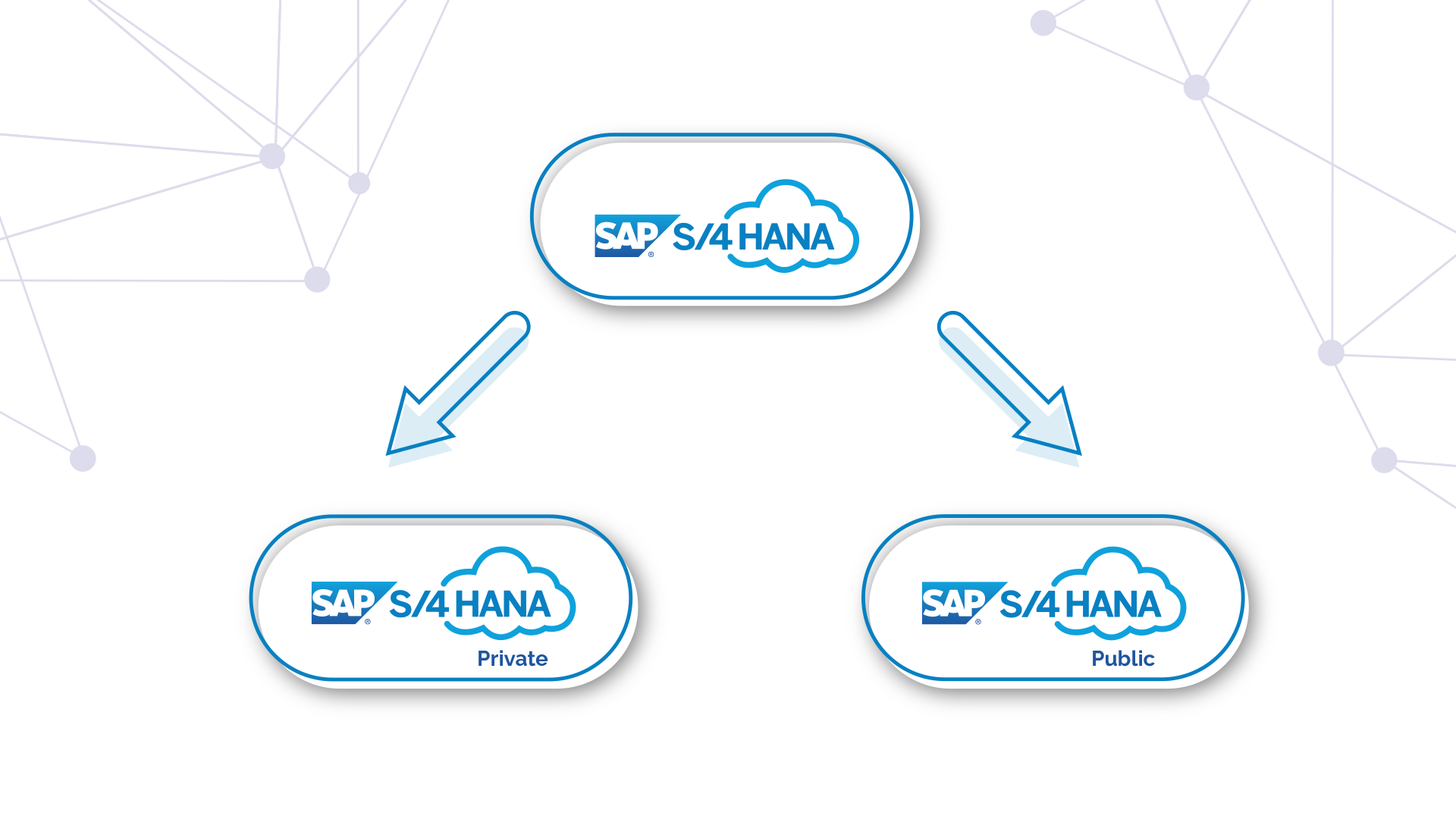
In more complex scenarios, SAP has launched MRP Live on HANA, which leverages in-memory technology to process huge volumes of data in seconds.
This opens the door to:
- Run MRP more frequently without performance issues.
- Simulate hypothetical scenarios (what happens if demand grows by 20%?).
- Plan more granularly between different manufacturing sites.
- Provide planners with real-time information for decision-making.
In an environment where supply chains are increasingly volatile, this functionality is a competitive advantage.
Differences between MRP and other planning systems
- MRP I: focuses only on materials and bill of materials.
- MRP II: expands the vision to all manufacturing resources (labor, machines, costs, etc.).
- ERP: integrates even more, adding finance, human resources, sales, purchasing, and more into a single system.
In this sense, the MRP system is the foundation of modern production planning, but it is enhanced when integrated into a complete ERP system like SAP.
The importance of inventory management with MRP
A key aspect of MRP is inventory management. Having too much stock immobilizes capital and generates storage costs. Having too little stock leads to delivery failures and dissatisfied customers.
MRP, by working with forecasts, orders, and real-time inventory levels, provides the right information for the planner to make informed decisions.
This is especially relevant in sectors with perishable products or rapid technological obsolescence, where an error in raw material procurement can translate into significant losses.
Implementation of an MRP system in a company
The implementation of MRP requires an orderly process:
- Define clear objectives: cost reduction, delivery improvement, inventory optimization.
- Prepare master data: bill of materials, lead times, initial inventory levels.
- Configure the system: planning parameters, batches, procurement lead times.
- Train workers and planners: success depends on departments using the system correctly.
- Monitor results: measure productivity, profitability, and adherence to deadlines.
Does your company need an MRP?
Many companies wonder: "Is it time to implement an MRP system yet?" Here's a quick checklist:
- Is your inventory full of materials you never use?
- Are your deliveries delayed due to a lack of key components?
- Do you plan production in Excel and it's no longer sufficient for the current volume?
- Do you overbuy because you don't have visibility of the actual stock?
- Do your production lines stop due to a lack of parts?
- Is your money tied up in warehouses instead of flowing in your business?
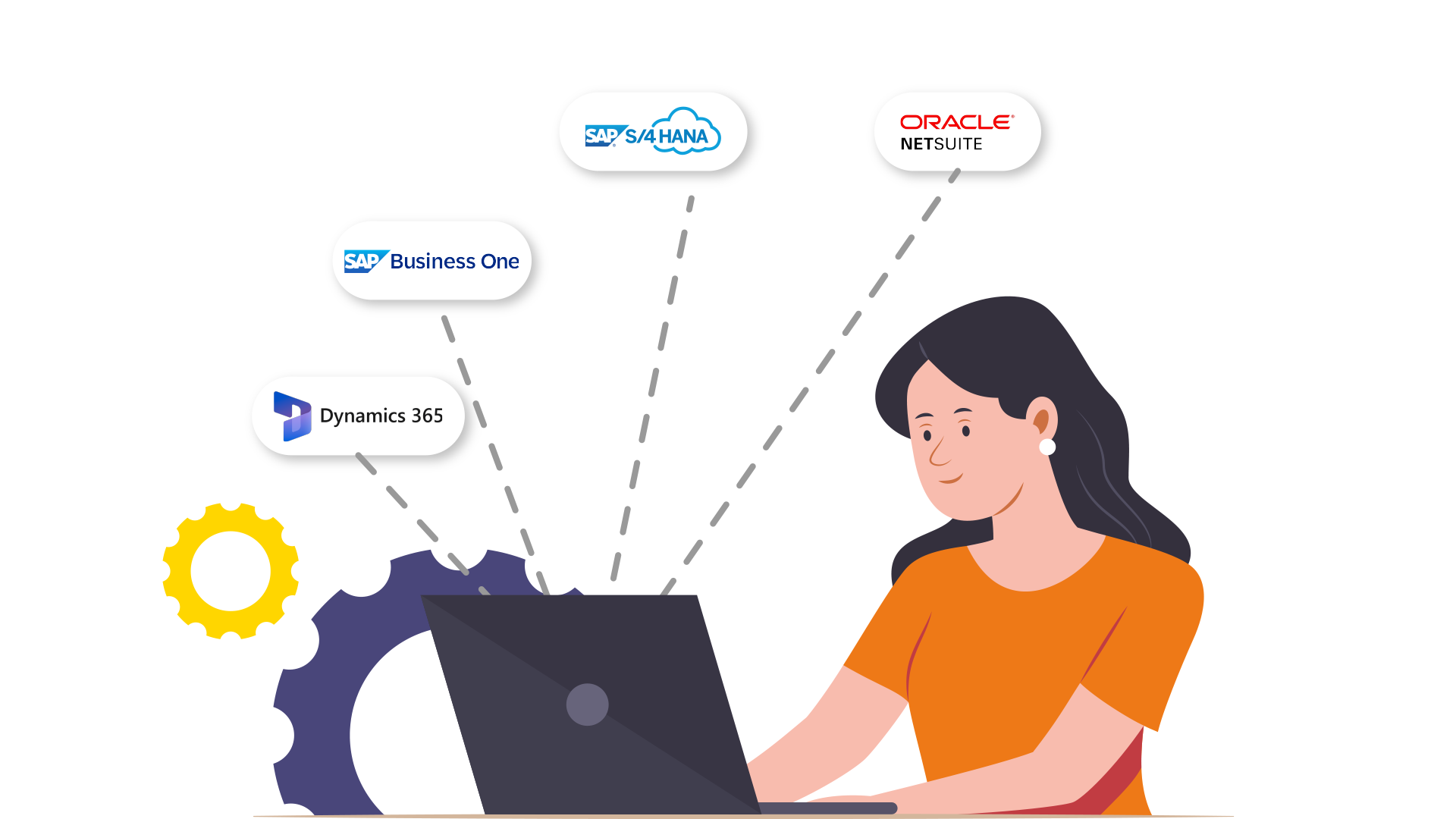
If you answered “yes” to three or more, your company is already ready for an MRP. At Xamai, we have the experience to implement SAP Business One or SAP S/4HANA with MRP module, and take your materials planning to the next level.
Conclusion
The MRP system in SAP is not just a technical tool, it is a business strategy. It allows manufacturing companies to plan efficiently, reduce costs, and increase customer satisfaction.
Whether in its SAP Business One version for SMEs or in its advanced MRP Live on HANA modality, materials requirements planning is essential to achieve more profitable operations, more agile supply chains, and total control of inventories and production.
If your company is looking to optimize its processes and take a leap in production planning, the best thing is to rely on experts who know the implementation of MRP systems in SAP. At Xamai, as an SAP Gold Partner, we have the experience to accompany you on this path towards more efficient and growth-oriented management.
Ready to talk to SAP specialists?
Tell us what your company needs and we'll help you find the best path.
Request information






 English
  Español de México
  Español