

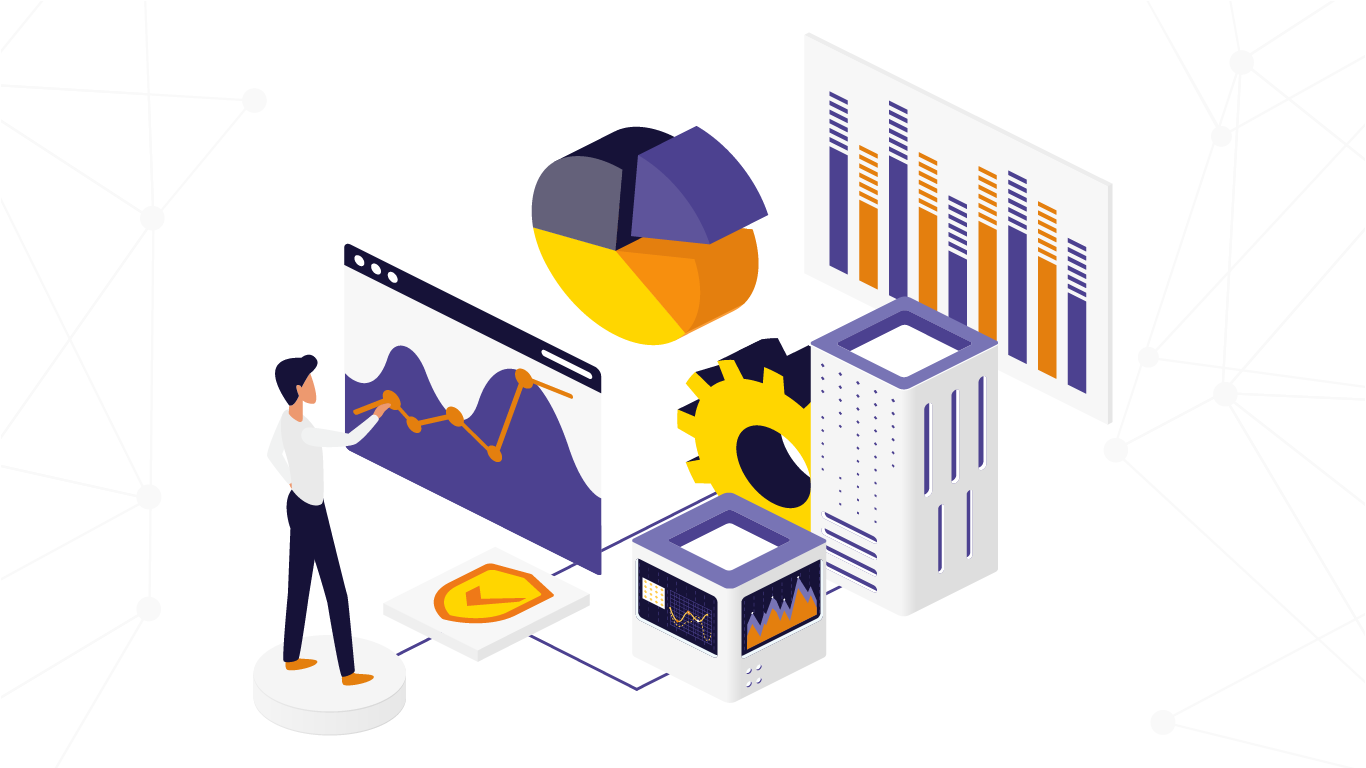
Want to optimize your results? Learn how Big Data transforms raw data into actionable knowledge.
Big Data is the topic that is most talked about when we refer to the digital transformation that is so current because companies, organizations, and industries generate large amounts of data from customers, devices, applications, social networks, sensors, and even the Internet of Things.
At this time it is important to know that it is no longer just about storing information, but understanding it, analyzing it, and converting it into decisions that are convenient for your business and based on data. And that's where Big Data comes in because it's not just about volume. Big Data refers to the ability to work with large datasets, of different types, and at high speed, to find patterns, generate insights, and optimize processes in real time.
A little history and evolution of Big Data
For years, companies worked with relational databases and limited datasets, mainly structured data such as sales, inventories, or accounting records; but over time, modernity and the growth of the internet shattered all known structures. Everything moved towards digital platforms and therefore there was a change of scenery.
There are elements that were essential in this change, such as the rise of social networks, cloud services, sensors and interconnected systems, all of which have caused an exponential growth in the volume of data.
This is how the need for new technologies, infrastructure and tools capable of processing large volumes of data that traditional systems could no longer handle arises.
What is Big Data and how does it work
Big Data is the set of technologies, processes and strategies that allow collecting, storing, processing and analyzing large volumes of information, both structured and unstructured. But you will wonder how it works practically? It does so in layers: data sources, collection, storage, processing, analysis and visualization. All this happens within a platform that was designed to scale, adapt to growth and offer availability always.
When Big Data performs an analysis, it goes from isolated data to actionable knowledge, and based on real evidence, it can help companies have a good decisive strategy not only based on intuition.
¿Tu empresa genera miles de datos diarios pero sigues decidiendo por intuición?
Deja de acumular información sin usar. Convierte el Big Data de tus operaciones en conocimiento estratégico en tiempo real integrándolo a tu ERP SAP con el respaldo de Xamai.
¡Conectar mis datos con Xamai!Characteristics and the “V”s of Big Data
The characteristics of Big Data are usually explained through different dimensions, known as the “V”s, which help to understand why Big Data requires specific solutions.
- Volume: refers to the large volumes of data generated constantly.
- Velocity: related to the processing of data in real time or almost immediate.
- Variety: meaning that it includes structured data, unstructured data, images, text, video and activity logs.
These are supplemented by other dimensions such as veracity, value and variability, all fundamental for the Big Data analysis to be reliable and useful for organizations.
Types and sources of data in Big Data
The data sources are as diverse as human and digital activities. In Big Data we find information coming from social networks, mobile devices, industrial sensors, enterprise systems, web applications, e-commerce platforms and cloud services.
This data can be structured, such as records in a database, or unstructured, such as posts, images, audio or consumer behavior. The combination of different sources allows a more complete analysis and a better understanding of customers, products and operations.
Operation and architecture of Big Data
The Big Data architecture is designed to handle large amounts of information in a distributed manner. Instead of a single server, multiple nodes are used that work together, which allows for greater speed, availability and scalability.
The process begins with data collection, continues with storage in systems prepared for large volumes and ends with processing and analysis. Visualization and business intelligence tools facilitate that people and professionals can interpret the results without needing to be technical specialists.
Technologies and tools for Big Data
The Big Data ecosystem includes multiple technologies focused on storage, processing, and analysis. Cloud platforms like Google Cloud offer flexible infrastructure to handle large datasets without the need for high initial investments.
There are also specialized tools for data analysis, visualization, monitoring, and administration, which allow transforming raw data into clear information for decision-making. These technologies make Big Data accessible not only to large corporations, but also to growing companies.
Relationship between Big Data, artificial intelligence, and machine learning
The true potential of Big Data is achieved when it is combined with artificial intelligence (AI) and machine learning. While Big Data handles the volume and management of data, AI and machine learning allow identifying patterns, making predictions, and automating decisions.
Thanks to this relationship, companies can anticipate behaviors, optimize production, improve diagnoses, personalize services, and offer more relevant experiences to consumers.
Applications and use cases of Big Data
The use of Big Data extends to almost all industries. In retail, it analyzes customer behavior to improve sales strategies. In manufacturing, it is used to optimize operations and predictive maintenance. In financial services, it helps detect fraud and manage risks.
In all cases, Big Data can transform information into clear competitive advantages, provided it is used with a well-defined strategy.
Data governance and management in Big Data
Data management and governance are critical aspects. Big Data requires clear rules regarding quality, security, access, and responsible use of information. Without proper administration, large volumes of data lose value and can generate risks.
Companies must define policies, roles, and processes that ensure data is reliable, protected, and used ethically and aligned with business objectives.
Challenges and problems of Big Data
Although its benefits are clear, Big Data also presents challenges. Technical complexity, lack of specialists, infrastructure costs, and integration with existing systems are often the main obstacles.
Furthermore, converting data into useful decisions requires more than technology: people, processes, and an organizational culture oriented towards data-driven decisions are needed.
Importance and benefits of Big Data for companies
Big Data allows companies to improve their productivity, optimize resources, better understand their customers, and react quickly to market changes. By analyzing large volumes of information, organizations can reduce uncertainty and make more informed decisions.
We can say that Big Data is a current tool for sustainable growth and innovation for your organization, since its value is not only in the technology, but in how it integrates with the systems that companies already use to operate and make decisions.
Having a solid platform and a specialized partner makes the difference between accumulating data and converting it into real results.
At Xamai, as an SAP partner, we help companies integrate their data with their ERP systems, analytics, and business processes, so that Big Data translates into data-driven decisions, greater operational efficiency, and sustainable growth.
¿Listo para transformar el Big Data en el motor de crecimiento de tu negocio este 2026?
La verdadera ventaja competitiva ocurre al conectar tus grandes volúmenes de información con tus procesos de negocio. Da el paso definitivo hacia las decisiones basadas en datos con SAP y Xamai.
Hablar con un experto en Analítica




 English
  Español de México
  Español