

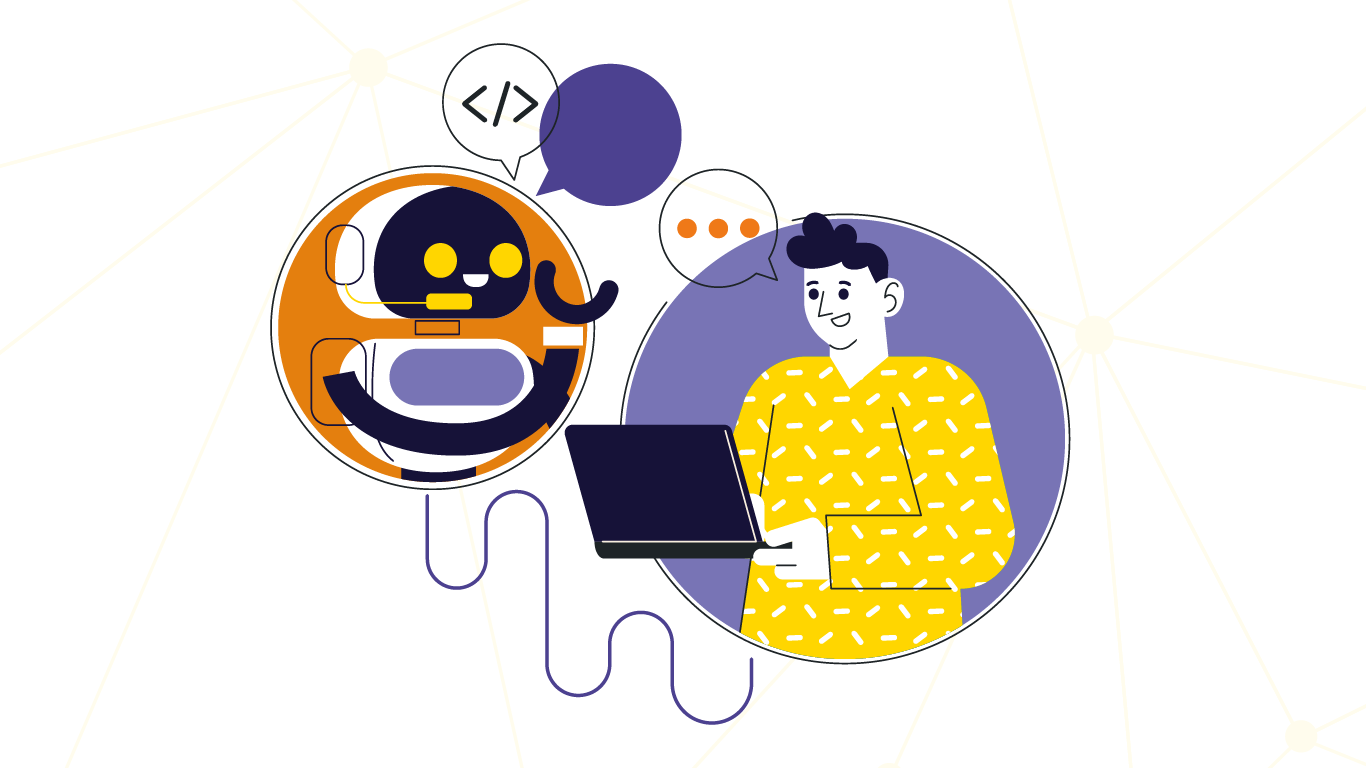
How does artificial intelligence impact businesses and daily life? Learn about real-world examples of AI in automation, data, and customer service today.
When we talk about artificial intelligence, many people think of futuristic robots or something far from their reality, but the truth is that AI is now part of our daily routine, of companies, of the devices we use, and of all the digital services with which we already interact all the time.
Examples of artificial intelligence are more present than we imagine, and you will be surprised to see that they are not only in large technology companies, but in organizations of all sectors.
In this article, we show you clear and everyday examples of artificial intelligence (AI) so that you understand how they work, what value they add, and why they are so important in the current development of society.
Virtual assistants with AI that listen and respond
One of the most well-known examples of artificial intelligence are virtual assistants such as Google Assistant, Siri, or Alexa. They are tools that combine natural language processing, machine learning algorithms, and data analysis to understand what we say and respond in real time to what we ask; but their ability goes beyond answering questions.
They can manage tasks, control devices, and offer personalized recommendations as they use models trained with large amounts of data and a constant learning process.
For companies, these assistants have improved communication with users and customers by automating support.
Social media and customized content
Another great example of intelligence is the functioning of social networks, as Instagram, TikTok, or LinkedIn use artificial intelligence to analyze user behavior patterns, interests, and preferences.
By analyzing your data, AI decides what content to show, in what order, and at what time. It's not a coincidence that you see posts that match your tastes; it's actually the result of algorithms that learn from each interaction.
For brands and businesses, this ability to segment and personalize translates into better marketing strategies and improved communication.
Recommendations in e-commerce
If you've ever bought a product online and then saw similar suggestions, you've already interacted with another clear example of artificial intelligence; in fact, e-commerce uses AI to analyze purchasing habits, browsing history, and consumption patterns.
These recommendation systems process large amounts of data in real time to offer products that truly match your needs and make your shopping experience more fluid, personalized, and efficient.
Facial recognition and security
Facial recognition is one of the most visible examples of artificial intelligence in security matters. It is used in mobile devices, surveillance systems, access control, and identification processes.
Here, AI analyzes images, detects patterns, and compares data to validate identities. The entire process occurs in seconds, supported by algorithms and models trained with enormous volumes of information.
Although it offers great advantages in security and efficiency, it also raises limitations and ethical debates that require human intervention and proper implementation to avoid misuse of data.
Data analysis for decision making
Without a doubt, one of the most valuable uses of artificial intelligence for companies is data analysis. Organizations generate large volumes of information every day, but without AI it would be impossible to take advantage of them.
Artificial intelligence systems help detect patterns, anticipate scenarios, and propose solutions in finance, marketing, operations, supply chain, and practically any sector.
Companies can make decisions based on real data, with greater precision and lower risk.
Process automation and productivity
Automation is another of the most used examples of artificial intelligence within companies. It can manage emails or schedule repetitive tasks; AI allows you to free up time and resources.
These systems learn from the process, adapt, and improve their operation over time. The result? There is a direct impact on the productivity of employees and teams, who can focus on higher-value activities.
Natural language processing in communication
Natural language processing is the technology that allows machines to understand texts, voice, and written content as human intelligence would. It is the basis of chatbots, assistants, sentiment analysis, and content generation.
This type of artificial intelligence is used in customer service, media, research, and digital platforms. Thanks to it, systems can interpret needs, offer relevant responses, and learn from feedback.
AI in industry and the supply chain
In industrial sectors, artificial intelligence is applied to optimize operations, monitor equipment, improve logistics, and reduce errors by simply performing real-time analysis. At that time, systems detect failures, anticipate maintenance, and improve resource utilization.
In the supply chain, AI helps plan inventories and respond better to market demand, saving costs and improving service.
Artificial intelligence beyond the everyday
Although today we are mainly talking about practical applications, there is also the concept of general artificial intelligence, which seeks to replicate broader reasoning capabilities similar to human intelligence. It is still under development, but advances in machine learning, computer science, and programming continue to pave the way.
Artificial intelligence as an engine of innovation
These examples of artificial intelligence demonstrate that it is not only about technology, but about a key tool for innovation, growth, and competitiveness. From assistants and devices to business platforms, AI is redefining the way we work, shop, and make decisions.
At Xamai, we understand artificial intelligence as a strategic enabler. Its correct integration into systems, software, and processes allows companies to leverage their data, improve their responsiveness, and advance their digitalization process in an intelligent and sustainable way.
AI is no longer the future. It is the present, and knowing how to use it makes the difference.
Ready to talk to SAP specialists?
Tell us what your company needs and we'll help you find the best path.
Request information






 English
  Español de México
  Español