

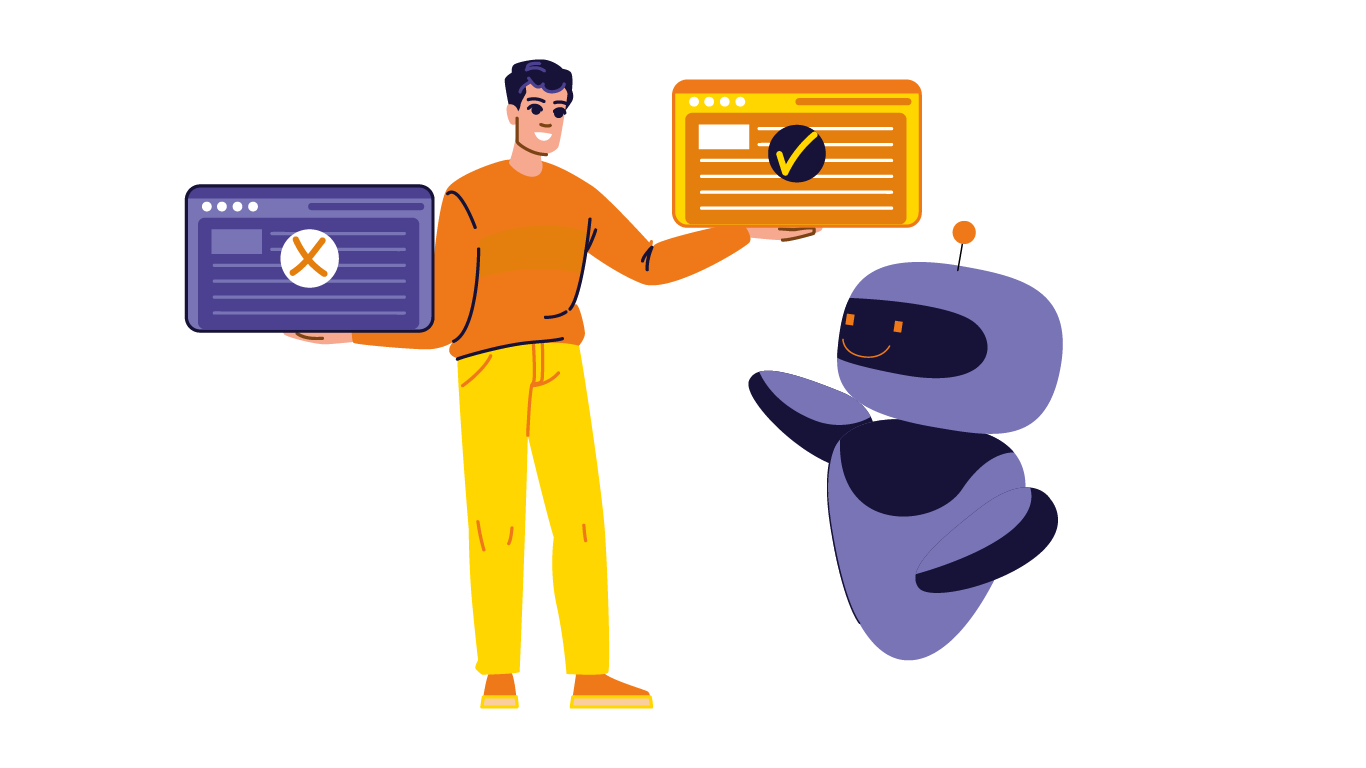
We analyze the advantages and disadvantages of artificial intelligence, the use of AI in companies, and the challenges that influence productivity, employment, and decision-making.
Talking today about the advantages and disadvantages of artificial intelligence is no longer a future or distant discussion. Artificial intelligence is part of the daily operation of companies, digital platforms, information systems, education, medicine, and production processes. Its presence is so constant that, many times, we interact with AI without realizing it.
The use of AI promises efficiency, automation, and better decisions, but at the same time raises challenges related to employment, privacy, ethics, and technological dependence. Therefore, analyzing the advantages and disadvantages of AI use in a balanced way is key to understanding its true impact.
Advantages of artificial intelligence in processes, companies, and society
One of the main advantages of artificial intelligence is its ability to automate tasks that previously required large amounts of time and human effort. Thanks to AI algorithms and machine learning, systems can execute repetitive processes consistently, quickly, and with fewer errors.
This translates into a direct improvement in productivity, especially in companies that work with large volumes of dataAI not only processes information, but also analyzes it, identifies patterns, and generates useful results for real-time decision-making. Instead of completely replacing people, artificial intelligence acts as a tool that amplifies human capabilities.
Furthermore, the ability of AI to work with enormous amounts of information allows operations to be optimized, problems to be anticipated, and solutions based on data to be proposed. In sectors such as finance, commerce, or industry, this constant analysis helps to reduce risks, improve results, and maintain competitiveness in increasingly dynamic markets.
Another point in favor of using AI is its impact on decision-making. AI systems combine historical data, real-time information, and predictive models to offer clearer scenarios. This allows organizations to act with greater precision, especially when dealing with complex decisions involving multiple variables.
In this context, artificial intelligence also drives personalization. From products to services and digital content, AI adapts experiences according to the behavior, preferences, and needs of each user. This approach improves the quality of life for consumers and strengthens the relationship between companies and customers.
Advantages of AI in sectors such as education, medicine, and work
In education, artificial intelligence has made it possible to develop more flexible and personalized learning programs. AI systems analyze student progress, identify areas for improvement, and adjust content based on their skills. This not only improves results, but also optimizes the time and resources available.
In medicine, the advantages of artificial intelligence are especially visible. AI supports diagnoses, clinical data analysis, early disease detection, and the development of more precise treatments. By processing large volumes of medical information, systems reduce errors and strengthen the decision-making of healthcare professionals.
In the workplace, AI increases operational efficiency. Many administrative, analytical, or tracking tasks can be automated, allowing employees to focus on strategic, creative, or problem-solving activities. This change redefines work, but also opens up opportunities for the development of new skills.
Disadvantages of artificial intelligence and the challenges of its use
Despite its benefits, the disadvantages of artificial intelligence are a topic that cannot be ignored. One of the main challenges is the displacement of jobs. Automation can replace certain functions, especially those based on repetitive tasks, which generates concern about employment and labor inequality.
This scenario forces us to rethink training, the development of skills, and the adaptation of workers to an increasingly technological environment. Without clear training strategies, the social impact can be significant.
Another important disadvantage is related to technological dependence. When decisions are completely delegated to AI systems, there is a risk of reducing critical thinking and human reasoning. Artificial intelligence should support decision-making, not completely replace it.
It is also essential to consider the errors and limitations of AI systems. Although algorithms reduce human errors, they are not infallible. The quality of the results depends directly on the programming, the database used, and the maintenance of the system. An error in the data can translate into incorrect decisions with real consequences.
Privacy, biases, and ethical concerns
One of the most sensitive topics within the disadvantages of AI is privacy. Artificial intelligence works with enormous amounts of information, often personal data. Without clear regulations and protection policies, the use of this information can generate legitimate concerns among users and consumers. This is compounded by the problem of
biases in AI algorithms. If the training data contains prejudices or errors, the systems can replicate them in their results. This affects selection processes, diagnoses, recommendations, and automated decisions, generating inequality and lack of equity. biases in AI algorithms. If the training data contains prejudices or errors, the systems can replicate them in their results. This affects selection processes, diagnoses, recommendations, and automated decisions, generating inequality and lack of equity.
Therefore, the responsible use of artificial intelligence requires human oversight, transparency in models, and ethical frameworks to guide its implementation.
Advantages and disadvantages of artificial intelligence in digital transformation
Artificial intelligence is vital for digital transformation. Its advantages allow companies and organizations to modernize processes, optimize operations, and improve productivity. However, its disadvantages highlight the need for strategic and conscious implementation.
The balance between benefits and risks does not depend on the technology itself, but on how it is used. AI can drive growth, innovation, and competitiveness, but it can also amplify errors, inequalities, and social problems if not managed correctly.
Responsible use as the key to the future of AI
The advantages and disadvantages of artificial intelligence show that we are dealing with a powerful tool, not an automatic solution. Its impact on society, work, and quality of life will depend on the decisions made today in terms of regulation, training, policies, and values.
When artificial intelligence is integrated with a human, strategic, and ethical vision, it becomes an engine of positive transformation. The challenge is to harness its potential without losing sight of its limits and responsibilities.
Ready to talk to SAP specialists?
Tell us what your company needs and we'll help you find the best path.
Request information





 English
  Español de México
  Español