


Transform your database into strategic decisions, driving business success with Business Intelligence.
Business Intelligence (BI), refers to the set of technologies, processes, and tools that help companies collect, analyze, and convert data into meaningful information for strategic decision-making. Simply put, it's like having a radar that shows you how your company is performing.
With BI, organizations can transform large amounts of data into useful knowledge. This involves identifying patterns, trends, and opportunities that can be crucial for business success.
BI solutions can range from simple reports to more advanced database analysis, using intuitive visualizations to facilitate understanding of information. They are business intelligence tools that provide improved decision-making.
We could say that Business Intelligence is like a compass that guides companies through data analysis, providing a clear vision and helping leaders make informed decisions.
Why is Business Intelligence or Business Intelligence important?
The importance of business intelligence lies in its ability to transform seemingly chaotic data into valuable and actionable information for companies.
At Xamai, we analyze some of the most important reasons why an organization should venture into BI models.
Informed Decision Making
BI provides relevant and timely information, allowing business leaders to make decisions based on concrete data rather than relying on intuition or assumptions.
Optimization of Operations
By analyzing operational data, organizations can identify areas for improvement, efficiencies, and opportunities to optimize processes, which can lead to more effective use of resources.
Identification of Market Trends
BI allows for the analysis of past and present trends, helping companies anticipate changes in the market, customer behavior, or even the competition. This is essential to proactively adapt to changing conditions.
Improvement of Business Performance
By evaluating the performance of various aspects of the business, from sales to internal operations, organizations can identify areas of success and opportunities for improvement, thus contributing to sustainable growth.
Competitiveness
Companies that leverage BI can gain a competitive advantage by making faster and more accurate decisions. This allows them to quickly adapt to market conditions and outperform the competition.
Improvement in Customer Experience
By better understanding customer behavior and preferences through data analytics, companies can personalize their products and services, improving the customer experience and strengthening business relationships.
Business intelligence gives companies a clearer and more complete view of their operations, enabling strategic decisions that drive long-term success.
How does business intelligence work?
The functioning of Business Intelligence follows a systematic process to obtain valuable information. First, relevant data is collected from various sources, both internal (financial transactions, sales data) and external (market trends). This step is crucial for having a complete basis.
Once collected, the data goes through a processing process, where it is cleaned and its quality is ensured. Removing duplicates and proper preparation are essential to guarantee the effectiveness of subsequent analysis. Subsequently, the processed data is stored in a centralized warehouse, facilitating quick access when needed for analysis.
With data ready, the analysis begins using specific Business Intelligence tools. This involves creating reports, dashboards, and advanced analytics to identify patterns and trends. The visual presentation of information is key, using graphs and tables to facilitate understanding of the findings.
Finally, business leaders use the information derived from the analysis to make informed and strategic decisions. This cycle is continuous, as implemented decisions generate new data, thus improving the Business Intelligence process for future analyses. This comprehensive approach drives performance and continued success for the company.
Examples of business intelligence
Various companies use business intelligence to transform information into actionable insights. From optimizing operations to understanding consumer behavior, we want to show you some of the applicable examples of BI in companies regardless of their industry and how they would benefit from them.
Sales Analysis:
A retail company can use Business Intelligence tools to analyze sales trends over time, identify best-selling products, and adjust inventory strategies accordingly.
Customer Segmentation:
A telecommunications company could use BI to segment its customers based on data usage, calls, and messages. This would allow them to personalize offers and services to meet the specific needs of each group.
Operations Optimization:
A supply chain can employ Business Intelligence to analyze process efficiency, identify bottlenecks, and improve inventory management, leading to a smoother and more profitable operation.
Employee Performance Analysis:
In the field of human resources, BI tools can help evaluate employee performance, identify areas for development, and optimize human resource allocation to improve productivity.
Social Media Monitoring:
Companies can use BI to analyze big data and activity on social media, understand brand perception, evaluate the impact of marketing campaigns, and respond effectively to comments and trends.
Financial Analysis:
Financial institutions can use Business Intelligence to analyze data, assess risks, detect fraud, answer user questions, and make informed decisions about investments and loans.
KPI Tracking:
Any industry can benefit from tracking Key Performance Indicators (KPIs) through BI. For example, measuring customer service response time, customer retention, or operational efficiency.
These examples illustrate how Business Intelligence is a key term that applies in various areas to improve decision-making, optimize data warehouse processes, and increase efficiency in different business sectors.
5 Notable Advantages of Business Intelligence
Business Intelligence offers numerous advantages that contribute to the success and sustainable development of companies. Let's analyze 5 of them that we see in every business in practice.
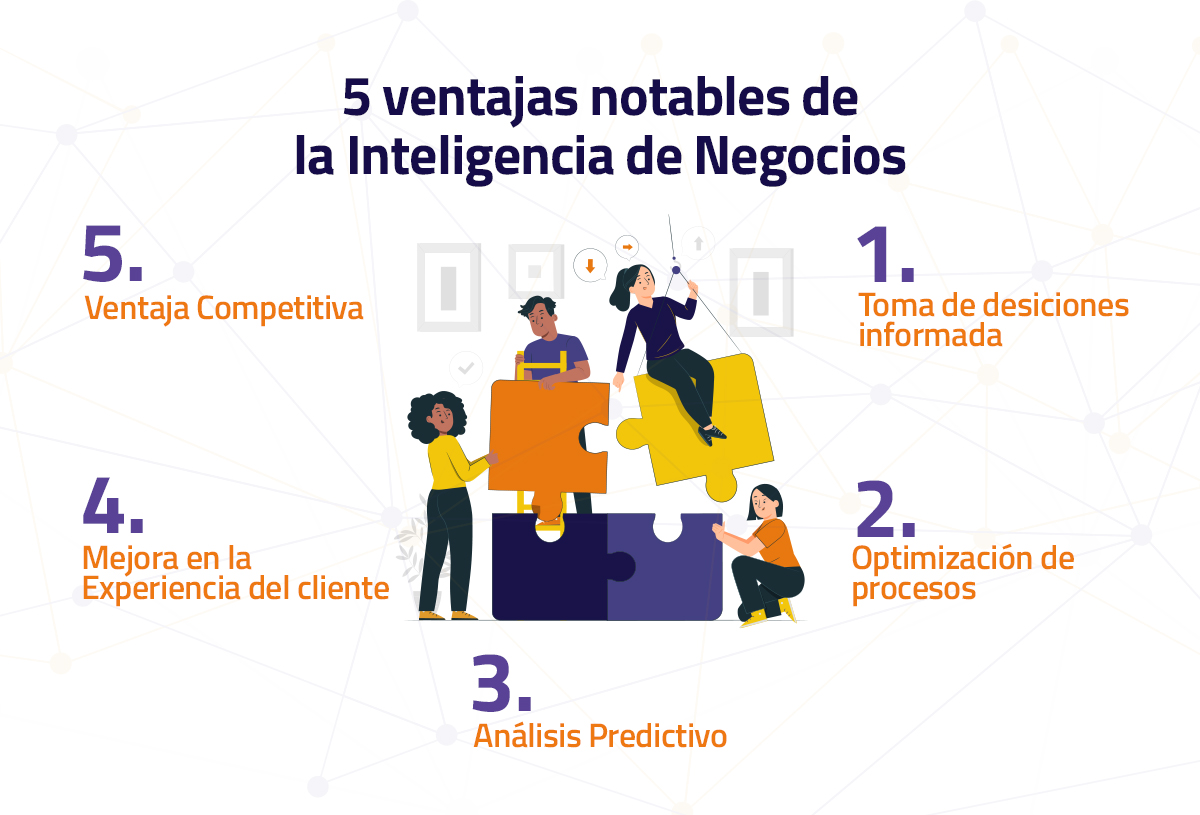
- Informed Decision-Making:
BI provides business leaders with accurate and relevant information to make strategic decisions. By basing decisions on concrete data rather than intuition, companies can minimize risks and increase the likelihood of success. - Process Optimization:
By analyzing operational data, organizations can identify areas for improvement in their internal processes. This leads to optimization of operations, improving efficiency and reducing unnecessary costs. - Predictive Analysis:
BI's ability to perform predictive analysis allows companies to anticipate future trends and events. This is essential to proactively adapt to changes in the market, customer demand, or even to foresee potential operational problems. - Improvement in Customer Experience:
BI allows companies to better understand their customers. By analyzing data on customer behavior and preferences, companies can personalize products and services, thereby improving the customer experience and strengthening loyalty. - Competitive Advantage:
Companies that efficiently leverage BI can gain a significant competitive advantage. By making faster and more accurate decisions, adapting quickly to market conditions, and anticipating customer needs, companies can position themselves better against the competition.
Business Intelligence offers advantages ranging from more informed decision-making to operational optimization and gaining a competitive advantage in a dynamic business environment.
BI Trends
Currently, Business Intelligence (BI) trends are pointing towards the integration of more advanced technologies. The increasing use of artificial intelligence and machine learning is enabling more predictive and automated data analysis.
Furthermore, data visualization is becoming more interactive and accessible, making it easier for users to understand and explore information intuitively. Mobility also plays a crucial role, with an emphasis on the ability to access reports and analyses from mobile devices.
Real-time collaboration and cloud data integration are other trends that stand out, promoting more agile and data-driven decision-making in an increasingly dynamic business environment.
Main types of BI tools
Business Intelligence (BI) tools are divided into several categories according to their functions and capabilities. First, there are reporting and query tools, which allow users to create custom reports and perform appropriate queries on datasets.
Then, data visualization tools offer intuitive graphical representations to facilitate the interpretation of information. Analytics platforms and dashboards provide deeper analysis and dynamic visualizations.
Online analytical processing (OLAP) tools allow exploration of multidimensional data. Finally, data mining and predictive analytics solutions use advanced algorithms to discover future patterns and trends.
The choice of tools depends on the diagnosis of the specific needs of each company.
SAP and BI
Now it's time to talk about SAP and its close relationship with Business Intelligence through its offering of products and solutions:
SAP BI
SAP BI is a comprehensive suite that provides tools and applications for analysis, reporting, and data-driven decision-making. SAP BI allows organizations to integrate data from various sources, both internal and external, to obtain a complete view of their performance and operations.
A key feature of SAP BI is its ability to transform data into meaningful information through advanced analysis processes. From creating detailed reports to generating interactive dashboards, SAP BI facilitates the visual presentation of information.
SAP BusinessObjects
SAP BusinessObjects is one of SAP's leading BI solutions, which includes tools for report creation, appropriate analysis, data visualization, and dashboards.
As we have explained in previous articles, this tool stands out for its ability to integrate data from various sources, offer advanced analysis, and provide visual tools that help organizations make informed and strategic decisions.
SAP Business Warehouse
SAP BW is a data warehousing system designed for business data analysis, integrating information from various sources to facilitate decision-making. SAP BW facilitates the extraction of data from heterogeneous systems and its transformation to ensure consistency and quality. This processed data is stored in a centralized repository, which facilitates quick and efficient access for analysis. An essential business intelligence tool.
SAP HANA
With SAP HANA, SAP's in-memory processing platform, the company has taken BI to the next level by providing fast data processing and real-time analytics capabilities.
SAP plays an important role in the world of BI by offering a variety of solutions that allow companies to leverage their data effectively to improve decision-making and gain a more complete view of their operations. If you would like more information, do not hesitate to contact us.
Ready to talk to SAP specialists?
Tell us what your company needs and we'll help you find the best path.
Request information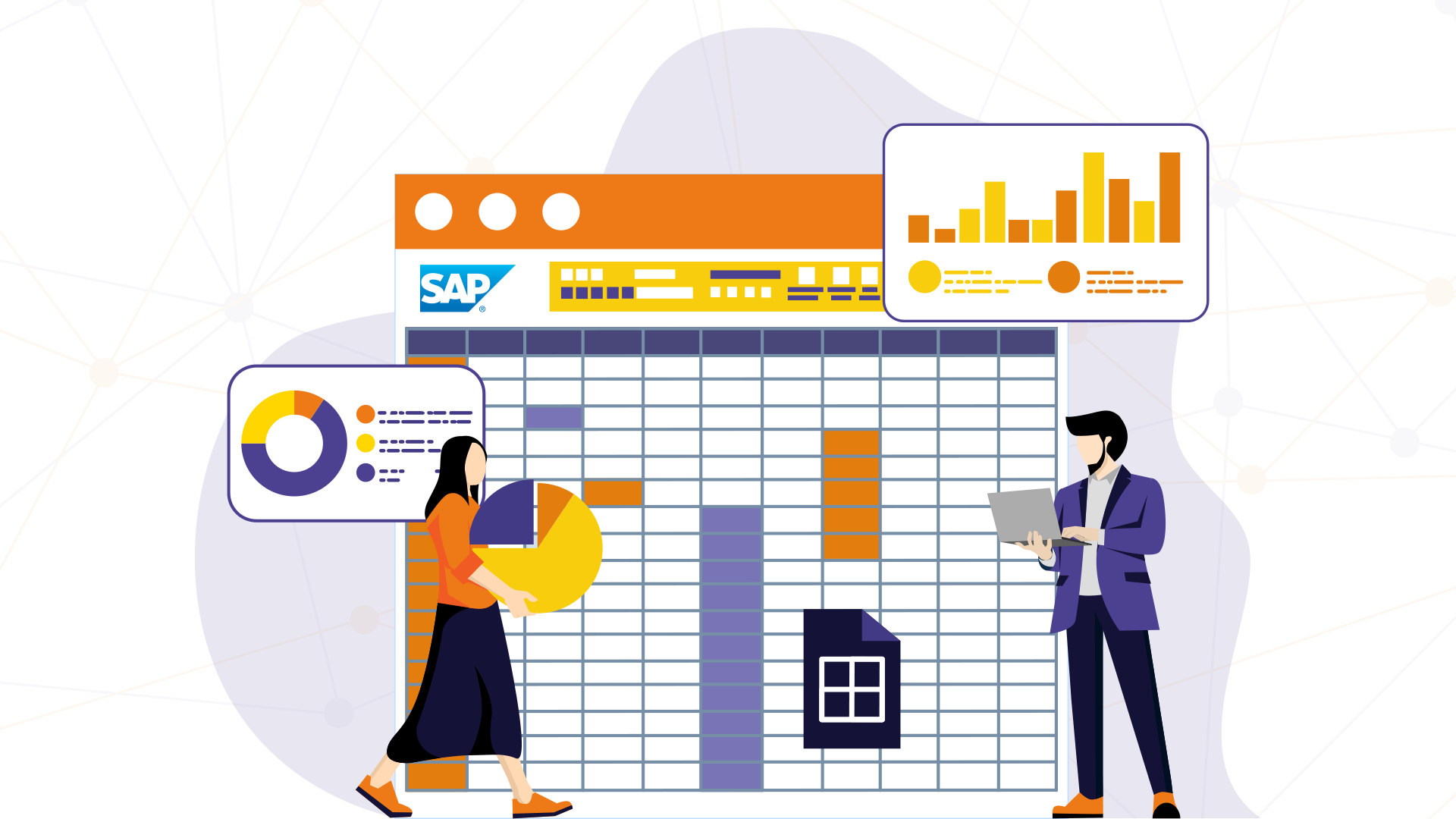







 English
  Español de México
  Español