

In a world where competition is fierce and customer expectations are constantly rising, organizations must constantly seek ways to improve the quality of their products and services. In this context, SAP QM (Quality Management) emerges as a fundamental tool for companies that want to optimize their quality control processes and ensure customer satisfaction.
Join us to discover everything related to this SAP quality management system.
What is SAP QM?
SAP QM (Quality Management in SAP) is a module of SAP ERP (Enterprise Resource Planning). whose main function is to help companies manage and control the quality of their products and processes.
Some of the key features and functionalities of SAP QM include:
- Quality Control: SAP QM allows organizations to define quality standards for their products and processes, establishing inspection and testing criteria to ensure that products meet these standards.
- Quality Planning:
It allows for the planning of quality control activities, such as inspections, tests, and quality evaluations, so that they can be scheduled and carried out efficiently. - Quality Data Recording:
SAP QM records and stores quality data, such as inspection and test results, so that analyses and tracking of product and process quality can be performed over time. - Non-Conformance Management:
It allows for the registration and tracking of non-conformances, which facilitates the identification of quality problems and the taking of corrective actions. - Integration with Other SAP Modules:
SAP QM integrates with other modules of SAP ERP, such as materials management, production, and supplier management, to ensure that quality is controlled at all stages of a product's lifecycle. - Regulatory Compliance:
Helps organizations comply with regulatory and normative requirements related to product and process quality.SAP QM is a tool that allows companies to control and manage the quality of their products and processes efficiently, which contributes to improving customer satisfaction, reducing quality costs, and ensuring compliance with standards and regulations.
What does SAP QM Quality Management consist of?
The SAP QM module gets its name from the initials QM, which represent Quality Management in English. Its main function in all areas of a company is to ensure that all activities performed comply with the most appropriate quality standards.
Its design focuses on ensuring that all operations carried out in the company comply with the appropriate standards. To achieve this, it considers several aspects, such as the quality of suppliers, the quality of its products, the inspection of the company's inventory, the manufacturing process of products, and sales transactions to customers.
This module is responsible for meticulously supervising all components of the production chain.
What is the purpose of SAP QM Quality Management?
This module is used to establish an internal quality control process, facilitating the acquisition of high-quality materials at all times through automatic analysis of each supplier.
This ensures the availability of products that meet the required quality standards. In addition, it plays a fundamental role in supervising and preparing the company's quality.
SAP QM processes are applied in the inspection of materials upon receipt of goods before storage, as well as in production processes to verify quality standards during manufacturing.
This SAP module is composed of complementary elements including:
- Material Management (MM):
This module simplifies advanced material and warehouse management operations, allowing for efficient consumption and purchase planning, as well as effective inventory and billing control. - Plant Maintenance (PM):
This component allows you to prevent breakdowns in machinery, regardless of the products or services offered by the company. It facilitates the planning of preventive actions, maintenance reminders, and detailed tracking. - Production Planning (PP):
Helps the company achieve its goals through the planning of short- and long-term strategies. It allows you to enter data on needs and actions, generating effective planning to achieve objectives and tracking actual costs and plans.SAP QM Quality Management is used to guarantee the quality of purchased materials, supervise production processes, and offer additional tools, such as material management, plant maintenance, and production planning, to optimize business management.
Areas covered by the QM module
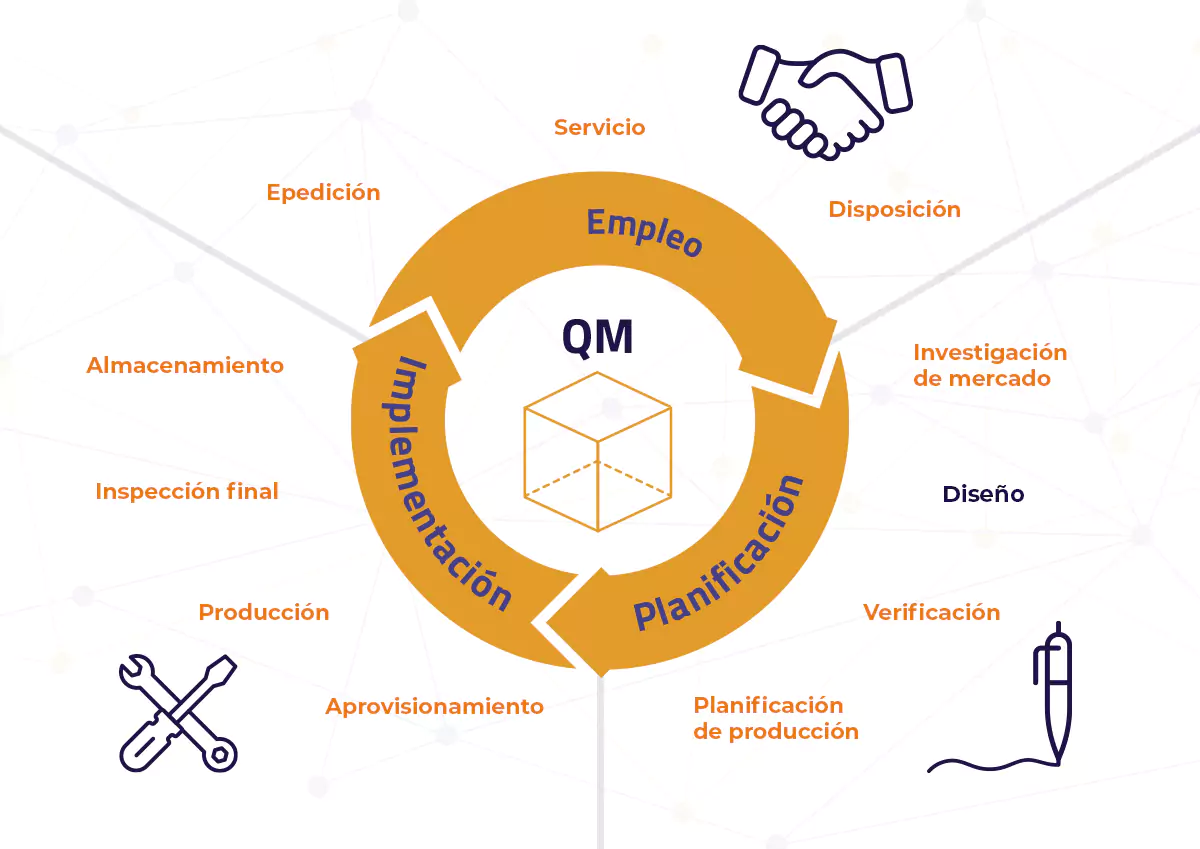
As we mentioned earlier, this module is responsible for supervising and managing the quality of the products or services offered by a company. In this context, the QM module generally covers three distinct areas: Planning, Notifications, and Inspections.
- Quality Planning:
Quality planning is an essential part of any quality management process. In this stage, the strategies and actions that must be carried out to ensure that products or services meet established quality standards are defined. Some key activities include:Establishment of Quality Objectives: Define specific quality goals that must be achieved.
Process Design: Create production or service delivery processes that are capable of meeting quality standards.Specification of Requirements: Detail the quality requirements that products or services must meet.
Planning of Resources: Allocate resources such as personnel, equipment, and materials needed to maintain quality.
Documentation: Create documents such as quality manuals and procedures that describe how quality will be maintained.
- Quality Notifications:
Quality notifications refer to the system's ability to record and communicate any deviation or problem related to the quality of products or services. This includes:Record of Nonconformities: When a nonconformity with quality standards is detected, it must be recorded for tracking and resolution.
Problem Management: Tracking problems and necessary corrective actions to resolve them.
Change Control: Record and manage any changes in processes that may affect quality.
Customer Complaint Tracking: Record customer complaints and take steps to resolve them and prevent recurrence.
- Quality Inspections:
Quality inspections are evaluation processes carried out to ensure that products or services meet established quality standards. Important aspects of quality inspections include:Inspection Scheduling: Define when and where inspections will be carried out.
Acceptance criteria: Establish the standards that must be met for a product or service to be considered acceptable quality.
Data collection: Perform tests, measurements, or reviews according to the standards.
Results analysis: Evaluate the results of the inspections and make decisions based on them, such as product approval or corrective action.
Report Generation: Create inspection reports that document the results and actions taken.
The QM module covers quality planning, which establishes the foundations and strategies for maintaining quality; quality notifications, which are responsible for recording and managing quality-related problems; and quality inspections, which ensure that products or services meet established standards.
These three areas work together to ensure that quality is an integral part of an organization's processes and products.
Advantages and Disadvantages of the QM module
The Quality Management module aims to ensure and improve the quality of products and processes in an organization. However, there are advantages and disadvantages associated with the implementation and use of the QM module:
Advantages of the QM module:
- Quality improvement: The QM module allows organizations to establish and maintain quality standards, leading to continuous improvement of products and processes. This can result in more reliable products and satisfied customers.
- Regulatory compliance: Helps organizations comply with quality regulations and standards, which is especially important in regulated industries such as pharmaceuticals or food.
- Cost reduction: By identifying and correcting quality problems early on, costs associated with returns, repairs, and warranties can be reduced.
- Traceability: Facilitates tracking and traceability of products from raw material to finished product within inspection lots. This is crucial in the event of product recalls or quality audits.
Improves decision-making: Provides detailed information about product and process quality, which helps senior management make informed and strategic decisions.
Disadvantages of the QM module:
- Initial and maintenance cost: Implementing and maintaining a QM system can be costly, as it involves hardware, software, and staff training.
- Complexity: QM systems can be complex and require a learning curve for staff. This can increase resistance to their adoption.
- Implementation time: Full implementation of a QM system can take time, which may affect productivity in the short term.
- Personnel required: Requires personnel trained in quality management, which can increase labor costs.
- Rigidity: In some cases, implementing QM systems can lead to excessive rigidity in processes, which can be counterproductive in constantly changing environments.
The Quality Management (QM) module can provide many benefits to organizations in terms of quality improvement and regulatory compliance, but also presents challenges in terms of costs and complexity. The decision to implement a QM system should be based on the organization's specific needs and business objectives.
If you need more information about the SAP QM module, do not hesitate to write to us and any of our specialized consultants can provide you with more information.
Ready to talk to SAP specialists?
Tell us what your company needs and we'll help you find the best path.
Request information









 English
  Español de México
  Español