
Updated: March 2025
Compare functionalities and use cases to find the best enterprise solution between Odoo vs SAP, which is ideal for your organization?
In this article, we want to show you the distinctive features of each platform and the key differences between Odoo and SAP so you can determine which system is best for you.
As an entrepreneur, we know that choosing the right software can make the difference between efficiency and stagnation.
We talk about SAP as a solution, which stands out as a leading option for companies of all sizes, but we will make a comparison with the functionalities offered by Odoo.
In this article, we want to show you the distinctive features of each platform and the key differences between Odoo and SAP so you can determine which system is best for you.
We explain each solution offered for enterprise resource management, logistics, and show you how these solutions compare and which could be the best option for the unique needs of your business.
Odoo and SAP, who uses these platforms?
We know that SAP is one of the most used and recognized ERP platforms worldwide, as it offers solutions, tools, and functionalities designed to optimize the internal processes of organizations, in addition to helping with the management of human resources and finances as well as business logistics.
In the case of Odoo, it also offers a modular solution that can be adapted to the needs of any industry, making it an attractive option for a wide range of companies worldwide.
While Odoo may appear to be a good option for some companies due to its flexibility and lower initial cost, SAP offers much more evident advantages in terms of scalability, advanced features, support, and integration, especially for large companies that have particular needs that Odoo doesn't fully cover.
Consider that although Odoo may seem more economical to start, its real cost in the long term is often higher, as many of its modules, updates, and support services require additional payments, which generates operating expenses over time.
SAP is very different in this context: because from the very first Discovery sessions we conduct at Xamai, we help companies identify and plan not only implementation costs, but also the operating costs that may arise in the future.
This way you will already have the total investment visualized from the beginning and the long-term expenses.
Let's see which one might best adapt to the needs of your company.
A quick look: Odoo vs SAP
Odoo is a modular open-source solution characterized by its flexibility and ease of use. It is a good option for small and medium-sized enterprises (SMEs) looking for an affordable and customizable ERP solution.
Odoo offers a wide range of modules that cover the needs of CRM, accounting, project management, inventory, manufacturing, and e-commerce. However, recently we have received complaints from companies reporting having an inoperable Frankie system, which requires additional investment to continue functioning properly.
SAP is a leading enterprise ERP system that offers a wide range of functions and capabilities. It is a good option for large and growing companies that need a robust and scalable solution.
SAP is known for its solid financial functionality, its supply chain, and its customer relationship management capabilities.
Advantages of Odoo
Odoo has functionalities that optimize the operations of companies. Among its main advantages we find:
- Flexibility and customization: Its modular nature allows Odoo to be adapted to the specific needs of each business, regardless of its size or industry.
- Open source: Being open source, Odoo provides greater transparency, control, and the possibility of customizing it deeply, even developing custom modules; however, if it is not done with the help of an expert, in the end there are only modules that cannot be connected to each other, creating conflicts within the same system.
- Scalability: Odoo adapts to the growth of companies, from small startups to large corporations; however, Odoo, being open source, can face challenges in terms of security if not managed properly, which could compromise the security of large companies.
- Good design interface: Its interface, having a good design, can be considered easy to use; however, when executing it, it is complex for the user.
- Apparently accessible costs: Although Odoo offers subscription plans that seem more economical, including a free community version, the costs associated with implementation and maintenance can equal or exceed SAP's prices
- Rapid Implementation: Its implementation is usually fast and straightforward, allowing companies to start enjoying its benefits in a short time.
SAP is the leading market software for Enterprise Resource Planning, as we have mentioned in different articles, it is a complete suite of tools that optimize the operations of companies of all sizes and industries. Let's analyze a little:
1. Total Process Integration:
SAP eliminates information errors and connects all departments of your company, from finance and sales to production and human resources. This allows you to obtain a unified view of your business in real time, which helps you make more informed and strategic decisions.
2. Intelligent Automation:
SAP automates repetitive and tedious tasks, freeing up time for your employees to focus on higher-value activities. This increases efficiency and productivity throughout the organization.
3. Unparalleled Scalability:
SAP adapts to the needs of companies of all sizes, from growing businesses to large multinational corporations. It can grow with your business without the need for costly updates or data migrations.
4. Advanced Analytics:
SAP provides you with powerful analytics tools that allow you to extract valuable information from your data. This helps you identify trends, understand customer behavior, and make data-driven decisions.
5. Flexible Customization:
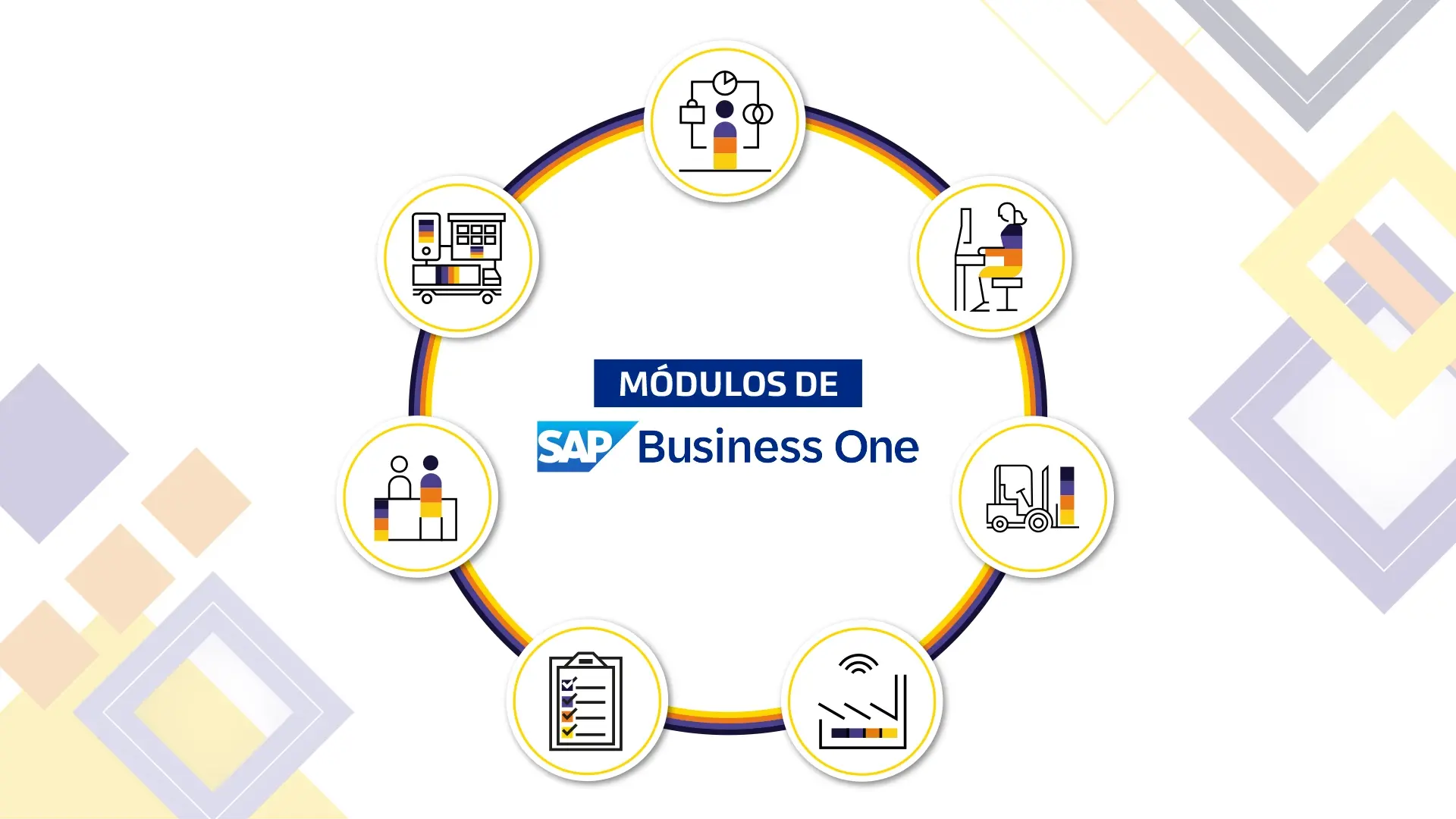
SAP offers ERP solutions tailored to different sizes and business needs. For growing companies, SAP Business One provides a flexible and customizable option, ideal for optimizing their operations. On the other hand, large corporations can benefit from the powerful capabilities of SAP S/4HANA Cloud, available in Public and Private versions. These options allow companies to scale and adapt as their processes and workflows evolve.
6. Robust Security:
SAP protects your data with the most advanced security measures in the industry. This gives you peace of mind knowing that your confidential information is secure.
7. Global Support:
SAP has a global network of partners and experts who provide you with ongoing support. This ensures that you always have the help you need to maximize the solution. Remember that by choosing us, Xamai, as the partner to implement this solution, you will also have assistance for maintenance, support and/or consulting.
8. Constant Innovation:
SAP continuously invests in research and development to offer its customers the latest technologies and functionalities.
This ensures that you are always at the forefront of business innovation. If you are looking for an ERP that can help you take your business to the next level, SAP is the perfect solution.
Advantages of SAP ERP versus Odoo ERP
While SAP and Odoo offer solutions for various business needs, here are some advantages that SAP has over Odoo:
Scalability and suitability for large enterprises
SAP is known for being highly scalable and suitable for large enterprises with complex and global operations. Its architecture allows for the management of large volumes of data and transactions efficiently, making it ideal for companies with multiple divisions, branches, or business units. It also has a simple yet more complete user interface.
Wide range of modules and functionalities
SAP offers a wide range of modules and functionalities that cover practically all aspects of business management, including finance, human resources, logistics, manufacturing, sales, and distribution, among others. This allows companies to adapt the system to their specific needs and scale gradually as needed.
Standardization and best business practices
SAP is designed based on best business practices and industry standards recognized worldwide. This helps companies standardize their business processes and adopt efficient practices that have been tested and validated by leading organizations in their sector.
In addition to having these best practices, SAP benefits from years of experience in continuous improvement of its processes, which ensures constant evolution and adaptability to new market demands.
On the other hand, Odoo, being a relatively new solution in the market, still faces various errors in its system. Although it offers a flexible and open-source platform, the lack of maturity compared to SAP can translate into additional challenges for companies seeking a robust and reliable solution.
Global support and user community
SAP has an extensive network of partners, consultants, and a large user community worldwide. This provides access to support resources and expert knowledge that can help companies implement, maintain, and optimize their SAP systems effectively.
Integration with external and legacy systems
SAP offers advanced integration capabilities that allow companies to connect their ERP system with other business applications, legacy systems, and third-party platforms. This facilitates data exchange and process synchronization between different systems, improving operational efficiency and decision-making.
Regulatory compliance and security
SAP stands out for its robust security framework and its ability to comply with specific industry regulations and standards, such as Sarbanes-Oxley (SOX), GDPR, and other privacy and compliance regulations. This is especially important for companies operating in highly regulated sectors or handling sensitive data.
In the Odoo vs SAP comparison, we can say that while Odoo is an apparently viable option for many companies, especially those of smaller size or with simpler requirements, SAP offers significant advantages in terms of scalability, functionalities, global support, and regulatory compliance, making it a preferred option for many large companies and global corporations.
What is the best ERP for your company?
Choosing the right management system is fundamental for long-term success. Are you looking for a solution that not only meets your current needs but also drives the future growth of your company? Let's see what you need to do. There are some steps you can follow to determine which is the best ERP for your company through the comparison already done.
Evaluate your company's needs
Start by identifying the key business processes you need to manage with an ERP. Consider areas such as finance, sales, inventory, production, human resources, and CRM. Make a list of your company's specific requirements in each area.
Research available options
Research different ERP vendors and compare the solutions available on the market. Some of the most popular options include SAP, Oracle, Microsoft Dynamics, Salesforce, Odoo, among others. Analyze the features, functionalities, costs, and opinions of other users.
Consider scalability
Evaluate whether the ERP is scalable enough to grow with your company as it evolves and expands along with the wide range of applications you will require in this growth.
A scalable system will allow you to add users, functionalities, and additional processes as needed without significant interruptions to operations.
Review ease of use and the user interface
It is important that the ERP is intuitive and easy to use for your company's employees. A user-friendly interface will facilitate system adoption and reduce the learning curve for users.
Analyze support and the user community
Consider the availability of technical support and the existence of an active user community that can provide guidance, advice, and best practices. Good support can be crucial for quickly resolving problems and optimizing system performance.
Evaluate the total cost of ownership (TCO)
Calculate the total cost of ownership of the ERP, including license costs, implementation, maintenance, updates, technical support, and user training.
Make sure you fully understand the costs involved over time. Perform tests and demos.
Before making a final decision, consider performing tests and demos of the ERP systems you are considering. This will allow you to evaluate the usability, functionality, and suitability of the system for your company in a practical environment.
Why choose SAP?
After this comparison, we tell you: don't settle for less when it comes to the future of your company. In the end, cheapness comes at a high price, make the smart choice and choose SAP as your technology partner for growth and innovation.
At SAP, we always conduct an assessment to understand your business processes specifically, which does not always happen with Odoo, which tends to be more generic without covering certain needs of your business and where sometimes personnel are required to fill gaps. Also, unlike Odoo, we handle the exchange rate with the Bank of Mexico.
Contact us: SAP expert partner, to discover how an ERP can transform your company for the better!
Ready to talk to SAP specialists?
Tell us what your company needs and we'll help you find the best path.
Request information

![[Podcast] Todo lo que debes saber sobre Success Factors](https://www.xamai.com/wp-content/uploads/2026/04/hs_todo-lo-que-debes-saber-sobre-success-factors-podc-1.jpg)



 English
  Español de México
  Español