

We tell you how AI helps improve business processes with task automation and other applications.
If you want to know how artificial intelligence affects the way we work, you'll be learning exactly how AI applications affect technical tasks, processes, products, services, and entire business models.
But how does artificial intelligence really affect your workflow? Understanding its scope means delving into how to improve products, services, and processes that we once considered unchangeable.
Today at Xamai, we want to show you how artificial intelligence applications are integrated into different sectors, not only for companies and businesses, but also in everyday life.
Connecting artificial intelligence with modern systems
Unlike traditional software that only executes fixed instructions, artificial intelligence applications work through a combination of algorithms, AI models, data analysis, and machine learning. All of these process large volumes of data stored in databases, digital platforms, and enterprise software solutions.
AI learns, recognizes patterns, and improves its performance over time, which allows it to automate processes, generate recommendations, and support real-time decision-making.
At Xamai, we leverage the robust solutions offered by SAP to create this technical synergy that allows us to move from task automation to intelligent real-time decision-making, generating a positive impact on both complex businesses and the simplest interactions in our daily lives.
Applications of artificial intelligence in everyday life
Day by day we realize that applications are so present and integrated that they go completely unnoticed. Here is a list so you can recognize the most important applications with which you interact every day.
Virtual assistants and smart devices
You already know and surely use tools like Google Assistant, which uses natural language processing to interpret voice, text, and context. It may seem like a simple application for creating reminders, answering questions, controlling devices, and assisting users in daily tasks; however, here artificial intelligence comes into play by combining voice recognition, data analysis, and machine learning to offer increasingly accurate responses.
Search engines, social networks, and digital content
In the social networks we use daily, there are search engines, and AI is present to analyze text, images, behavior, and preferences. As a result, you will get personalized results according to your tastes and preferences, relevant information will be prioritized, and the user experience on the web will be improved.
Even content platforms apply artificial intelligence to recommend publications, videos, and products based on consumption and reading patterns.
Applications of artificial intelligence in companies
The applications of artificial intelligence within a company mainly focus on efficiency, productivity, and decision-making. Let's learn about some of them:
Data analysis
One of the most valuable applications of artificial intelligence is advanced data analysis, where AI systems process large amounts of information to identify patterns, generate predictions, and support the decisions that the company must make, but also to anticipate changes, reduce risks, and improve operational planning.
Automation of processes and operations
AI-based automation helps improve repetitive tasks such as document management, information analysis, and process monitoring. By doing so automatically, errors are reduced, response times are improved, and human resources are freed up for strategic activities.
In organizations that work with enterprise platforms like SAP, artificial intelligence can be integrated to improve operations, analysis, and workflows more intelligently.
Applications of artificial intelligence in marketing and personalization
Marketing is one of the sectors that most takes advantage of the applications of artificial intelligence because AI analyzes user data, consumption behavior, and feedback to create personalized campaigns, automate actions, and optimize results. This improves the relationship with consumers and enhances the effectiveness of products and services.
Furthermore, content creation, sentiment analysis, and advanced segmentation allow for decisions based on real and updated information.
Applications of artificial intelligence in medicine and medical diagnosis
In the healthcare sector, artificial intelligence supports medical diagnoses, research, and clinical processes where it is possible to analyze images, medical data, and behavior patterns to detect diseases, support treatments, and improve the quality of life for patients.
These applications do not replace specialists, but function as support tools that strengthen medical decision-making.
Artificial intelligence in industry, robotics, and production
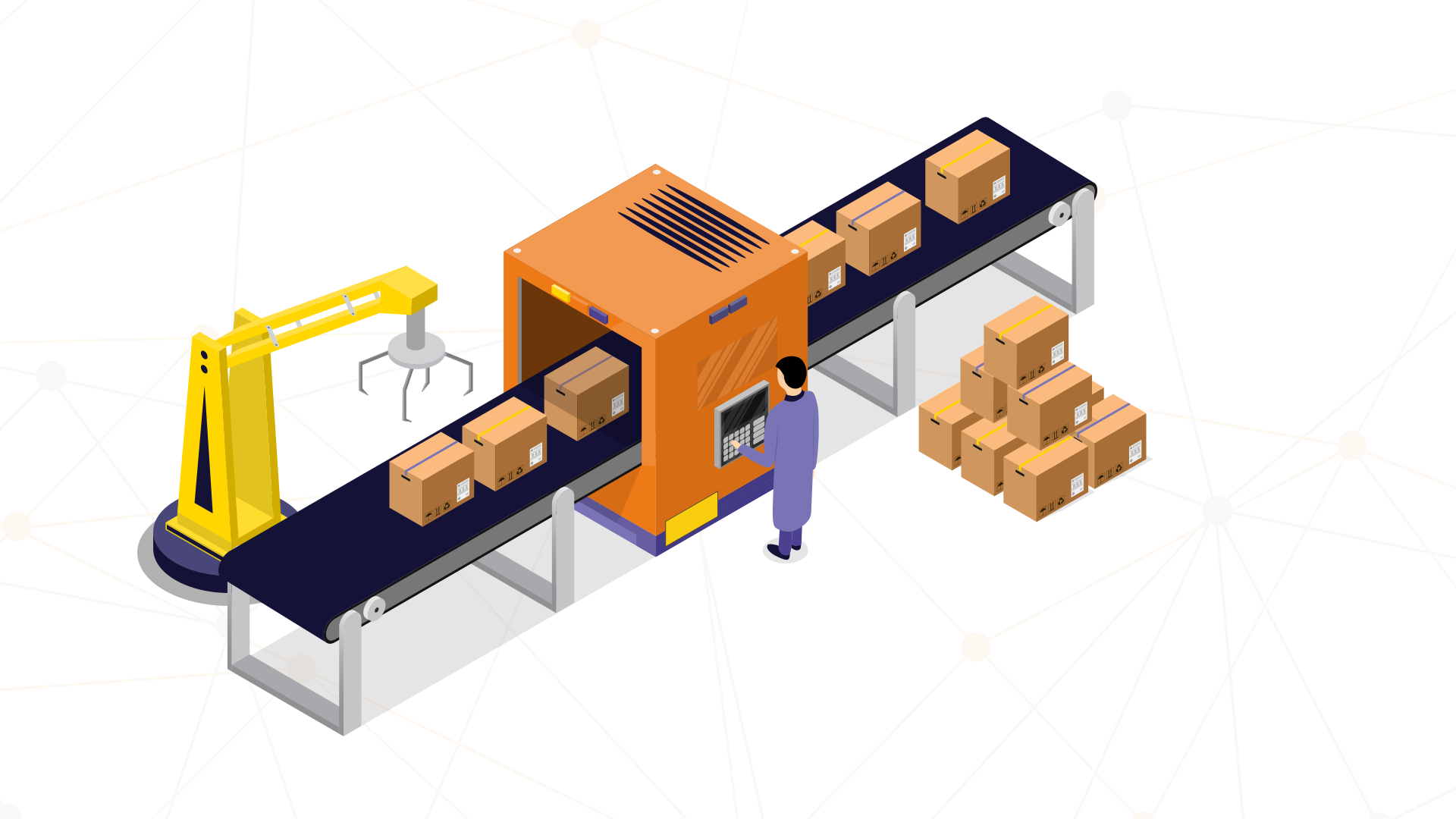
In industry, the applications of artificial intelligence are linked to automation, robotics, and process optimization. Here, like in a science fiction movie, intelligent machines can learn, adapt, and execute tasks with greater precision impacting areas such as manufacturing, logistics, maintenance, and quality control.
AI also allows for infrastructure monitoring, resource optimization, and real-time operational efficiency improvement.
Applications of artificial intelligence in cybersecurity and risk analysis
Cybersecurity is another field where artificial intelligence has very important applications because it can analyze behavior patterns to detect threats, prevent attacks, and protect sensitive information.
Thanks to machine learning, these systems improve their ability to respond to new digital risks.
Advantages of artificial intelligence applications
The advantages of Artificial Intelligence go far beyond technology because we are clear that it is about enhancing our capabilities. First, AI allows for more precise decision-making, as it can analyze volumes of data that would be impossible for a human to process, identifying patterns and risks in seconds.
The result? increased productivity, as freeing people from repetitive tasks through automation allows teams to focus on activities that provide real human value.
Furthermore, AI modernizes processes and drives a culture of constant innovation, allowing organizations to move from being reactive to proactive, adapting with agility to a competitive and changing environment where speed and personalization are key to success.
Applications of artificial intelligence as part of an “all” digital
Artificial intelligence applications do not work in isolation. They are part of an ecosystem that includes software, platforms, infrastructure, data, and specialized talent.
Understanding artificial intelligence (AI) as a vital component of this “digital all” allows its adoption to be organic and scalable in each of its functions.
Thus, from generative AI to sector-specific solutions, each implementation ceases to be a technical experiment and becomes a competitive advantage that evolves with the pace of the company's global strategy.
Ready to talk to SAP specialists?
Tell us what your company needs and we'll help you find the best path.
Request information







 English
  Español de México
  Español