
We'll show you how you can optimize the management of your supply chain and thus improve efficiency and reduce costs.
When you hear the term supply chain, it may sound like something technical or reserved for large corporations. But in reality, every company, regardless of size, has one: from the one that manufactures furniture, or supplies heavy machinery to international companies, to the corner bakery or a convenience store.
Understanding the Supply Chain
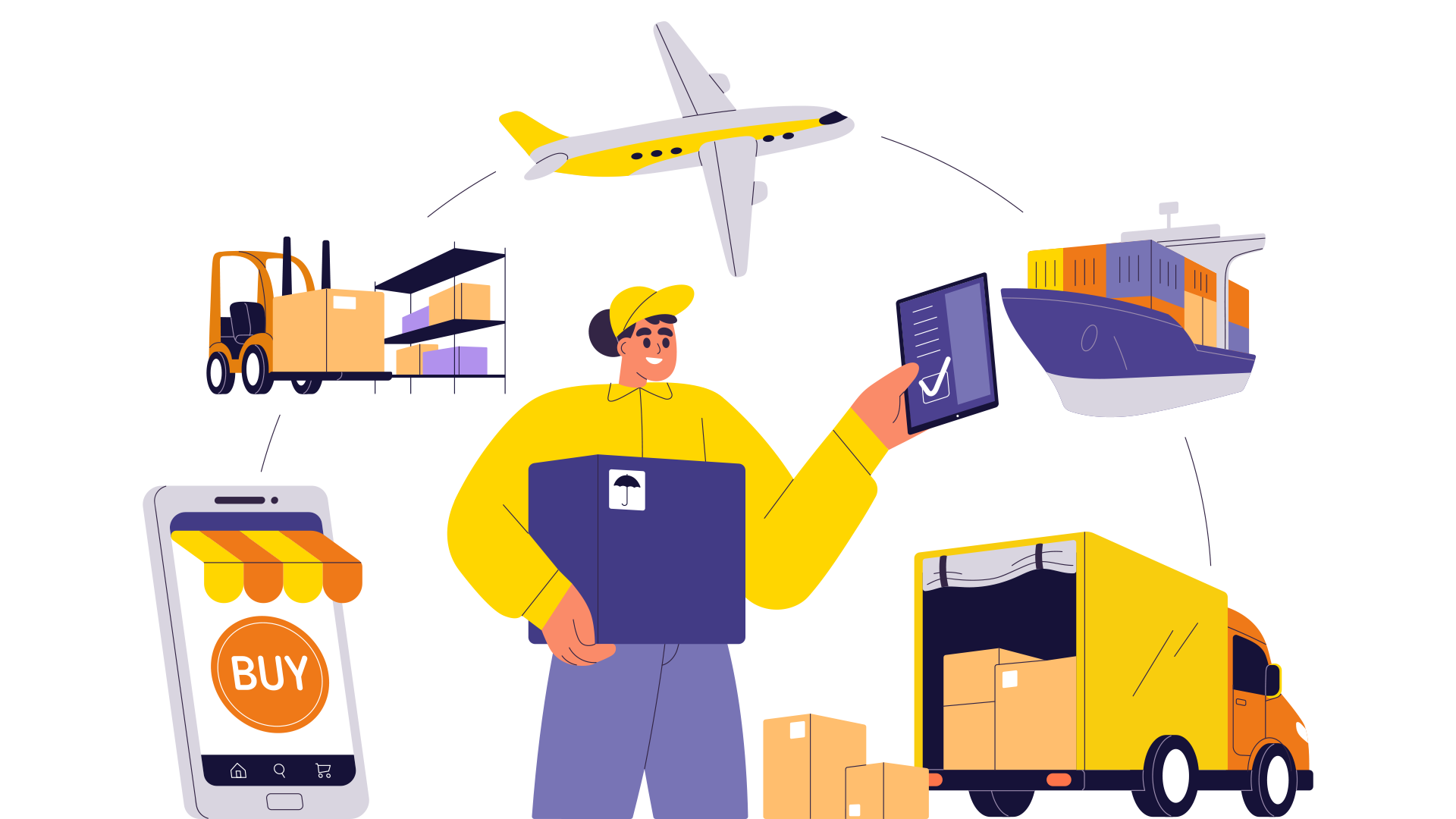
The supply chain or supply chain is the complete journey a product takes from when the raw material is obtained to when it reaches the end customer, and it actually involves many people, resources, and processes:
- Suppliers who deliver raw materials.
- Factories that are responsible for production and manufacturing.
- Storage and logistics centers.
- Transportation, distribution, and points of sale.
Let's put it quickly: the supply chain is the invisible thread that connects everything necessary for a business to function correctly.
Stages of the Supply Chain
To better understand how an efficient supply chain works, it is helpful to look at its stages. Although each company may have particularities, almost all follow the same path from raw material to end customer.
1. Planning
It all starts with planning, the stage where market demand, available resources, and production capacity are analyzed. Decisions are made here about what will be manufactured, in what quantity, and at what time. Good planning avoids excess inventory and delivery delays.
2. Procurement
Next comes procurement, which consists of obtaining the raw materials, inputs, or products needed. This is the time to coordinate with suppliers, evaluate prices, quality, and delivery times. Poor handling in this phase can affect the entire chain.
3. Production or Manufacturing
In this stage, the raw material is transformed into the final product. Human resource management, operational efficiency, and the quality of the production process come into play. Automation and technology help make this phase more agile and with fewer errors.
4. Storage and Logistics
Once produced, the product needs a space to be stored. Correct storage ensures that goods are available when needed. Then comes logistics, which organizes transportation and distribution to points of sale or directly to the consumer.
5. Delivery to the Customer
This is the visible face of the entire supply chain. Delivery must be fast, secure, and fulfill what was promised. Customer satisfaction depends heavily on this step, as a company may have a great product, but if it doesn't deliver it well, it loses trust.
6. Returns and After-Sales Service
Although it is sometimes forgotten, the return or after-sales service stage is also part of the supply chain. Handling returns, claims, or maintenance efficiently improves the relationship with customers and closes the supply cycle with a good experience.
Why is it so important?
Because customer satisfaction depends on it. If the company does not have an efficient supply chain, there will be delays in delivery, defective products, or even inventory losses. On the other hand, a well-managed chain improves costs, reduces the carbon footprint, and ensures that consumers receive their products exactly when they need them.
How to achieve an efficient supply chain
The key is optimization. It's not just about having many suppliers or large warehouses, but about coordinating every step. Here are some basic points:
1. Planning and Management
Clear planning helps anticipate demand, organize operations, and avoid waste. Digital tools and supply chain management platforms facilitate this work, allowing complete visibility of the journey of each good.
2. Collaboration between Areas
The supply chain does not only depend on the logistics area. Human resources, sales, purchasing, maintenance, and production are also involved. When all employees are aligned, achieving objectives becomes more agile.
3. Use of Technology and Automation
Today there are technological solutions that completely transform the way companies manage their supplies. Automation of tasks, inventory systems, cloud platforms, and data analysis help reduce errors and improve distribution.
4. Location and Customization
Knowing the location of each point in the chain allows for quick responses to market changes.
The Benefits of an Efficient Supply Chain
An efficient supply chain not only reduces costs. It also improves the relationship with suppliers, drives digital transformation, and elevates the consumer experience. Organizations that invest in technological implementation often have more sustainable processes, greater inventory control, and smarter management of their resources.
Current trends in supply chains
Let's be clear, today companies are looking for much more than just moving goods from one point to another: they want to do it with efficiency, sustainability, and technology. These are some of the main trends that are transforming the way businesses manage their supply.
1. Digitalization and total visibility
More and more organizations are connecting their entire supply chain through digital platforms that integrate real-time data. This allows them to monitor from manufacturing to final delivery, detect bottlenecks, and improve planning. Systems like SAP S/4HANA or SAP Business One offer precisely that: a complete view of the entire flow of products, inventories, suppliers, and customers.
2. Sustainability and carbon footprint reduction
Environmental concerns have arrived with force. Companies are looking to reduce their carbon footprint and make their processes more sustainable, optimizing transport routes, using clean energy, and choosing responsible suppliers. An efficient supply chain now seeks not only profitability but also environmental responsibility.
3. Automation and use of artificial intelligence
The automation of repetitive tasks and the use of AI to anticipate demand or manage inventories are already a reality. Robots, predictive systems, and data analysis allow companies to make faster decisions with less margin of error.
4. Resilient and local supply chains
After recent global challenges, many companies are strengthening their local supply chains. They prefer to have closer suppliers and localization strategies that allow them to react better to unforeseen events or global crises. It is a trend that drives a new vision of trade, more collaborative and focused on operational continuity.
5. Personalization and consumer experience
Today's consumer wants speed, quality, and personalized attention. That's why modern supply chains are adapting to offer more personalized products and services, using consumption data and planning tools that adapt to the customer's real needs.
Frequently asked questions about supply chain
1. What is the difference between logistics and supply chain?
Logistics focuses primarily on the transport, distribution, and delivery of products, while the supply chain encompasses the entire process, from obtaining raw materials to satisfying the final customer.
2. What role do suppliers play within the supply chain?
Suppliers are the starting point. Without them, there are no raw materials or products to manufacture. Their reliability and compliance are essential for the chain to not be interrupted.
3. How does technology help improve the supply chain?
Digital platforms allow automating processes, optimizing inventory, reducing errors, and having total visibility of operations. This translates into a more efficient and sustainable supply chain.
4. Why is it important to reduce the carbon footprint in supply chains?
Porque impacta directamente en el medio ambiente y en la imagen de la empresa. Hoy, los consumidores valoran más a las organizaciones que apuestan por la sostenibilidad y las soluciones verdes.
Impulsa tu cadena de suministro con SAP y Xamai
Una cadena de suministro eficiente necesita algo más que buena intención: requiere una plataforma altamente capaz y técnica capaz de integrar cada proceso, desde la planificación hasta la entrega.
SAP, al ser líder mundial en software empresarial, ofrece soluciones especializadas para gestión de la cadena de suministro, logística, inventarios y automatización de operaciones.
Con productos tan eficientes como SAP Business One o SAP S/4HANA, tu empresa puede tener visibilidad total de sus suministros, reducir tiempos de entrega y optimizar costos.
Y si buscas un acompañamiento experto en esa labor, en Xamai somos tu mejor opción al ser SAP Gold Partner, con más de 26 años de experiencia ayudando a empresas a digitalizar y fortalecer sus procesos logísticos. Nuestro equipo te asesora paso a paso en la implementación, personalización y mantenimiento de tus soluciones SAP.
Haz que tu cadena de suministro sea más inteligente, sostenible y eficiente con SAP y Xamai. Contáctanos y descubre cómo transformar la manera en que tu negocio gestiona cada entrega.
Ready to talk to SAP specialists?
Tell us what your company needs and we'll help you find the best path.
Request information





 English
  Español de México
  Español