

In other words, the task of data intelligence is to process a large amount of data so that it can be used optimally.
In this article, we will tell you everything you need to know about data intelligence, from its definition to the benefits it can bring to your business.
Understanding data intelligence
Like any company dealing with digital transformation and access to artificial intelligence, data intelligence collects and generates large amounts of data through an extraction system, storing data by data at a great capacity and speed.
These come from various sources (sometimes also from external data sources) and it is important not only to collect them, but also to be able to classify, understand and analyze them so that they are usable. That is the definition of data intelligence.
This discipline belongs to the field of data science and has the task of identifying information in raw data that offers value and can help your company make decisions.
The raw data you collect should be seen as a commodity that needs to be transformed and processed to reveal its full value.
Like a rough diamond that needs to be polished, data intelligence reveals the information that can be extracted from the data.
What is data intelligence used for?
Data intelligence can be used to identify growth or development opportunities for your business, to predict the impact of economic developments on your ecosystem, or to stay one step ahead of your competitors in new market trends.
Data intelligence is considered a strategic asset to increase operational efficiency and should not be confused with business intelligence.
The term data intelligence refers to how companies use the information they collect to add value.
This means that all data that emerges must be recorded and managed systematically. Data intelligence is used to process and continue using this information in a way that makes sense for the company, so that the data can be used to generate added value and competitive advantages for the company.
There are some important tools in this process:
Business Intelligence (BI) and Analytics:
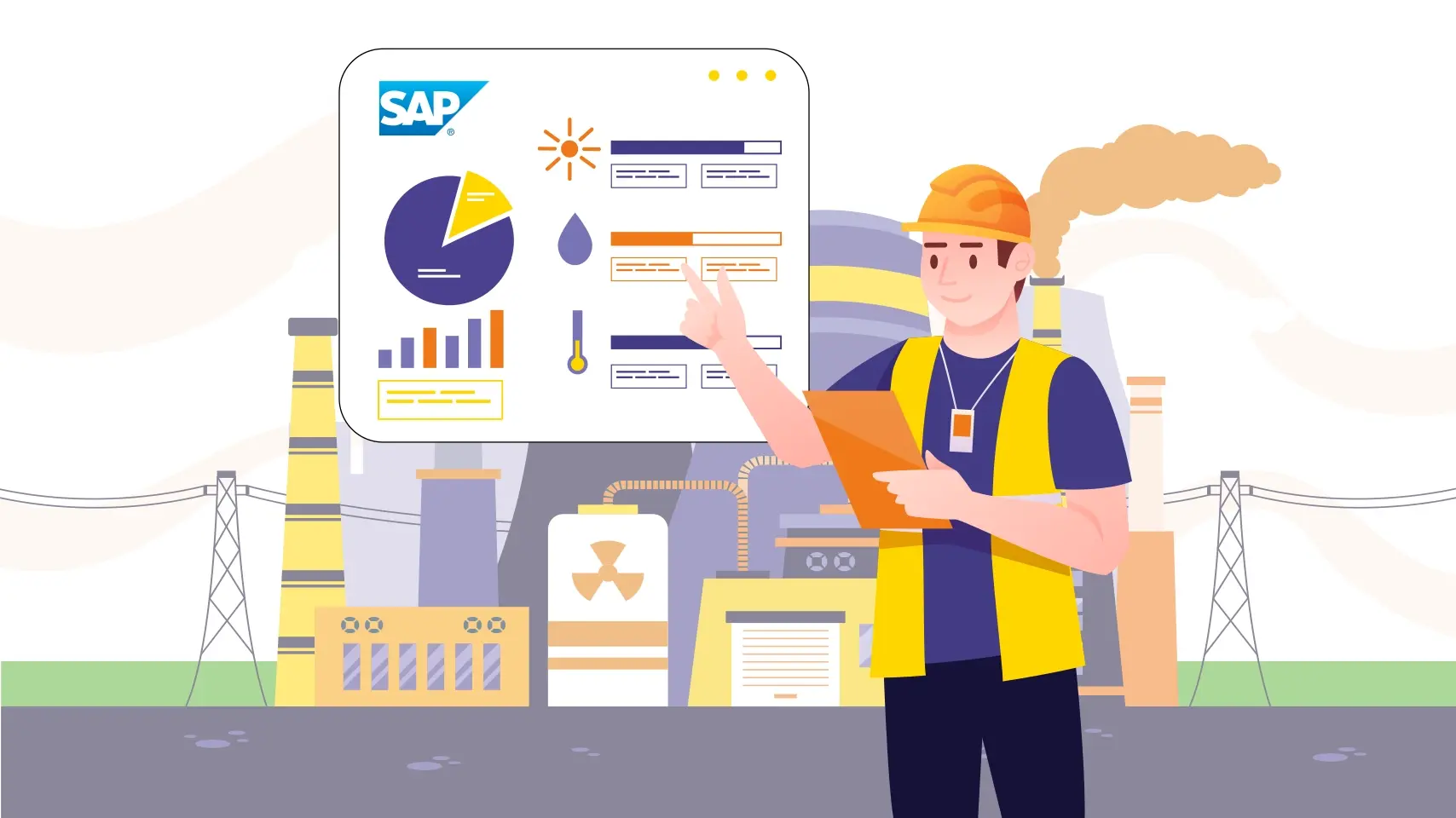
With digital tools such as SAP Analytics solutions, company data is analyzed in a targeted way and information is extracted from it, which companies can use to improve their processes, services, investments and decisions and thus have a smart company.
Big Data and IoT:
The Internet of Things connects large amounts of data, employees, machines and processes. The interaction of analytics, big data and IoT creates immense added value for your company.
Big data and Artificial Intelligence:
With Artificial Intelligence, data can not only be automatically evaluated and processed at a low cost, but also new connections can be recognized, predictions can be made about future conditions and recommendations for action can be derived.
Data Enrichment:
In order to be able to obtain the greatest possible benefit from the data, it is often necessary to improve or refine the raw data available for later use. The available material is often enriched with relevant data from external sources.
Machine learning
Machine Learning is one of the technologies that supports AI, which allows computers to perform functions similar to human learning skills. In particular, we use these tools for predicting market behavior.
What is the difference between data intelligence and business intelligence?
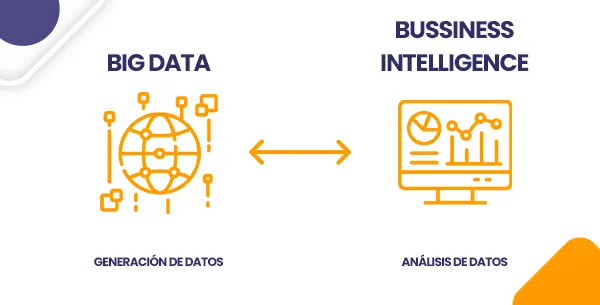
In the field of data, individual disciplines sometimes tend to become confused in their tasks. This can cause a distortion of the image and a lack of understanding of the benefits.
Data intelligence and business intelligence are often confused with each other, although they pursue very different objectives. You should know that data intelligence aims to set the stage to structure your data assets for future use; while business intelligence is a process that makes the data processed by data intelligence usable.
In short, Data Intelligence helps organize the data available in your company, while Business Intelligence organizes your company's activities based on the available data that has been collected.
Recognizing these principles, it is safe to assume that data intelligence is a discipline focused on developing future strategies (for example, to identify investment opportunities), while business intelligence focuses on understanding operational processes within your organization.
In any case, data intelligence and business intelligence remain closely linked, as both help companies in the decision-making processes.
Objectives of data intelligence
Are you planning a Data Intelligence project? Then it is absolutely necessary to establish a precise timeline and define clear objectives.
Data intelligence allows you to analyze the performance of your organization and take action where improvements can be made.
Because data intelligence is based on the analysis of a wide range of data, it allows for advanced correlations to create detailed analyses of different situations. For example, Data Intelligence can help you understand and predict the behavior of your customers and audience by evaluating browser cookies and metadata, using your website as a tool.
Optimizing customer desires, forecasting strategies, you can gain valuable time with data intelligence and machine learning. A fact that translates into a significant competitive advantage.
Benefits of data intelligence
You would do well to trust data intelligence to make your data assets more productive.
The main benefit that can be derived from data intelligence is the acceleration of decision-making processes.
Forget intuition and risky bets: your decisions will now be based on real-time observations from high-quality data. Data intelligence also reduces exposure to risk, allowing you to make informed decisions based on the knowledge you gain from data. A lower risk of error in strategic decisions also leads to better cost control.
Data intelligence can be used to identify duplicate and unnecessary steps in analysis or decision-making processes.
Data intelligence can help you be more effective and more efficient. Ultimately, it is a promise of progress, of knowing more about the market and detecting tomorrow's trends before your competitors.
Be part of the future and take your company to the next level. Xamai it can help you integrate programs that help transform your business. If you have any questions, contact us and we will guide you in the best tools you can implement in your company.
Ready to talk to SAP specialists?
Tell us what your company needs and we'll help you find the best path.
Request information






 English
  Español de México
  Español