
We tell you how to optimize artificial intelligence in your supply chain to increase efficiency and reduce costs
Artificial intelligence in the supply chain has become one of the biggest transformations that companies are experiencing in this digital age. It's not a fad, but a true evolution in the way organizations plan, produce, distribute, and make decisions within their supply chains.
Thanks to AI, supply chain management no longer depends solely on human experience, but also on the analysis of large volumes of data in real time, the automation of processes, and the optimization capabilities offered by AI and machine learning systems.
Let's break down how it works, what benefits it offers, and what challenges it involves integrating artificial intelligence (AI) into supply chain management.
AI in the supply chain: the new operating brain of companies
When we talk about AI in the supply chain, we are referring to a set of tools, algorithms, and platforms capable of analyzing data, detecting patterns, and anticipating problems before they occur.
Imagine a company can accurately predict demand levels, adjust its inventory based on the season, or plan more efficient delivery routes to reduce costs and times. That's exactly what artificial intelligence achieves in the supply chain.
AI systems integrate information from various points in the chain — suppliers, warehouses, operations, transactions, and even social networks — to make smarter and faster decisions.
Furthermore, they allow for constant interconnection between all supply chain actors, which improves collaboration, adaptation, and overall business efficiency.
From data to knowledge: how AI transforms supply chain management
The heart of AI in supply chain management is data. Every movement of products, every order, every shipment, and every price change generates valuable information. However, the challenge lies in processing it correctly.
AI systems and machine learning models can analyze millions of records in seconds, finding patterns that a human would find difficult to detect. For example:
- Identify supply problems before they affect production.
- Predict demand to avoid inventory surpluses or shortages.
- Optimize delivery and storage processes.
- Adjust production levels according to market trends.
This artificial intelligence allows companies to make decisions based on evidence and not on assumptions. And when decisions are more accurate, productivity, profitability, and supply chain sustainability also improve.
Joule from SAP is an example of AI applied to the supply chain
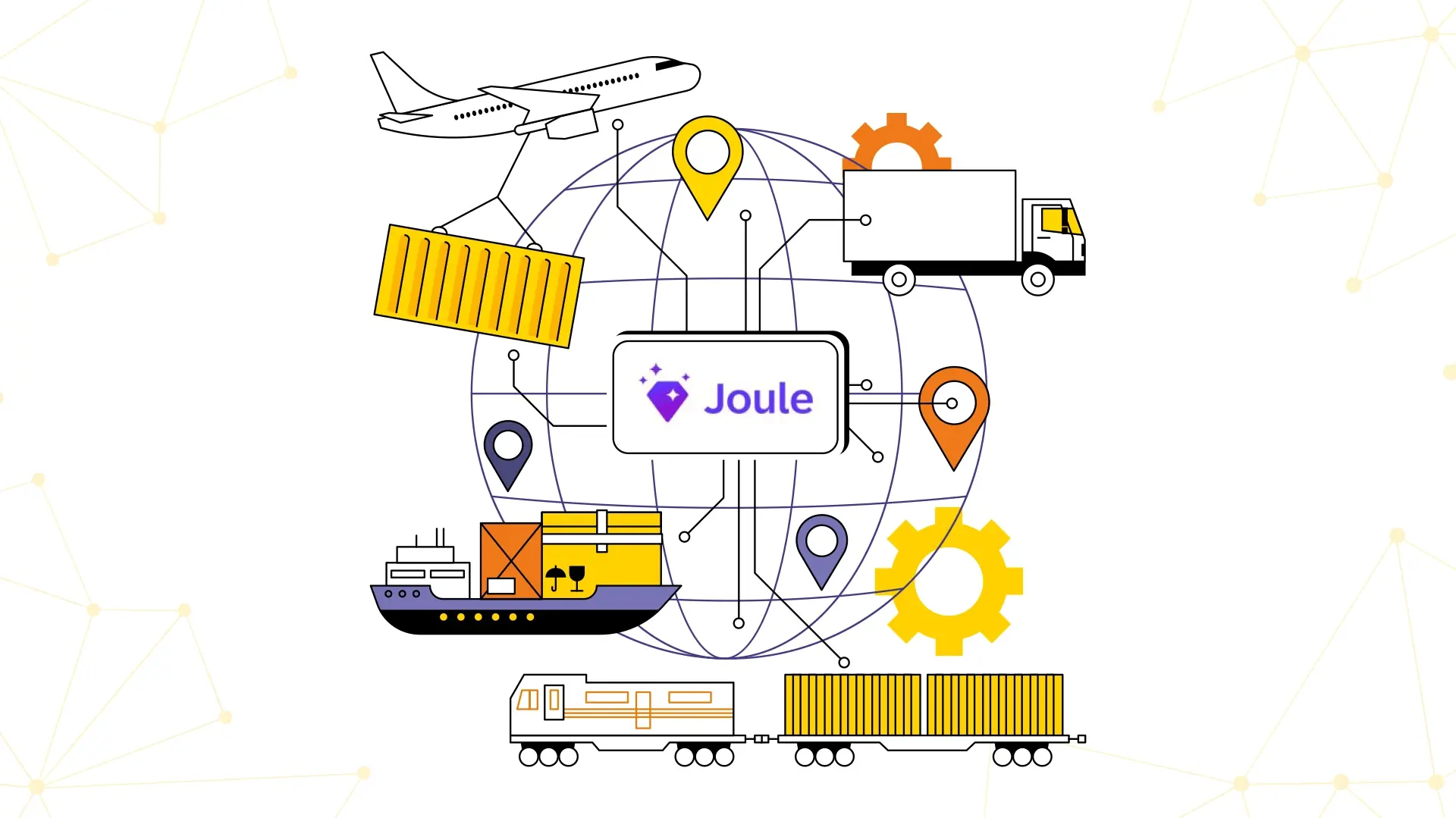
To understand how artificial intelligence operates in a company, an example would be to mention Joule, the generative AI layer integrated into SAP.
It is a technology that connects directly with ERP Cloud data, in Public Cloud and/or in Private Edition. It analyzes inventories, purchases, demand, suppliers, and production from a single conversation.
Joule functions as an assistant that understands the business because you can ask it to identify risks in the supply chain, anticipate inventory shortages, or suggest concrete actions to improve planning.
Joule can also help you create more accurate forecasts and detect inefficiencies that would normally go unnoticed.
What's valuable is that it not only explains what's happening in the supply chain, but also offers recommendations based on real operational data.
By integrating it into a Cloud ERP, Joule helps companies have a more agile, proactive, and connected supply chain, without relying on external tools or manual analysis.
Benefits of AI in supply chain management
Implementing AI in the supply chain brings multiple benefits that impact both efficiency and business strategy.
1. Optimization and cost reduction
One of the greatest benefits of AI is its ability to analyze the complete supply chain information, detect inefficiencies, and propose improvements. For example, it can identify shorter transportation routes, schedule predictive maintenance on facilities or equipment, and suggest adjustments in production or storage to reduce energy and operating costs.
2. Improved decision-making
With real-time data, managers can react faster to problems or market changes. AI systems allow simulating scenarios, evaluating risks, and choosing the best strategy before acting.
3. Smarter inventory management
AI helps maintain the perfect balance between demand and supply. It's no longer about filling warehouses, but about having the right inventory, at the right time. This reduces waste, improves planning, and ensures more agile delivery.
4. Increased productivity and automation
Thanks to automation, many repetitive tasks can be performed by intelligent systems, freeing up workers for more strategic tasks. From order scheduling to shipment tracking, AI simplifies daily operations.
5. Sustainability and carbon footprint reduction
More efficient management also means a smaller environmental impact. Artificial intelligence can help reduce energy consumption, optimize transportation usage, and contribute to the sustainability of supply chains by reducing their carbon footprint.
Challenges in implementing AI in the supply chain
Despite the multiple benefits, implementing AI in supply chains is not without challenges. The main one has to do with the integration of existing systems and technological infrastructure.
Many organizations still operate with manual processes or fragmented information, which hinders the efficient functioning of AI models. In addition, trained personnel in technology, programming, and data analysis are required.
Another challenge is security. With so much interconnection and data flow over the internet, companies must strengthen the protection of their data and establish robust cybersecurity protocols.
Finally, there is the human factor. AI is not meant to replace workers, but to enhance their capabilities. Therefore, cultural adaptation and the development of digital skills are essential to take full advantage of its potential.
The real impact of AI: from theory to results
There are already numerous success stories. Large companies in the logistics and production sectors have managed to reduce operating costs by up to 30% by integrating AI into their processes. Others have improved the accuracy of their demand forecasts and reduced errors in inventory management thanks to machine learning algorithms.
Even, some organizations use AI to analyze social media information and detect changes in consumer preferences before they are reflected in sales. This level of intelligence allows anticipating market movements and adjusting strategy with agility.
Ultimately, artificial intelligence in the supply chain not only improves efficiency, but redefines the future of supply chain management, completely transforming the way operations are planned, inventories are managed, and products are delivered.
Frequently Asked Questions about AI in the Supply Chain
1. How difficult is it to implement AI in a supply chain?
It depends on the company's level of digitalization. If there are already connected systems, implementing AI is easier. The important thing is to start with a pilot project, test models, evaluate results, and scale up gradually.
2. Can AI replace human personnel in the supply chain?
No. AI complements human work. Repetitive tasks can be automated, but strategic decision-making, creativity, and relationship management still depend on people. The key is collaboration between AI and workers.
3. What specific benefits does a company get by using AI in its supply chain?
Among the main benefits are: greater accuracy in forecasts, better inventory management, reduction of costs, increase in productivity and better decision-making. All of this positively impacts the business's profitability.
4. What type of data does AI need to function correctly?
It needs real-time data on movements, storage, demand, transactions, suppliers, and operations. The more information the system has, the more accurate its predictions will be.
Take the next step towards a smarter supply chain
Integrating artificial intelligence into the supply chain is more than a technological change: it is a strategic transformation. Companies that bet on AI today are building the most efficient, sustainable, and competitive supply chains of tomorrow.
At Xamai, we help organizations design and implement AI projects that strengthen supply chain management, optimize processes, and improve decision-making.
Take the step towards a more connected, agile, and sustainable supply chain and transform your business model from the root.
Ready to talk to SAP specialists?
Tell us what your company needs and we'll help you find the best path.
Request information






 English
  Español de México
  Español